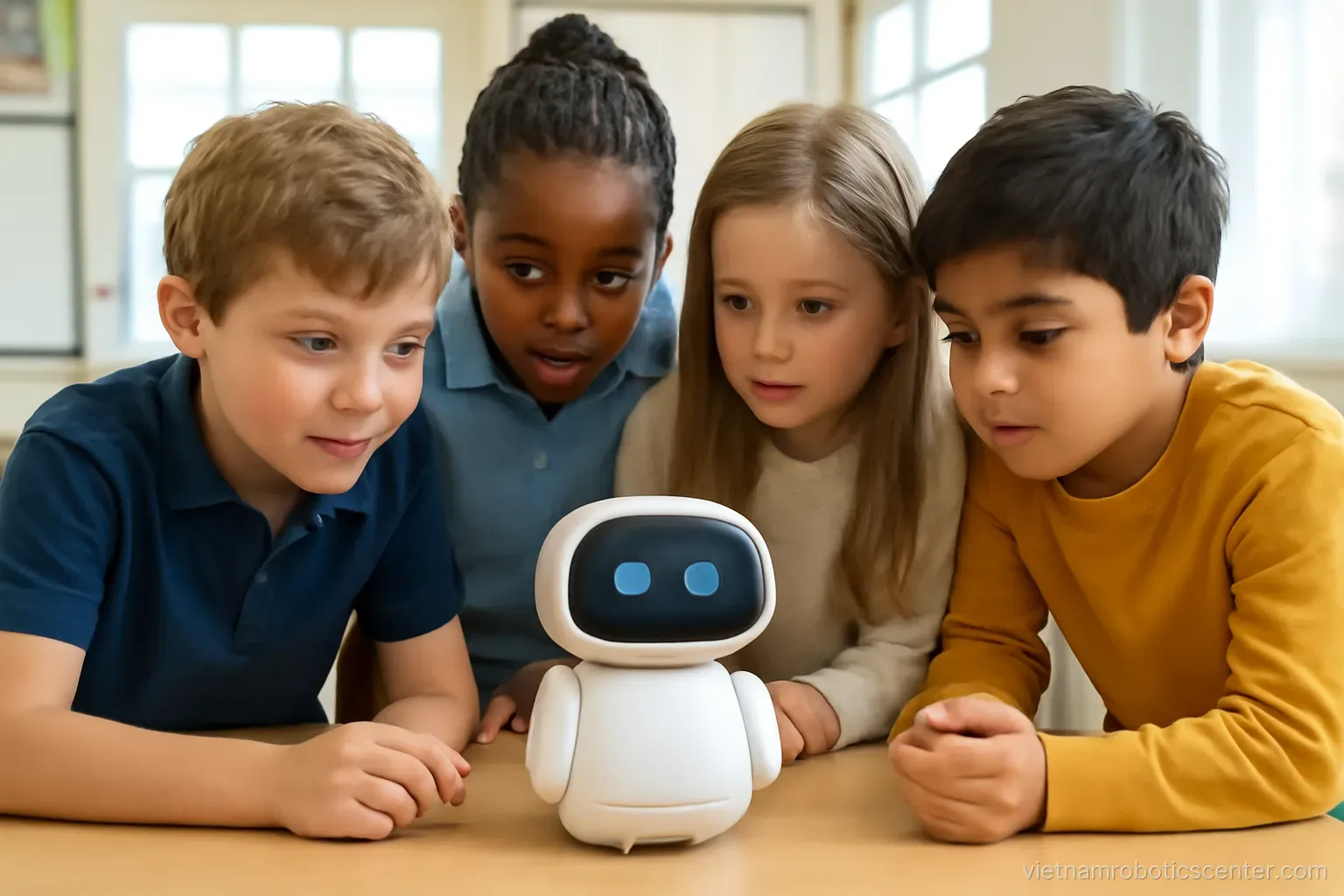
A robot in a classroom always draws attention. The difficulty is that attention fades quickly, and what remains once the novelty has gone is the thing actually worth paying for.
Three roles, worth keeping separate
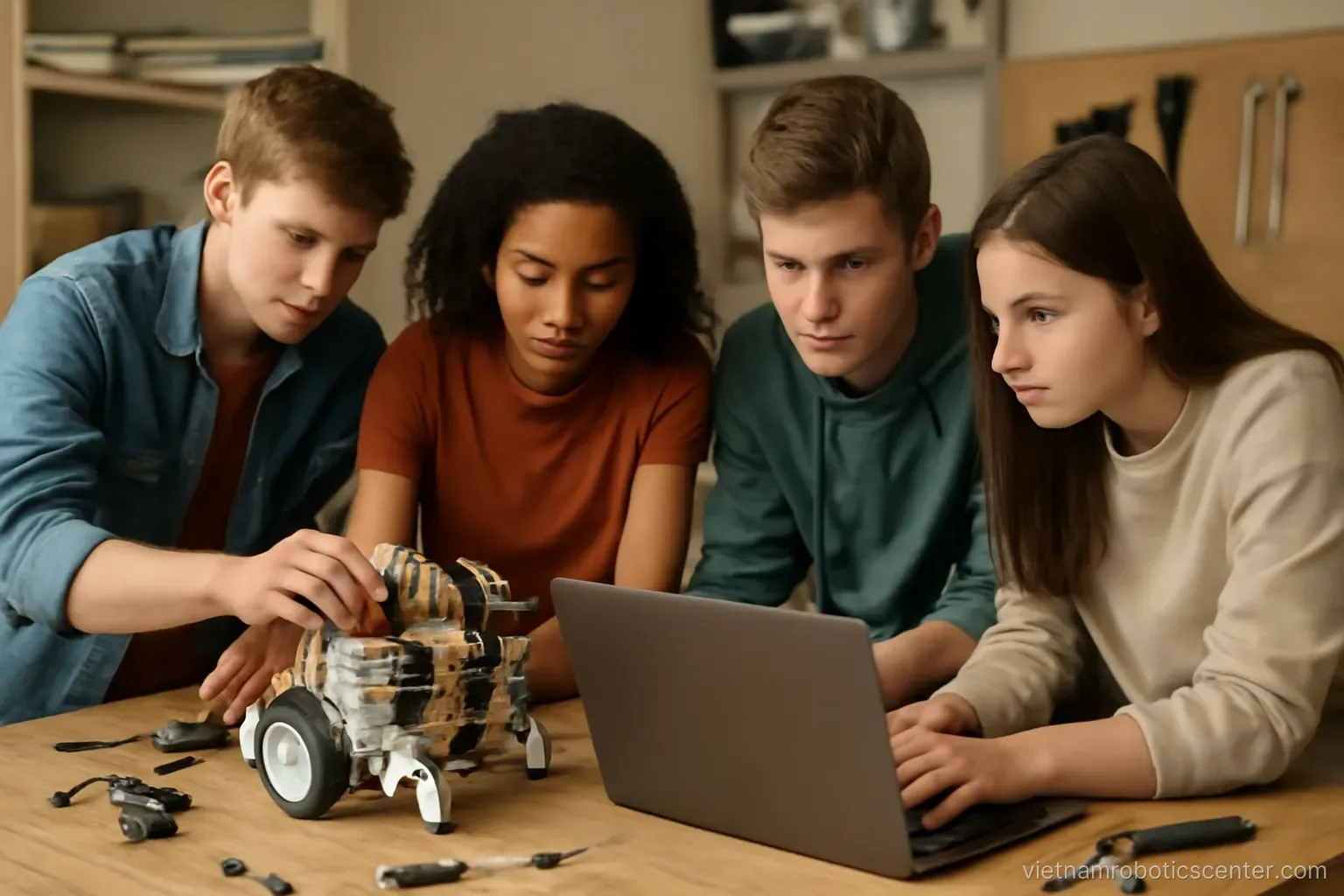
The robot as the subject. Students build it, program it, debug it. What they learn is logical reasoning, problem solving, and patience when a program misbehaves. This role has the clearest educational value and the least visual appeal.
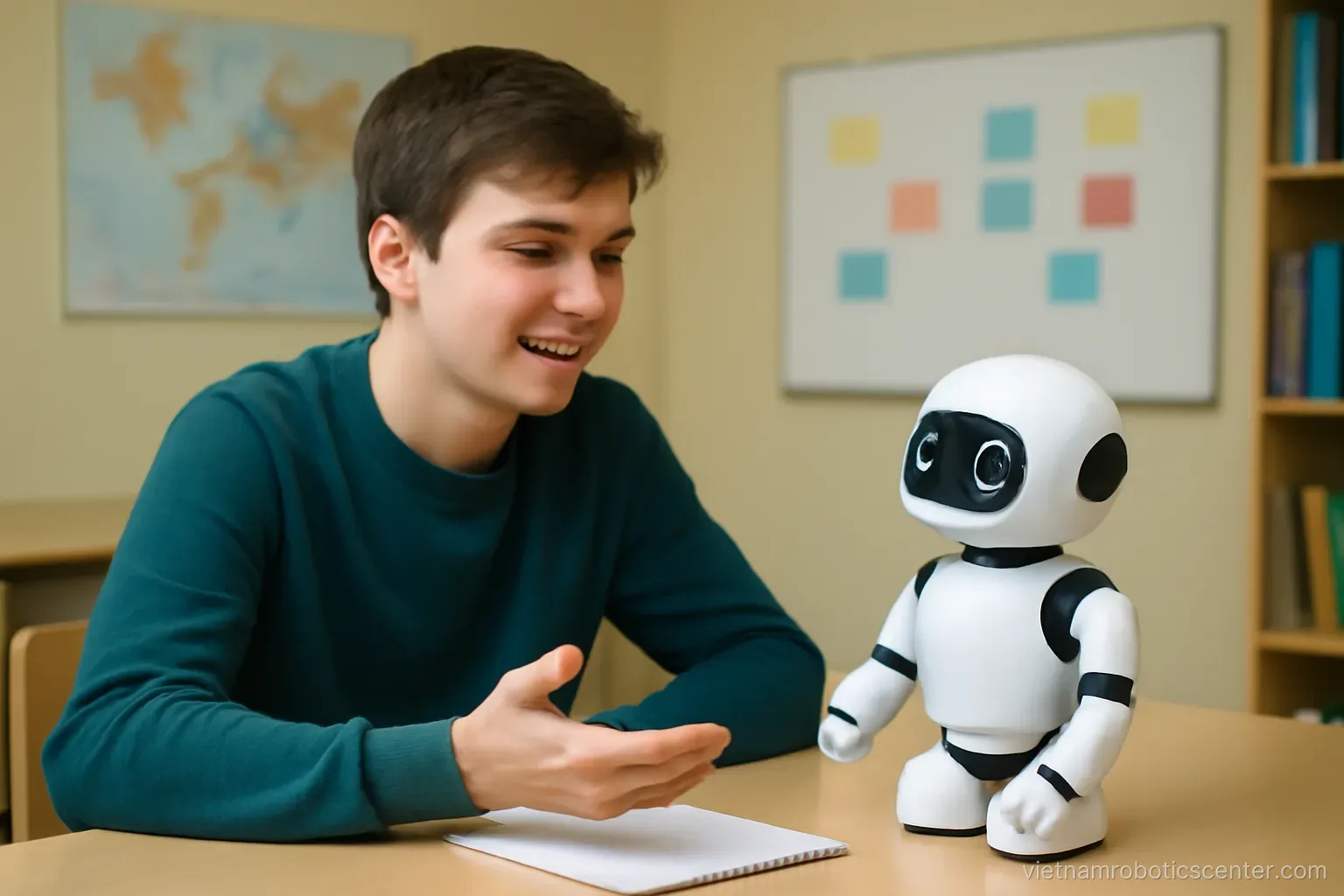
The robot as a teaching tool. The robot presents, reads, questions students. Impressive to watch, and the learning value depends entirely on the content — if the content is good, a screen does the same job.
The robot as an interest generator. Its presence makes lessons more engaging, attracts students to a centre, creates an image for the institution.
These three call for different equipment and different investment. The common mistake is buying for the third role and then expecting outcomes from the first.
Being explicit about which role you are purchasing is the single most important decision, and it should be written down rather than left vague.
Robot as subject: where the value sits
This role has the strongest pedagogical basis, for specific reasons.
Immediate and undeniable feedback. A wrong program produces wrong movement, visible at once. Quite unlike written exercises awaiting marking.
Mistakes are cheap and unthreatening. The robot hits a wall, you try again. This creates an environment where students are not afraid to be wrong — something very hard to produce with tests.
Problems are concrete and visible. Why did it turn too early? leads directly to thinking about timing, speed and sensors, and abstract concepts become tangible.
Teamwork happens naturally. One robot, three students, each with a part.
The condition for this role to produce results: the teacher must know enough to help when students are stuck. This is a real constraint and it binds harder than equipment budget.
Robot as teaching tool: when it earns its cost
Worth it when the robot does what a screen cannot. Physical presence, moving to where students are, holding the attention of young children, interacting through gesture.
Not worth it when the job is presenting content. If the robot reads a lesson and displays slides, a screen does it better for a fraction of the price.
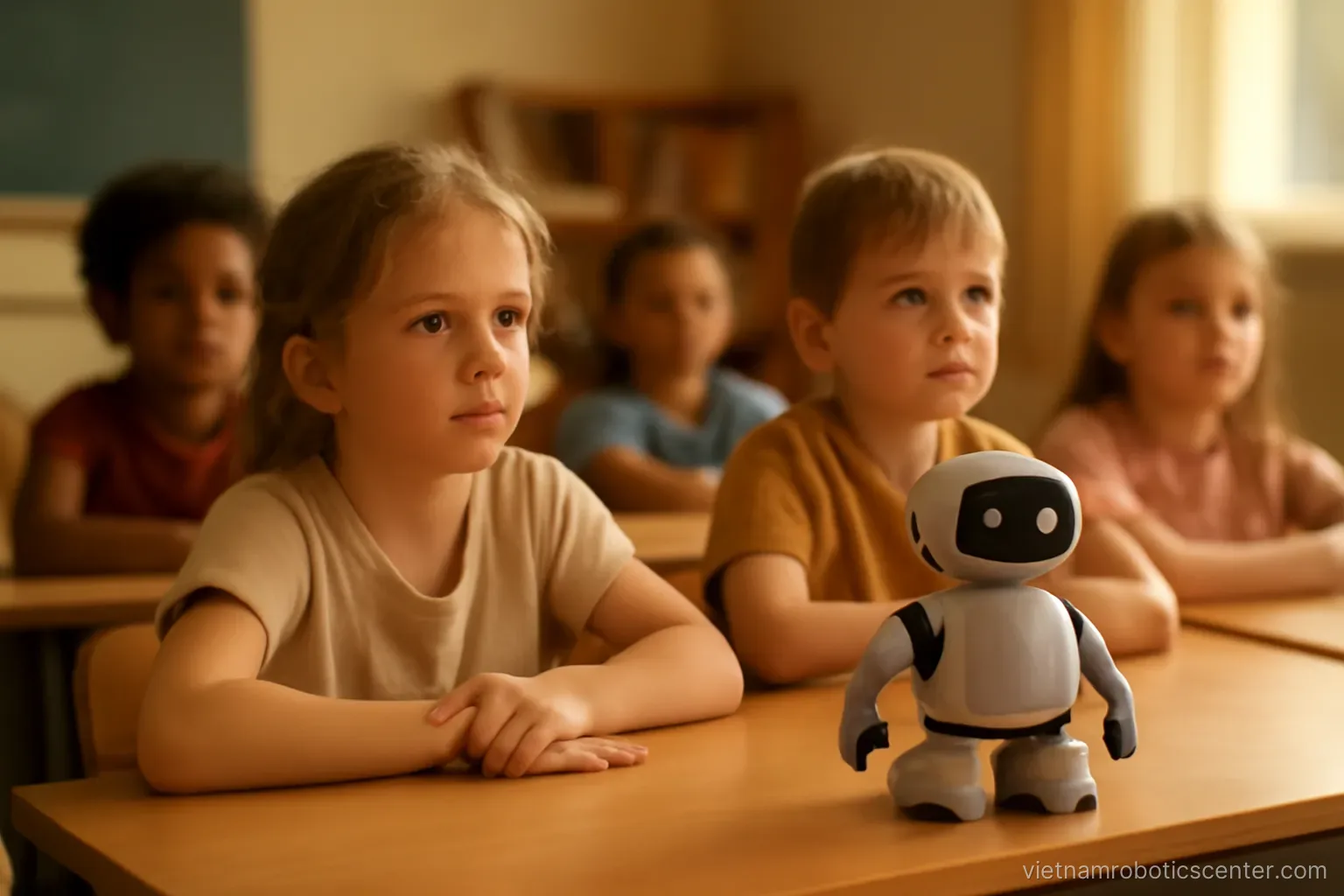
Worth it with younger learners. Pre-school and primary children respond far more strongly than teenagers. With older students the novelty dissipates within a few sessions.
Worth it where patient repetition is needed. Pronunciation practice, vocabulary drilling, times tables — a robot does not lose patience at the thirtieth repetition, and weaker students are less reluctant to repeat with a robot than with a teacher.
That last benefit is rarely discussed and may be the most real: a robot does not judge, so struggling students practise more.
The novelty effect and how to survive it
Every new device in a classroom passes through excitement and then decline. With robots the excitement typically lasts a few weeks.
The pattern. Week one students crowd around; week four the robot sits in a corner. This is normal rather than a fault.
What decides the rest. Whether the robot is inside the curriculum or beside it. If lesson plans are built around it, use continues; if it appears only when visitors come, it will only ever be used when visitors come.
The remedy. Write specific lesson plans for each session involving the robot, with clear learning objectives, before buying the equipment. If the plans cannot be written, that is a signal not to buy yet.
Measure sessions used. Record how many sessions per month involve the robot. A declining figure is the earliest warning and it is easy to track.
Choosing equipment against the objective
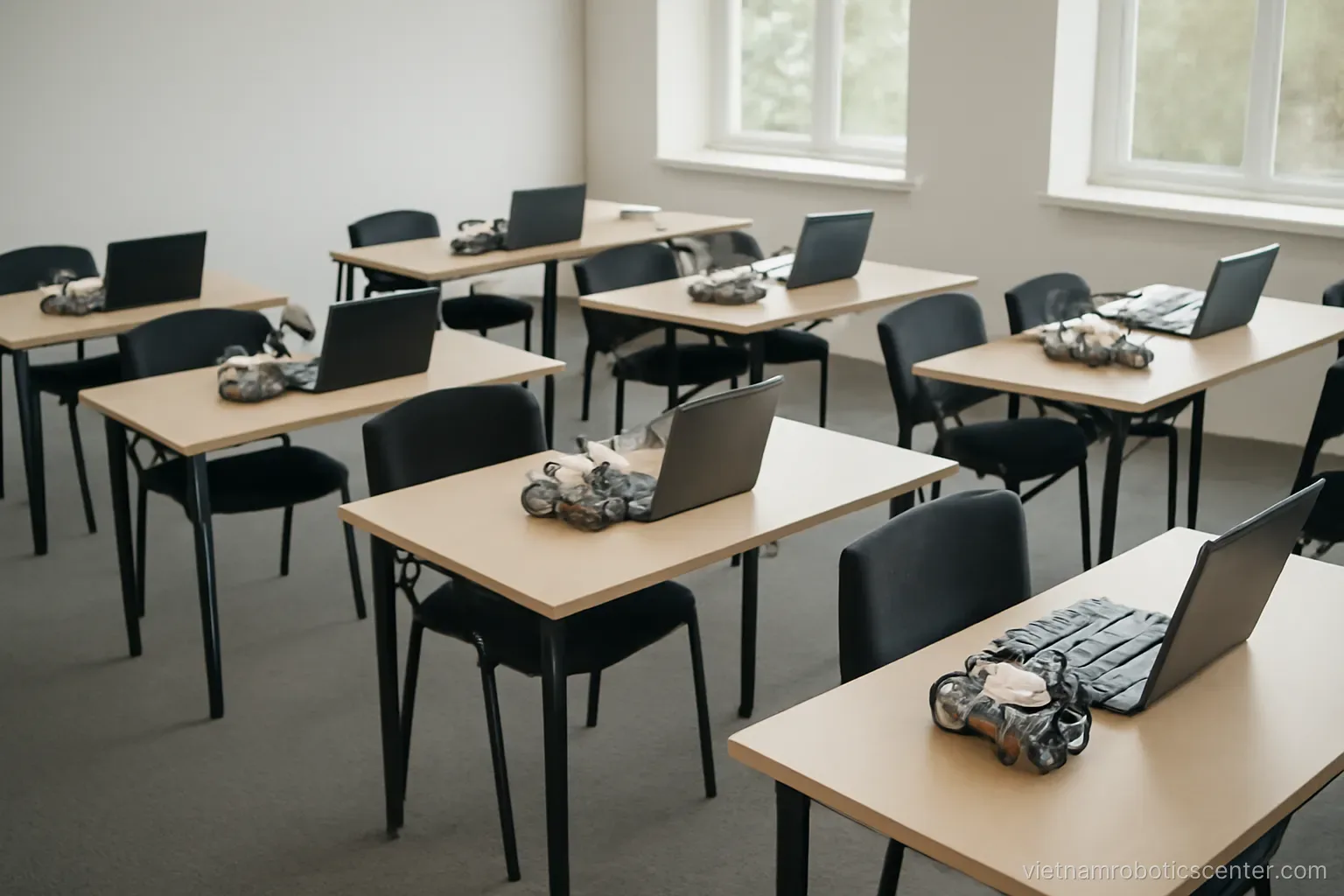
Teaching computational thinking → small, inexpensive learning robots, enough sets for each group to have one. Quantity matters more than the quality of any single unit, because students must build rather than watch.
Teaching languages or drilling → a robot with strong conversation ability, where speech quality matters far more than physical form.
Attracting enrolments and building image → a humanoid placed where parents see it. Be explicit internally that this is a marketing investment and price it accordingly.
Teaching robotics as a field → equipment closer to industrial reality, programmable at depth.
Limited budget → favour quantity of simple devices over one expensive unit. Ten cheap robots for ten groups of students carry more educational value than one expensive robot the whole class watches.
The general principle: in education, students must be able to touch it. Equipment too expensive to let students handle has lost most of its educational value.
Frequently asked questions
What are the three roles of a robot in education?
The robot as subject that students build and program, the robot as a teaching tool that presents and questions, and the robot as an interest generator. Each requires different equipment and different investment.
What is the most real benefit of a robot as a teaching tool?
It does not judge, so weaker students practise more willingly than they would with a teacher. It also does not lose patience at the thirtieth repetition, which people do.
How do you survive the novelty effect?
Write specific lesson plans with clear learning objectives for each session involving the robot, before purchasing. If the plans cannot be written, that is a signal that the purchase is premature.
How should a limited budget be spent?
On quantity of simple devices rather than one expensive unit. Ten cheap robots for ten student groups carry more educational value than one expensive robot that the whole class only watches.
More in Reception and event robots and Service robots in hospitality and retail.