Demand for robotics and AI education is rising and opening a centre is not difficult. The difficulty is getting students to enrol for a second term. This covers the three things that decide it: curriculum, teachers and class model.
Levelling the curriculum clearly
The most common error is one curriculum for all ages and abilities. Younger students cannot keep up and older ones are bored.
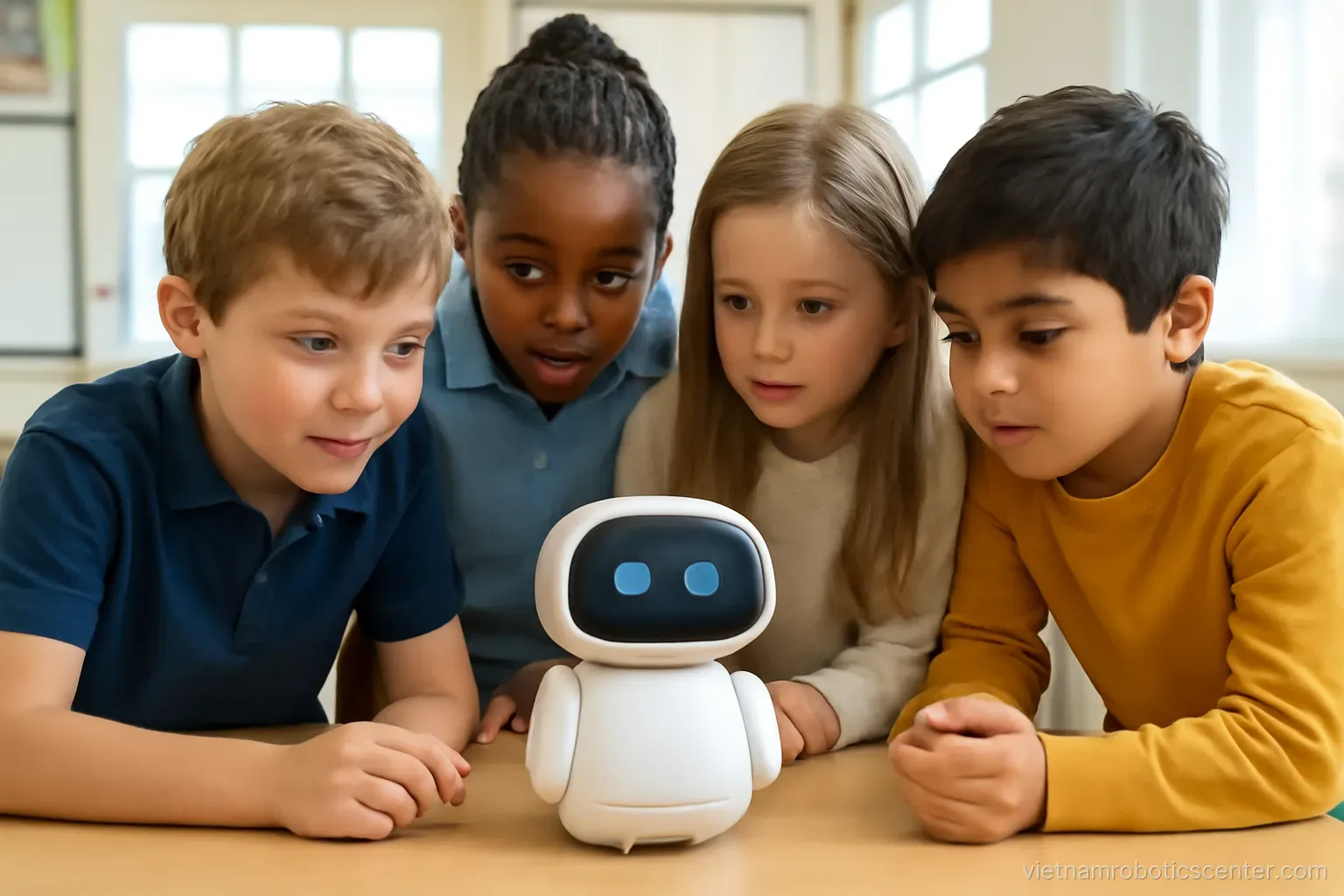
Introductory level. The aim is a visible result and enjoyment. Simple assembly, drag-and-drop programming, a robot that moves on command. No emphasis on theory.
Basic level. Sensors, conditions, loops. Students design a simple behaviour themselves. This is where computational thinking genuinely forms.
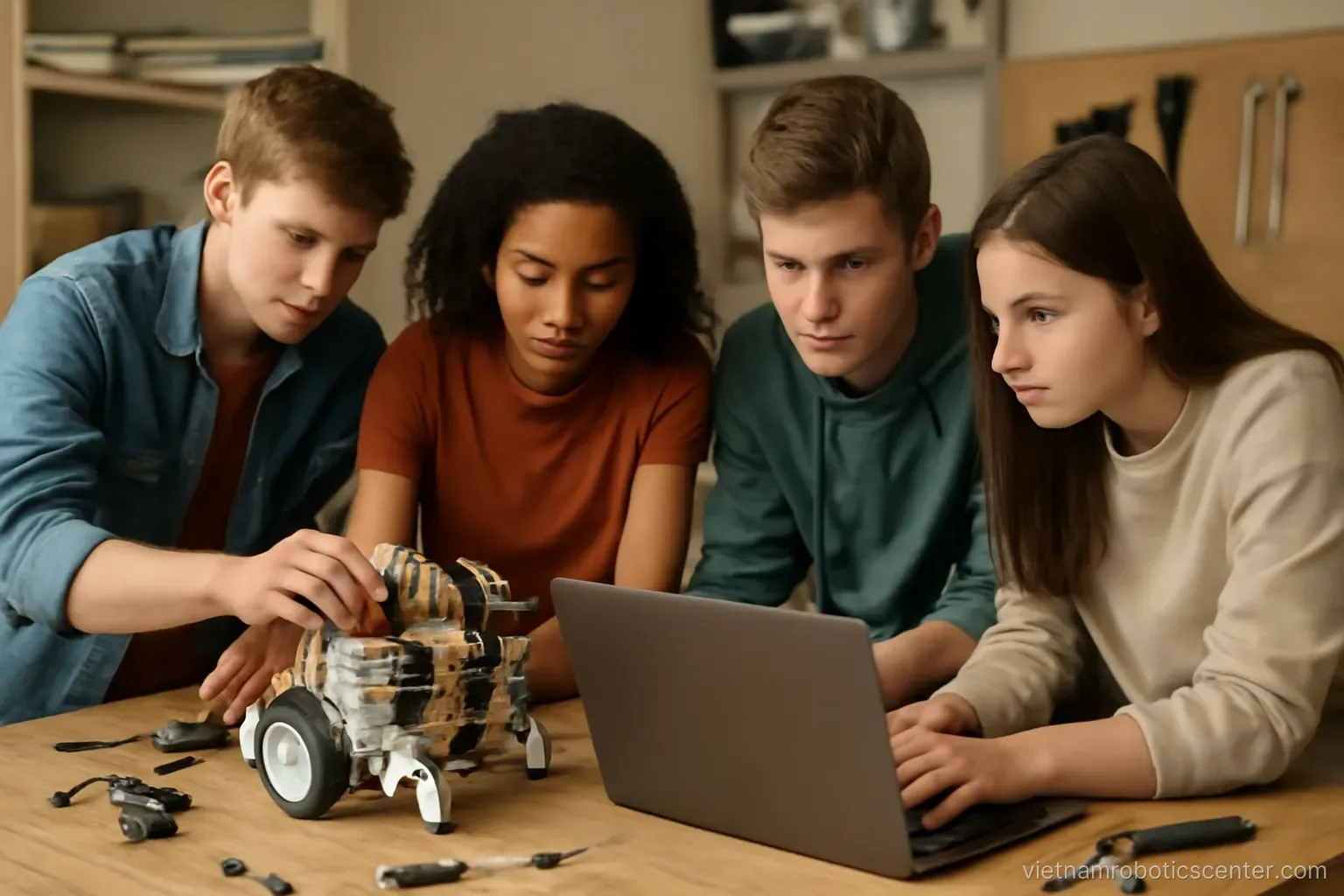
Intermediate level. Writing code in a real language instead of blocks. Combining several sensors. Completing a project across several weeks.
Advanced level. Image processing, more sophisticated control, open-ended problems. Student numbers are small here and the value lies in retaining the strongest group.
The key point: each level must produce its own shareable result. Students and parents need to see progress at every stage rather than waiting for the final level.
Teachers are the real bottleneck
Equipment can be purchased in a week. Teachers cannot.
Realistic sources. Final-year engineering students, young engineers wanting additional work, IT teachers extending their range. Each has different strengths and all need additional preparation on the teaching side.
Technical skill is not sufficient. A technically strong person who cannot teach will do the work for the students instead of letting them struggle — the most common failure and one that destroys the entire value of the session.
Detailed lesson plans are required. Not an outline but a script: what happens in the first fifteen minutes, how to prompt when students are stuck, how the session closes. Good plans let a new teacher deliver immediately.
Cover is essential. A centre depending on one strong teacher faces a crisis when they leave. At least two people able to deliver each level.
Periodic retraining. The technology moves, and teachers who are not updated will teach outdated material without realising it.
The class model
Class size. Six to ten students per teacher is typical for practical sessions. More than that and the teacher cannot reach students who are stuck, and a student stuck too long leaves.
Equipment ratio. No more than two students per set. Three or more guarantees someone is only watching.
Session length. Ninety to a hundred and twenty minutes. Shorter and nothing gets finished; longer and younger students lose focus.
Frequency. Weekly is common and has a drawback: students forget between sessions. Where possible, add small tasks doable at home without equipment.
Stable groups. Keep the same students together across sessions. Friendships are as strong a reason to return as the content.
Hold an open session for parents. Once per course, with students presenting their work. This is the most effective retention tool, because parents see progress rather than hearing about it.
Choosing centre equipment
Prioritise durability. Centre equipment is handled by dozens of students weekly, quite unlike personal equipment. Individually replaceable parts matter more than specifications.
Standardise on one platform. Multiple platforms complicate lesson plans, make spares harder to stock, and make it harder for teachers to cover one another.
Ensure an upgrade path. A platform letting students progress from blocks to code without changing hardware retains students across levels.
Stock consumables generously. Batteries, cables, wheels, screws, sensors fail regularly. A session halting for want of one cable happens more often than expected.
Keep spare sets. At least one ready to swap when a set fails mid-session.
Do not overbuy at the start. Enough for current classes plus one, expanding with actual enrolment rather than with forecast.
Retaining students into a second course
The most important metric for a centre, and an easy one to measure.
Proportion enrolling in the next course. Track it by course and by teacher. It identifies problems more precisely than any satisfaction survey.
Reasons students do not return. Ask directly. Usually three groups: found it too hard, found it boring, or the schedule did not work. Each needs a different response.
Show the path forward. A student finishing a course without knowing what comes next will stop. Explain the next course and what it enables, during the final session.
Give them something to take home. Something they keep and can show others — a video, a robot they built, a certificate.
Maintain community between courses. A group chat, open sessions, internal competitions. Students still connected to the centre return far more readily.
Do not serve only the strong group. Average students are the larger number and the main source of revenue. A programme oriented entirely toward competitions loses them.
Frequently asked questions
What is the most common curriculum error?
One curriculum for all ages and abilities. Younger students cannot keep up, older ones are bored, and neither group enrols for the next course.
Why might a technically strong teacher teach badly?
Because they tend to do the work for students rather than letting them struggle through it. This is the most common failure in practical sessions and it destroys the learning value entirely.
What equipment ratio is needed?
No more than two students per set. Three or more guarantees that someone only watches, and those students are the ones who do not enrol for the next course.
What is a centre's most important metric?
The proportion of students enrolling in the next course, tracked by course and by teacher. It identifies problems more precisely than satisfaction surveys do.
More in Service robots in hospitality and retail and Robots for real estate and showrooms.