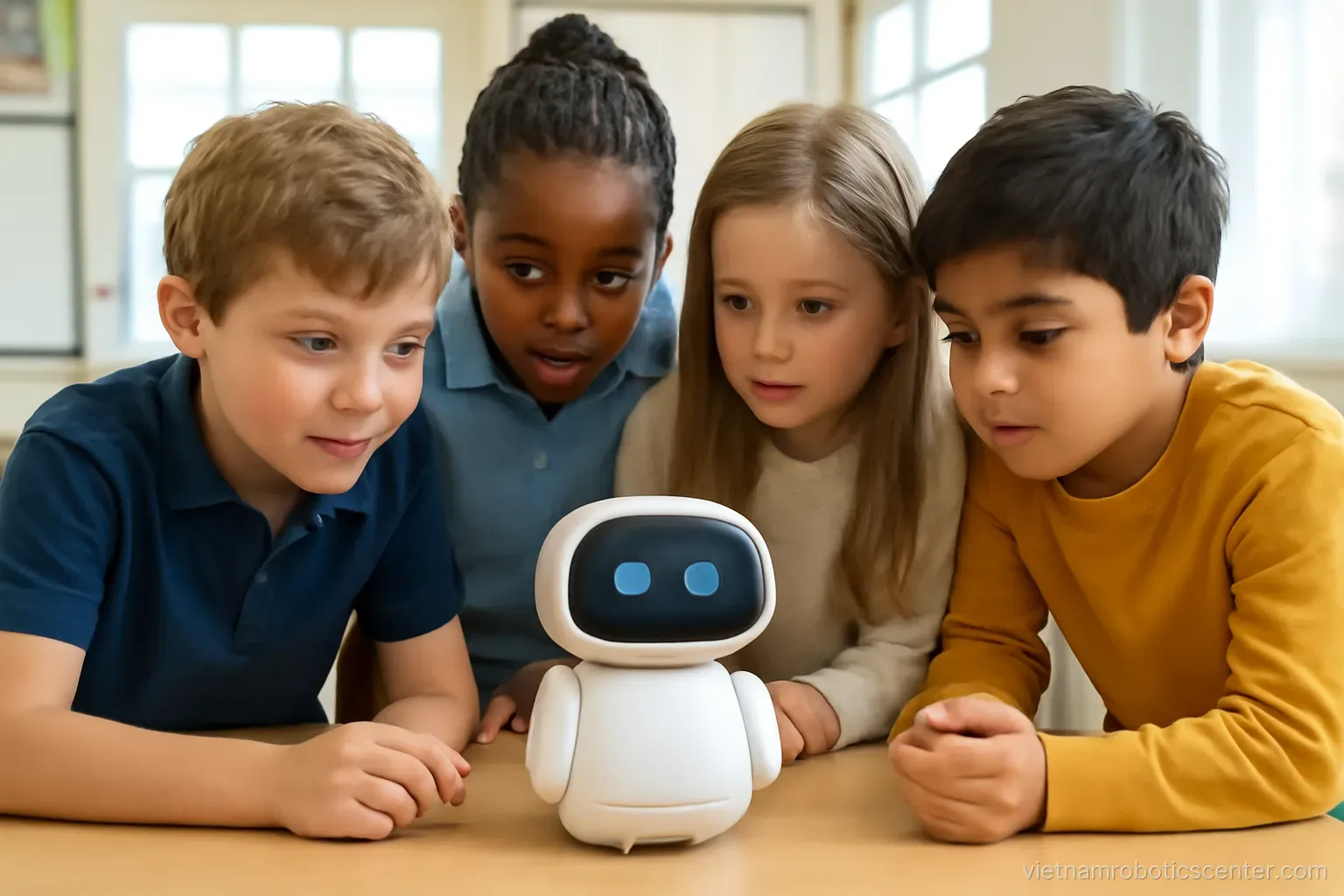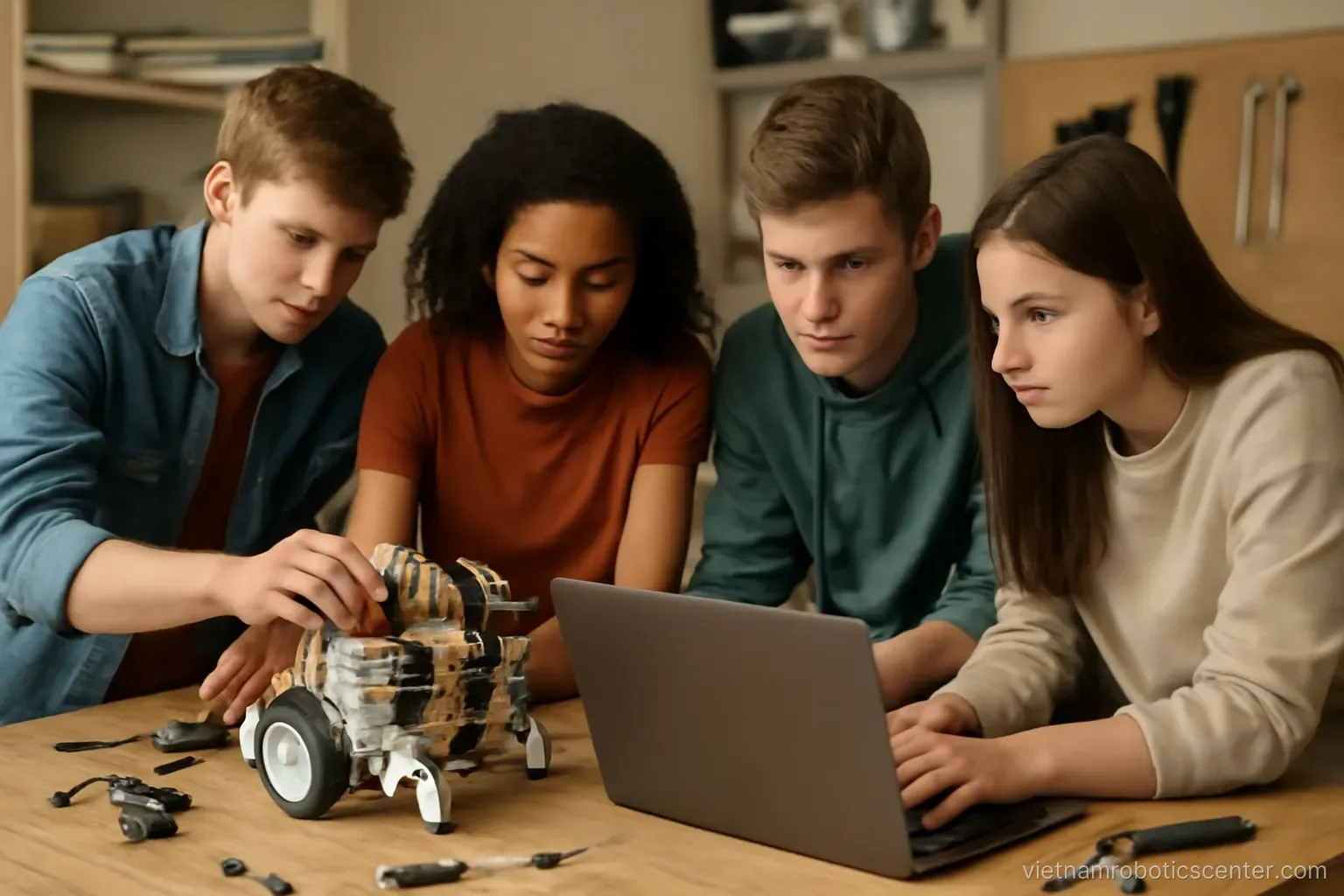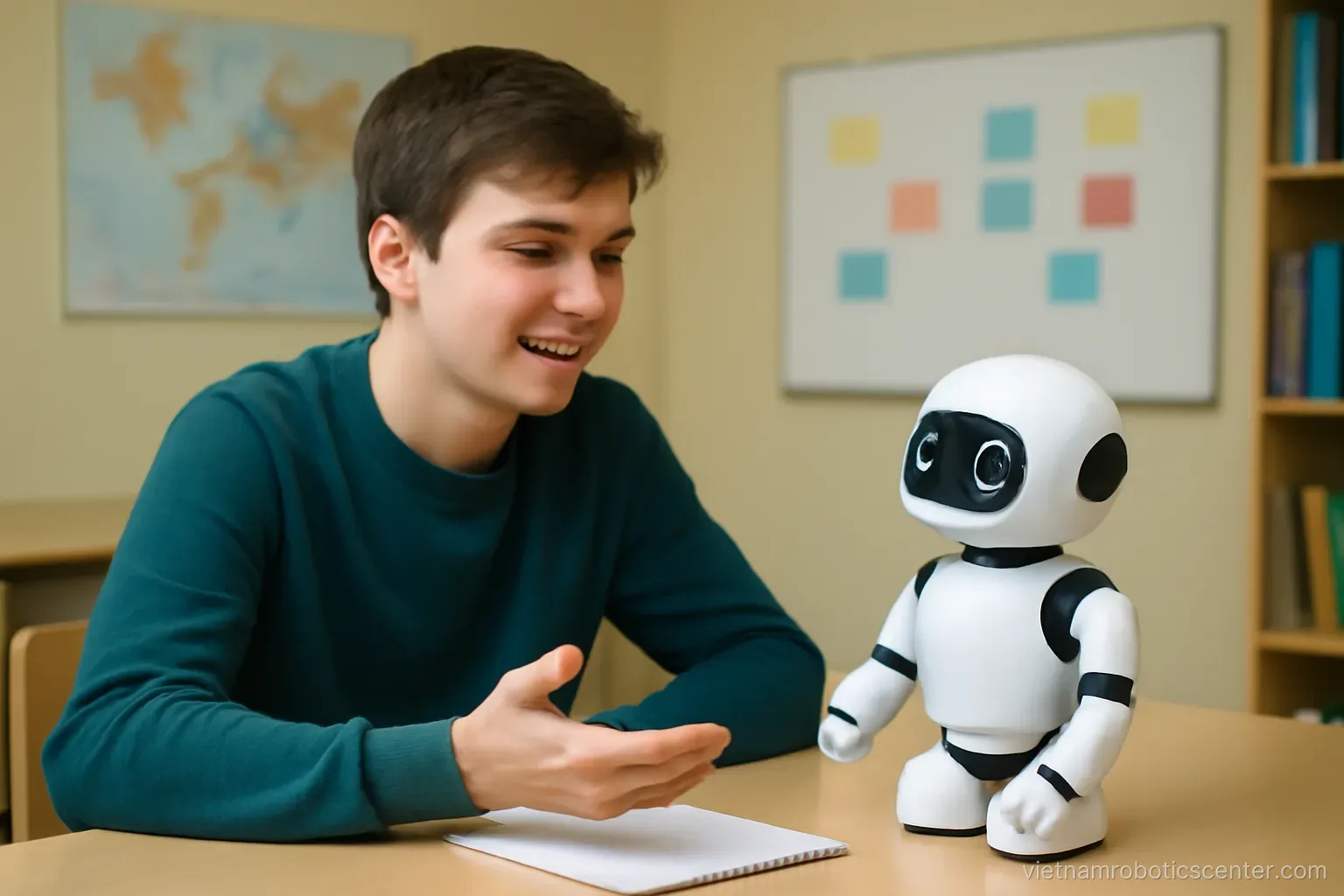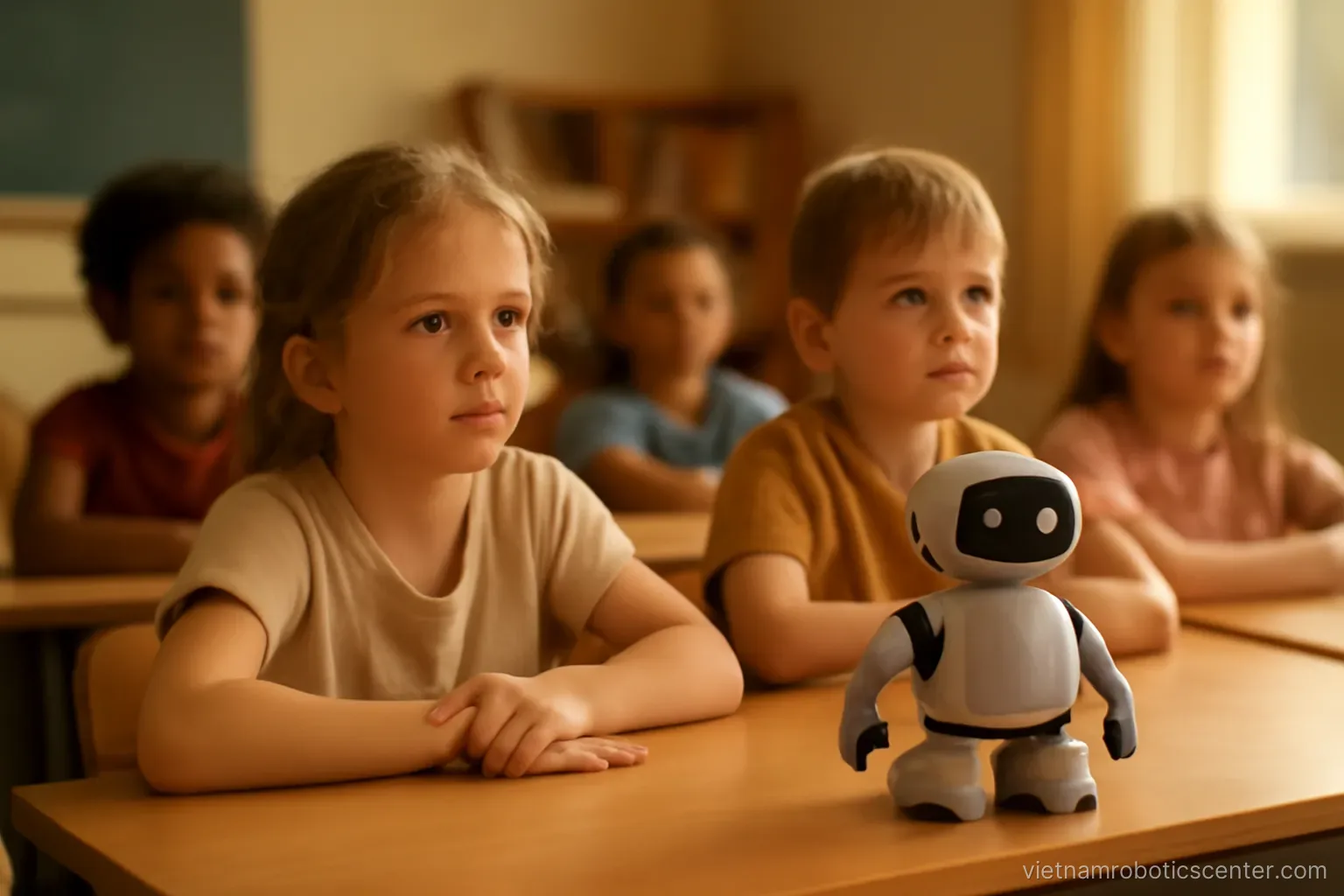
Children today use AI daily through applications and voice assistants, while their mental picture of AI comes mainly from films. The gap between those two produces a set of misconceptions that schools are best placed to correct.
Four common misconceptions
Robots think like people. Films portray robots with emotions, desires, the capacity to betray. Children carry that image into reality and both fear and expect the wrong things.
AI is always right. The opposite belief, and more widespread among older children. The machine said it, so it must be true. This is the more dangerous misconception because it shapes how they learn.
Robots learn everything by themselves. The data, the training and the people behind it are invisible.
Robots will take all the jobs. Absorbed from adults, carried as vague anxiety without any understanding of mechanism.
Worth noting: the first two contradict each other and children commonly hold both at once — fearing overly intelligent robots while trusting an AI assistant's answers absolutely. Teaching should target that contradiction directly.
What to teach at each age
Pre-school and early primary. A robot is a machine people made. It does what it is told. It does not feel pain or sadness. Go no further at this age — the goal is only to remove fear and excessive personification.
Late primary. Machines follow instructions, and people write the instructions. Let children write a simple sequence and watch the machine follow it exactly — including when the instruction is wrong. The core lesson: the machine does what it was told, not what you meant.
Lower secondary. AI learns from examples, and people choose the examples. If the examples are missing or skewed, the results are skewed too. This is the right age to begin discussing how AI can be wrong, and wrong systematically.
Upper secondary. How to verify information an AI produces. Personal data. The questions around using AI in schoolwork honestly. And the roles emerging around the technology.
Teaching without creating fear
Children's fear of technology usually originates in how adults talk about it.
Avoid apocalyptic language. Robots will replace humans is both inaccurate and generates anxiety that leads to no useful action.
Emphasise the people behind it. Every AI system is designed, trained and deployed by people who decided what it is for. This is both true and restores a sense of agency.
Let children control something. Telling a robot to do something and watching it comply is the most effective way to dissolve fear. What you can control is not frightening.
Show concrete limits. Have the robot attempt something it cannot do — grasp an unfamiliar object, understand a convoluted sentence. Seeing a real limit works better than being told about limits.
Answer the real questions. Children ask whether it is alive, whether it hurts, whether it dislikes them. Answer seriously and simply rather than dismissing.
Teaching honest AI use in schoolwork
This is happening in every school and is usually handled by banning.
Outright bans achieve little. Students use it anyway and simply hide it, and they lose the chance to learn how to use it properly.
Separate using it to learn from using it to avoid learning. Asking AI to explain a concept you do not understand is learning. Asking it to do the exercise is avoidance. Students understand this distinction when it is explained clearly.
Teach verification. AI answers fluently regardless of accuracy. Have students find examples of AI being wrong — a highly effective exercise, and they usually find them quickly.
Teach attribution. If AI was used, state which part. This builds an honest habit for later.
Redesign the exercises. A task an AI completes in three seconds needs redesigning rather than protecting by prohibition. Tasks about personal experience, about process, or about defending a position are far harder to substitute.
What is worth leaving them with
If only a few things can be taught, these last the longest.
A machine does what it is told, not what you meant. This applies to programming, to using AI, and to a great deal else in life.
There is always a person behind it. Every system was built by someone for some purpose. Who made this and what for is a durable habit of thought.
Fluency is not accuracy. A well-phrased answer is not necessarily a correct one, whether it comes from a machine or from a person.
Where machines are capable, your value lies elsewhere. Not as competition with machines but as guidance on where to invest effort.
Technology is a choice, not a destiny. Societies decide what technology is used for, and today's children will take part in those decisions.
None of these require equipment or budget, and they outlast any specific tool skill a school could teach.
Frequently asked questions
Which misconception about AI is most dangerous in children?
Believing AI is always right. It is more widespread than fear of intelligent robots and it directly shapes how children learn, because AI answers fluently regardless of whether the content is correct.
What most effectively removes children's fear of robots?
Letting them control one and watch it follow their instructions. What you can control is not frightening, and this experience works better than any explanation.
Should students be banned from using AI?
Outright bans achieve little because students use it anyway and hide it. Better to separate using it to learn from using it to avoid learning, teach verification, and redesign tasks an AI completes in seconds.
What core lesson lasts longest?
That a machine does what it was told rather than what you meant, that there is always a person behind every system, and that fluency is not the same as accuracy — from machines or from people.
More in Deployment and operations and What AI robots are.