Reception robots and delivery robots were on the market long before large language models arrived. Understanding exactly what the new generation adds — and what it does not — is the difference between a purchase that works and one that ends up in a storeroom.
What a scripted robot could already do
The previous generation followed a decision tree. It worked, within limits.
It could navigate. Wheeled robots have been moving reliably through mapped buildings for years. This is mature technology and it did not change much.
It could speak. Pre-recorded or synthesised phrases, triggered by touchscreen selections or by simple keyword matching.
It could answer listed questions. If the visitor's question matched something in the list, the robot found it. If not, it failed.
That last limitation is the whole story. A scripted robot handled the questions someone had thought to write down, phrased approximately the way that person expected. Real visitors ask in ways nobody predicted, and every unpredicted phrasing was a dead end.
This is why earlier reception robots were widely bought and quietly abandoned. They looked capable in a demo where the questions were known, and failed in a lobby where they were not.
The three real additions
Understanding varied phrasing. The same question asked five different ways now reaches the same answer. This sounds small and it is the single largest practical improvement.
Generating answers rather than retrieving them. The robot reads your documents and composes a reply, instead of matching to a pre-written script. It can combine information from two places, summarise, and adjust length.
Being taught by documents rather than by code. Adding new knowledge means uploading a file, not hiring a developer. This changes the economics of keeping a robot current, which is where most earlier deployments died.
Together these move a robot from handles the questions we anticipated to handles most questions about topics we've documented. That is a meaningful widening, and it is also a bounded one — the robot still knows only what it has been given.
What did not change
The part sales presentations move past quickly.
Physics. Batteries still last a few hours. Robots are still heavy, still expensive, still break. Better software does not make motors stronger.
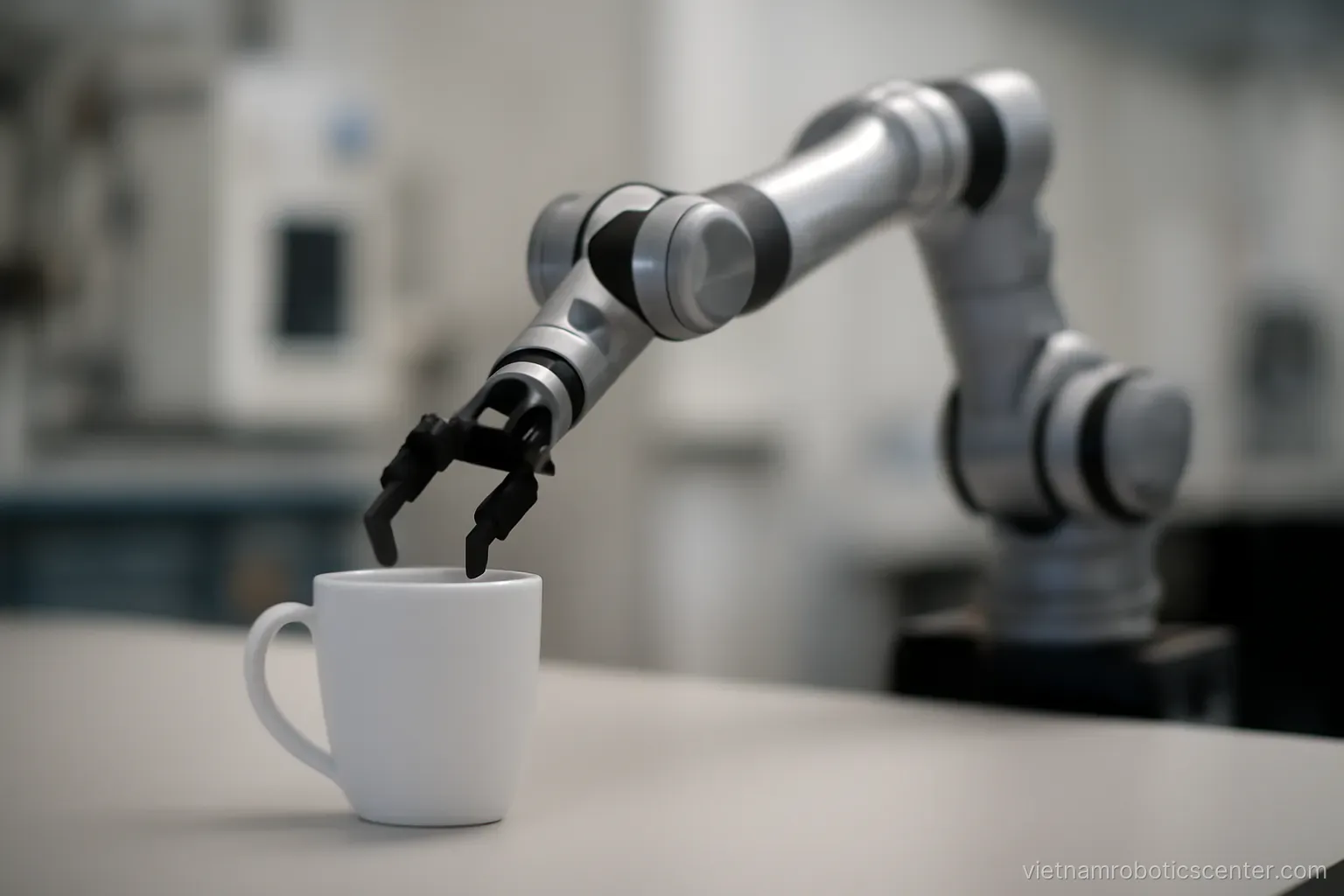
Hands are still clumsy. Picking up unfamiliar, soft or slippery objects remains far behind human capability, and this is mechanical, not a software limit.
Crowds are still hard. Navigating an empty corridor is a solved problem. Navigating a busy event floor is not.
It still needs a human. Charging, cleaning, content updates, unjamming. A robot does not look after itself, and the organisation that assumes otherwise ends up with an unused machine.
It can still be confidently wrong. Language models produce fluent text regardless of accuracy. In a customer-facing role, a wrong answer delivered smoothly is more dangerous than no answer at all.
Three tiers worth separating
When evaluating any robot, establish which tier the claimed capability sits in.
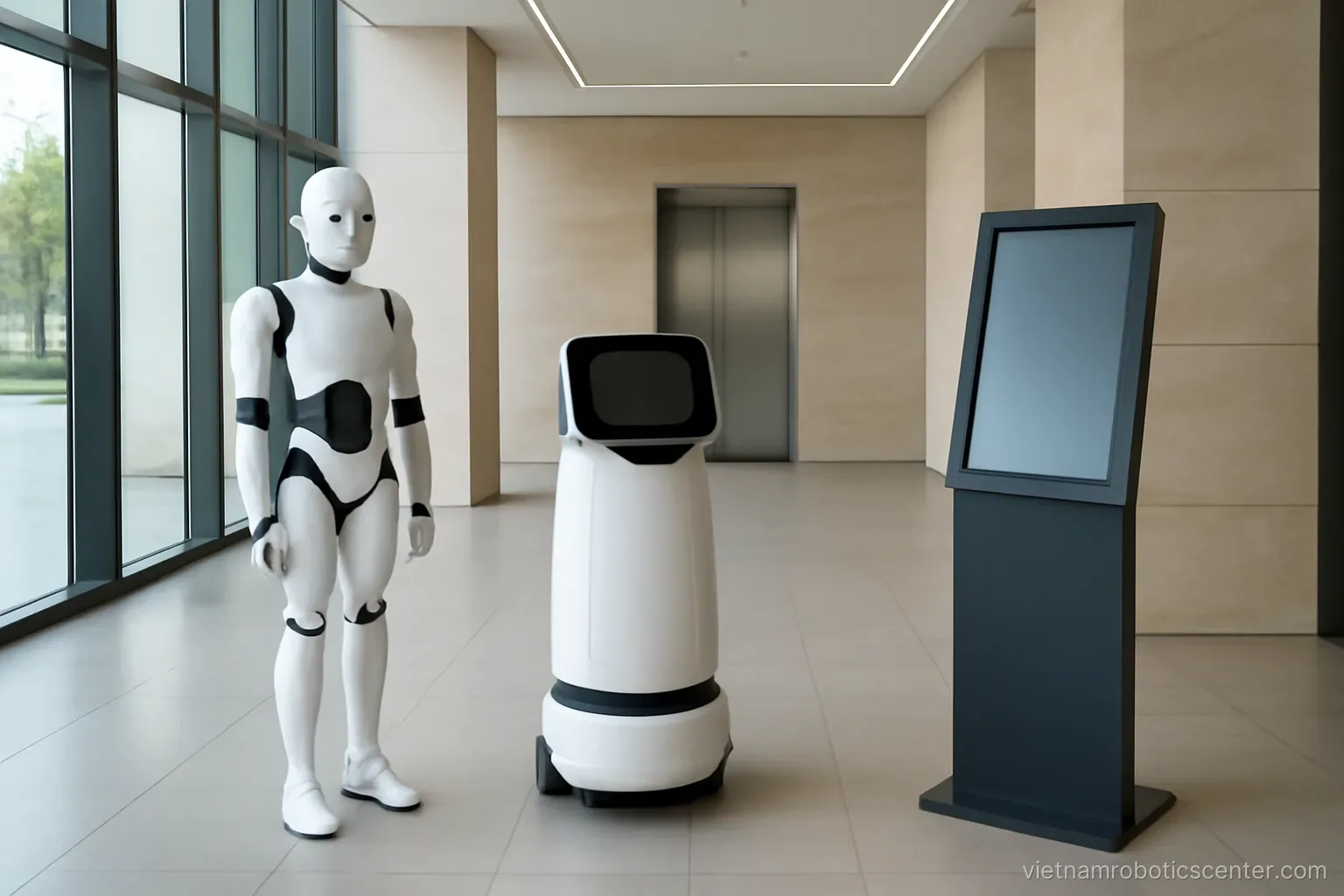
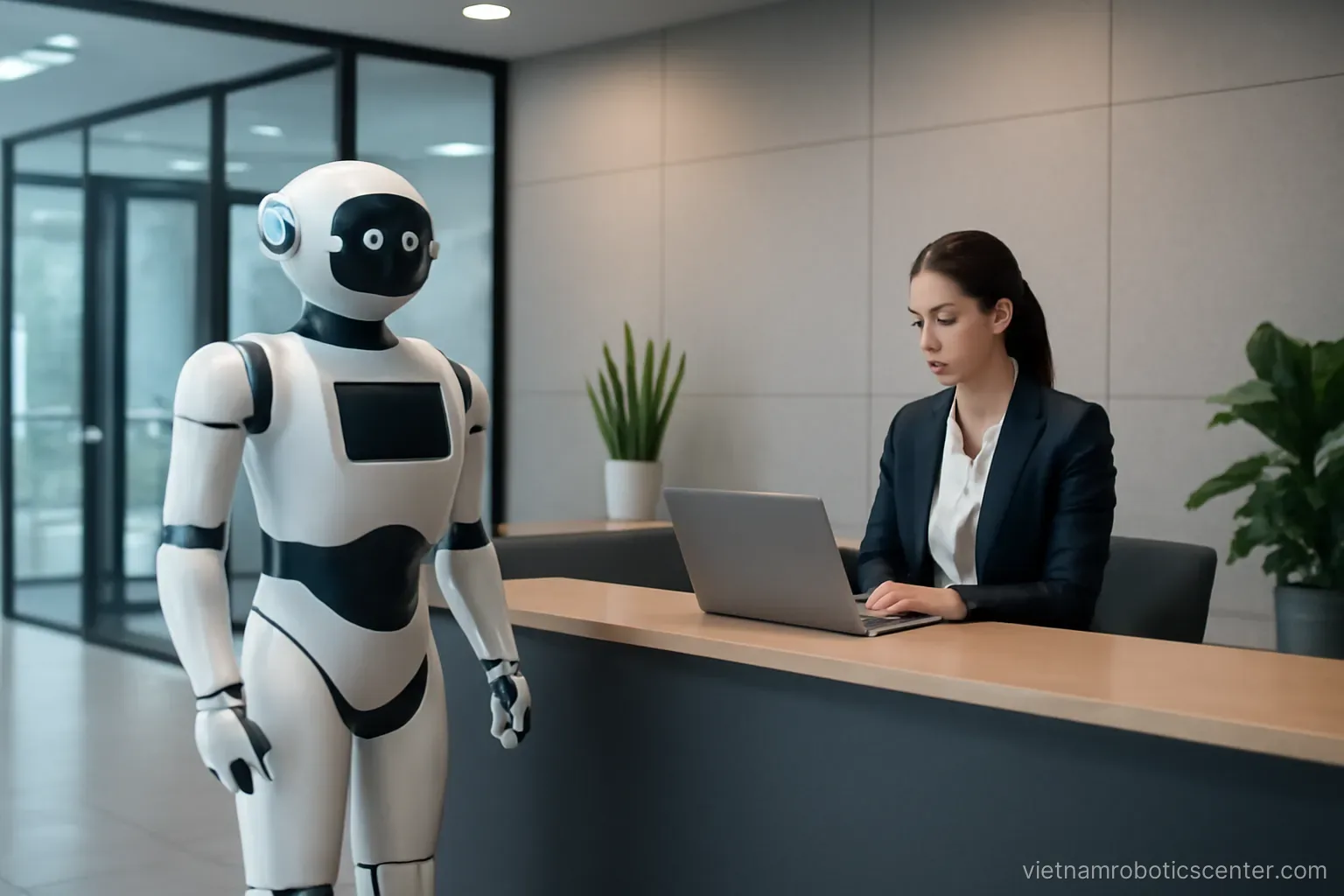
Tier one: speak and understand. Hear a question, understand it, answer. This tier works well today and underpins most reception and information robots. Functionally it is an AI assistant inside a physical body.
Tier two: move purposefully. Navigate to a point, avoid people, guide a visitor, carry an item. Works in prepared environments — wide corridors, flat floors, a built map.
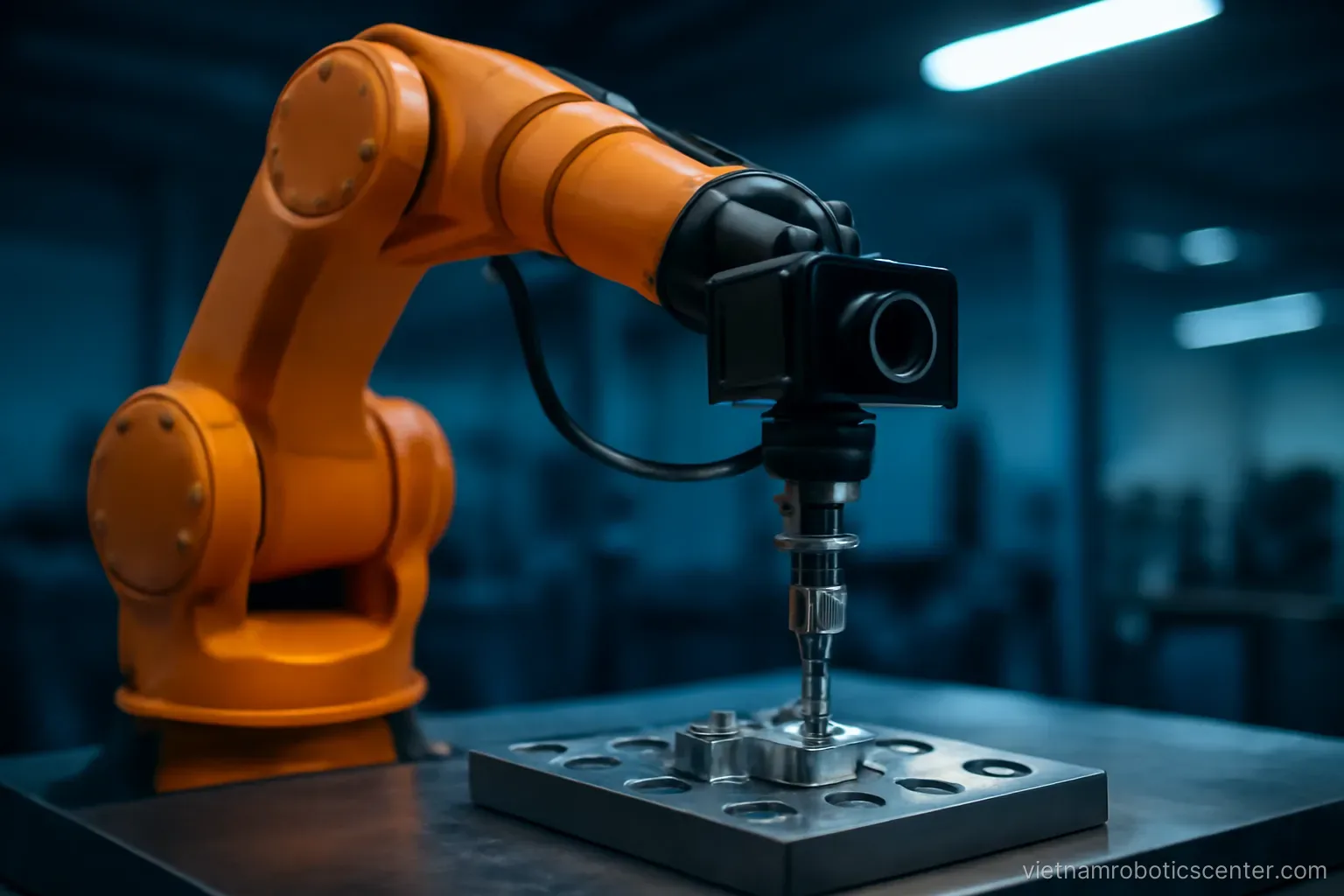
Tier three: manipulate objects. Pick up, place, open, pour, assemble. This is the furthest away, and it is the tier that demonstration videos make look closest.
Almost all deployable value today sits in tiers one and two. A supplier selling tier three capability at tier one prices is worth questioning carefully.
Questions that separate product from prototype
Five questions that reliably distinguish a working product from a good demo.
Where has it run, and for how long continuously? One week at a trade fair is not six months in a hotel lobby.
Who loads the content, and how long does it take? If every information change requires calling the vendor, the true cost is far above the purchase price.
What happens when it is wrong? Is there a mechanism to say it does not know, to hand over to a person, to log the failure for correction?
How many hours does it run, and how long to charge? Real figures with audio on, screen bright and movement happening — not standby numbers.
Who repairs it and how fast? The most important question and the one asked last most often.
AI robots are real technology and they are genuinely deployable today. They are simply not what a thirty-second video implies, and the gap between those two things is where budgets are lost.
Frequently asked questions
What is the core difference between scripted and AI robots?
A scripted robot handles only the questions someone thought to write down, phrased as expected. An AI robot understands varied phrasing, composes answers from your documents, and is taught by uploading files rather than by writing code.
Does AI make robots physically more capable?
No. Battery life, weight, motor strength and hand dexterity are mechanical limits. AI improves perception and conversation; it does nothing for the physical side of the machine.
Which capability tier is deployable today?
Speaking and understanding, plus purposeful movement in a prepared environment. Object manipulation with unfamiliar items remains far off and is the tier that demonstration videos make look closest.
What is the biggest risk in a customer-facing role?
A wrong answer delivered fluently and confidently. That makes a mechanism to say it does not know, a handover path to a person, and logging for correction mandatory rather than optional features.
More in Training and customising a robot and Robots in education.