Across many robot deployments one factor predicts outcomes better than equipment type or budget: whether one specific person is responsible for the robot. Machines without an owner degrade; machines with one get looked after.
What this person actually does
A concrete list, grouped by frequency.
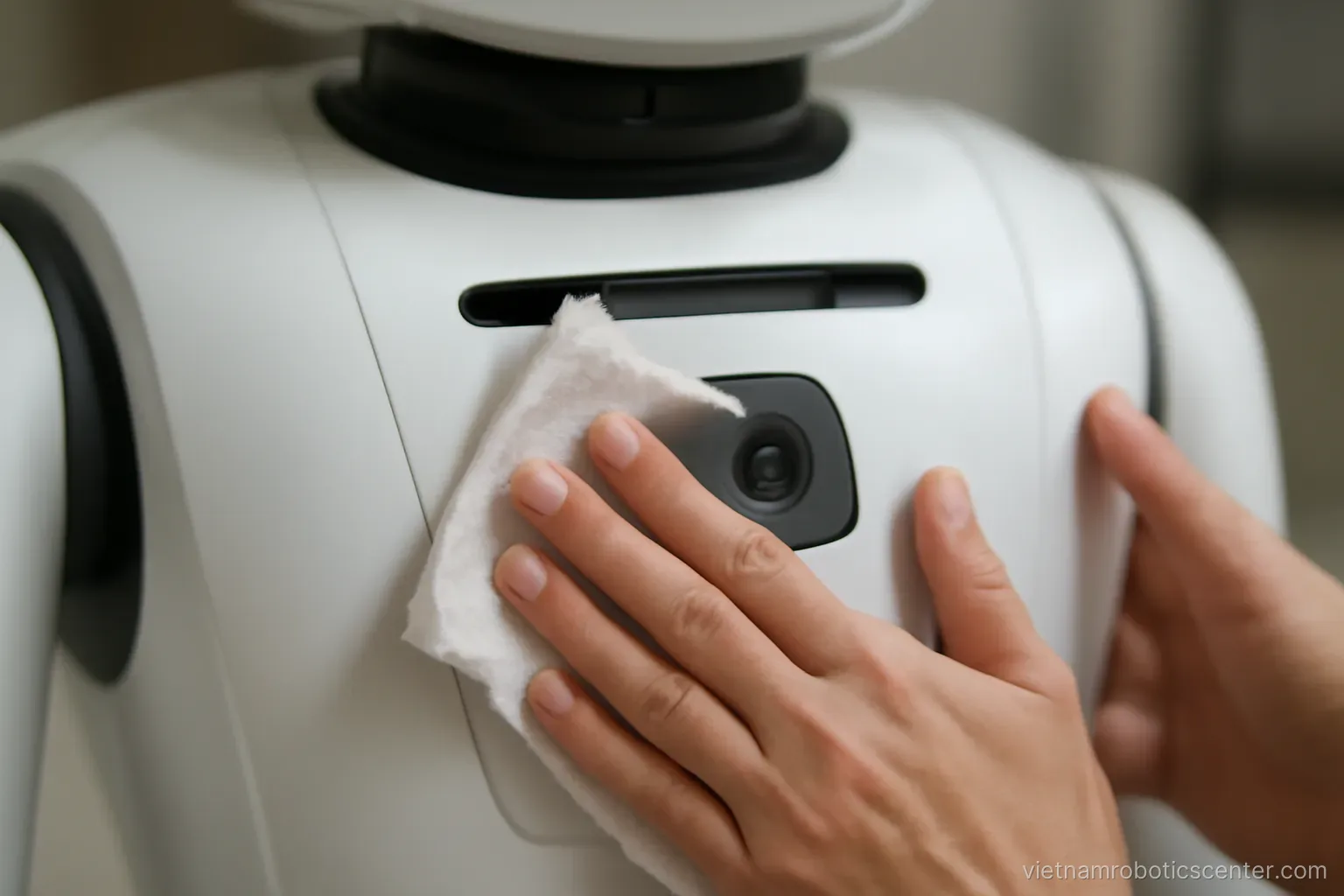
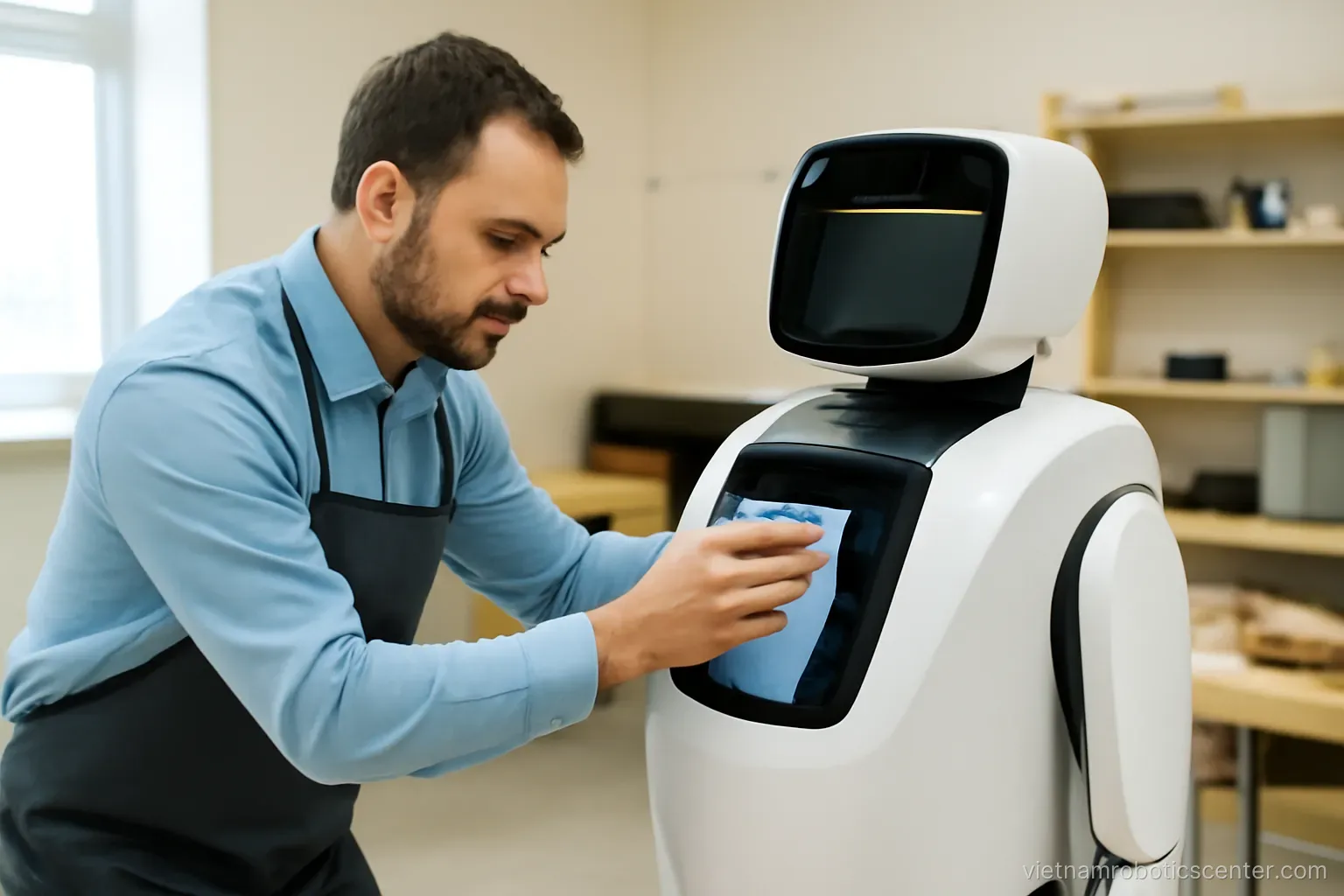
Daily. Check the robot is running, charged and clean. A few minutes.
Weekly. Ask ten common questions to verify content. Read a conversation sample. Record numbers. Ask staff whether anything needs attention. About an hour.
Monthly. Add content from the unanswered-question list. Review everything for anything out of date. Report the numbers. About half a day.
As needed. Handle jams and faults. Update when information changes. Contact the supplier when required.
Quarterly. Reassess: is it still in the right place, doing the right job, and should it be expanded or scaled back.
In total roughly two to four hours a week for one robot running steadily. More in the first month, less once it settles into routine.
What skills are needed
Far fewer than people assume.
No programming required. Most service robot products have a configuration interface built for ordinary users.
Clear writing is required. Because most of the work is drafting and revising content. This is the most important skill and the one least considered when choosing a person.
Understanding the work and the customers. Knowing what customers ask, what the correct answer is, and where the sensitive areas lie.
Willingness to observe. Most improvements come from standing and watching customers interact with the robot.
A little technical patience. Enough to restart it, check a connection and follow a troubleshooting guide.
Who suits. Customer service leads, shift managers or internal marketing staff usually suit better than purely technical staff — because the work is mostly content and observation rather than engineering.
How to structure the role
Put it in the job description. Not an unnamed extra. Unrecognised work is the first thing dropped when things get busy.
Allocate specific time. For example one hour on Monday morning. With a fixed slot the work happens; without one it is perpetually deferred.
Give decision authority. The owner must be able to edit content, change configuration and propose a move without seeking approval each time.
Have a second person. When the owner takes leave or resigns, the robot should not stop with them. At least one other person able to do the basics.
Report to someone. Monthly numbers to the decision maker. Having to report keeps the work valued and keeps the robot within leadership's attention.
Recognise the contribution. If the robot reduces work for the whole team, the person keeping it running deserves acknowledgement.
Handing over when the owner changes
The riskiest moment in a robot's life.
Documentation must exist. Daily routine, how to edit content, fault handling, supplier contacts, login credentials. If these live only in one person's head, the handover loses them.
Overlap the handover. The new person works alongside the old for at least two weeks.
Hand over the context too. Why the robot is positioned here, why it is configured this way, what was tried and did not work. This matters more than the procedures and is the part most easily lost.
Update access. Administrative accounts, content editing rights.
Notify the supplier. So they know whom to contact.
Do not leave a gap. If the old owner leaves before a replacement is named, assign the minimum to someone temporarily — daily checks and fault handling. A few weeks unattended is enough for a robot to start being abandoned.
When more than one person is needed
Multiple robots. From three units the workload exceeds what one person can do part-time.
Multiple locations. Robots at different branches need someone local for daily work, plus one coordinator for content.
Rapidly changing content. Sectors where prices and offers change weekly need more time on the content side.
System integration. When the robot connects to internal systems, technical involvement is also required.
The usual model when scaling. One person responsible for content and configuration across all robots, plus one person at each site handling daily operation. This maintains content consistency without needing an expert everywhere.
A signal that more people are needed: weekly tasks beginning to be skipped. That indicator appears considerably earlier than waiting for quality to visibly decline.
Frequently asked questions
How much time does the robot owner need?
Roughly two to four hours a week for one robot running steadily — a few minutes daily, about an hour weekly and half a day monthly. More during the first month.
What is the most important skill for this role?
Clear writing, because most of the work is drafting and revising content. Programming ability is largely unnecessary and is the skill people wrongly look for first.
Why must the role be in the job description?
Because unrecognised work is the first thing dropped when things get busy. A fixed weekly time slot is also needed, otherwise the work is perpetually deferred.
What is most easily lost during a handover?
Context — why the robot sits here, why it is configured this way, what was tried and abandoned. It matters more than the procedures and usually exists only in the departing person's head.
More in Robots in education and Training and customising a robot.