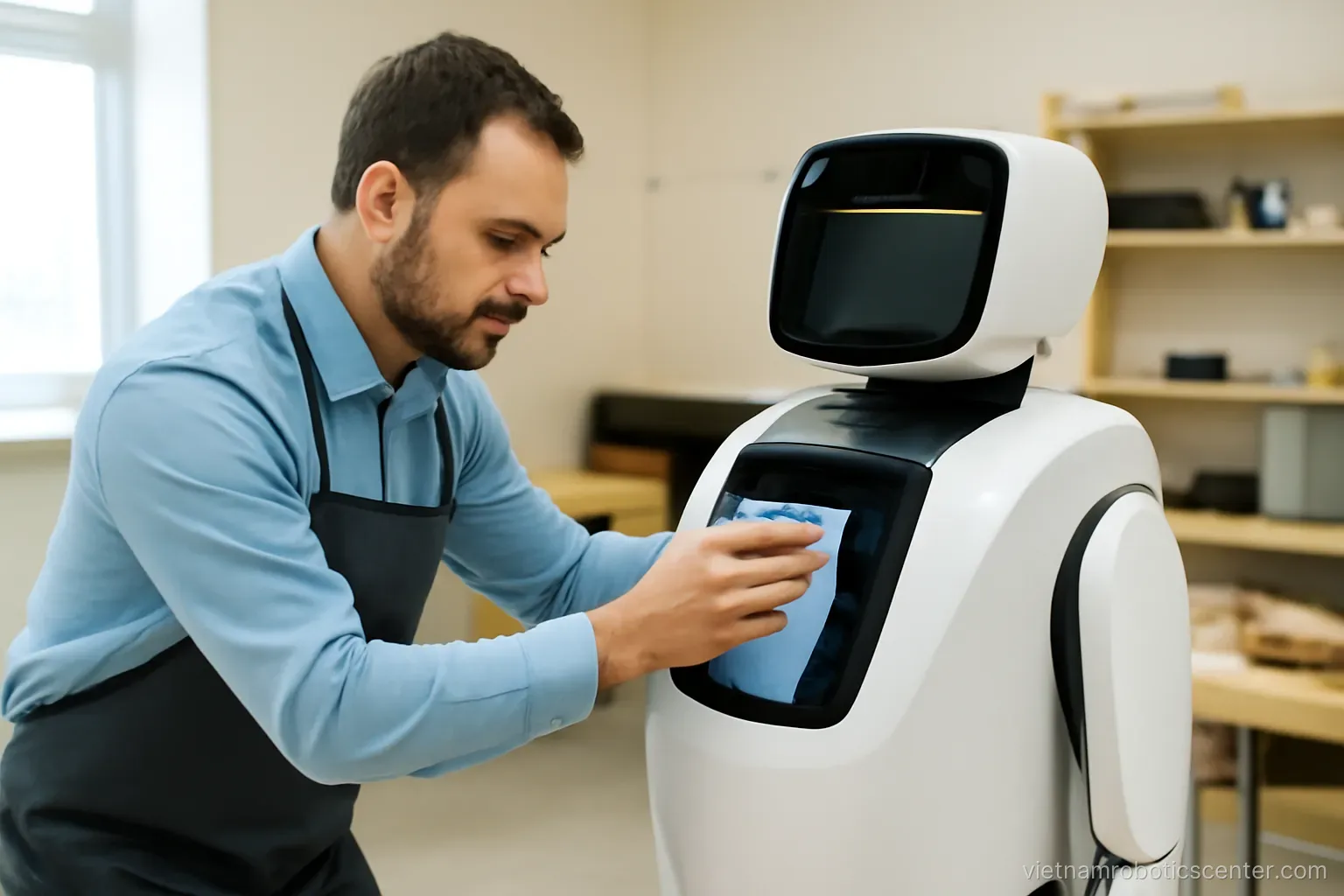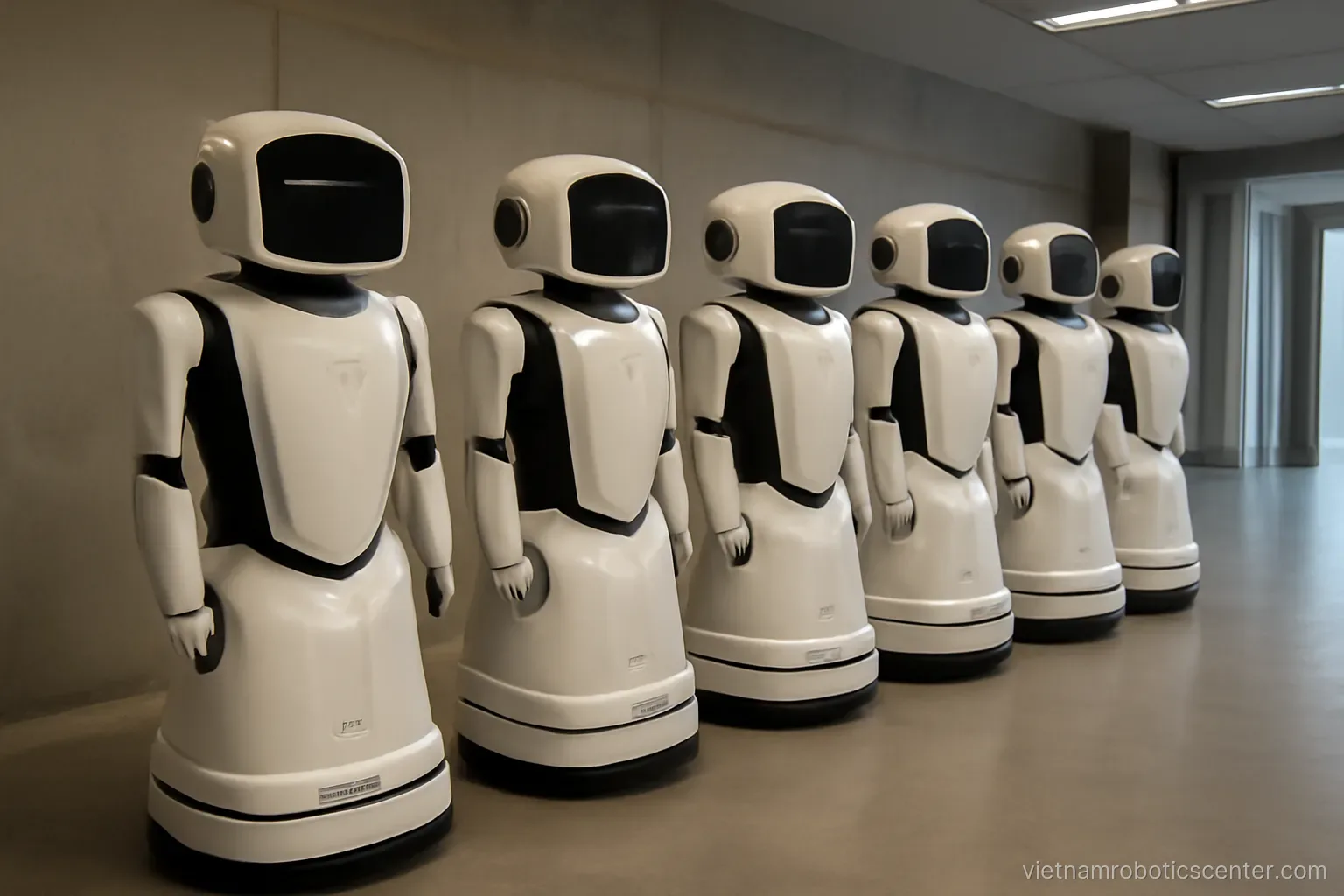
Once the first robot works well, the natural question is whether to buy more. But several robots are not one robot multiplied — a set of issues appears only from the second unit onward.
Managing content across several robots
The first and largest issue.
Content must stay consistent. Two robots at two branches giving different answers on the same policy is a real problem, and it appears quickly if each site updates independently.
Separate shared from local content. Company information, products and policies are shared. Opening hours, address and local staff are local. This structure must be established before the second robot arrives rather than after.
One person owns the shared content. Updated once, applied everywhere.
Local editing rights delegated. With clear limits on what may be changed.
Cross-check periodically. Ask the same question at different robots and compare answers. Simple, and it catches divergence early.
Ask suppliers about central management. Before buying more. If each robot must be configured individually, operating cost scales with unit count, which changes the expansion case entirely.
Standardise before scaling
Work worth doing while there is still only one robot, to make expansion easier later.
Standardise the configuration. Record the first robot's full configuration as a template to apply to subsequent units.
Standardise the operating procedure. Written up so a new site does not have to work it out again.
Standardise measurement. Same metrics, same collection method, so sites can be compared.
Standardise equipment. Buy the same model where possible. Two different robot types means two sets of procedures, two spares inventories and two training programmes.
Record the lessons. What was tried on the first robot and did not work. This is the most valuable asset from a first project and it usually goes unrecorded.
Organisations doing these four things while they still have one robot expand considerably faster than those who buy more and think about standardisation afterwards.
Several robots in one place
A case with its own issues.
Movement coordination. Two robots meeting in a narrow corridor. Either a coordination system or separate routes are required. Ask the supplier about this before buying the second unit.
Dividing the work. Which does what, and what happens when both are free or both are busy.
Charging. A dock each, or shared on a schedule.
Distinguishing them for customers. If they do different jobs, customers must know which to ask. Give them different names and state their functions.
Do not place them close together. Two robots side by side confuse customers and both end up underused.
Consider the alternative. Often one robot plus several lookup screens beats two robots and costs considerably less. Compare the two options before deciding.
Multiple sites
The more common pattern and the easier one to manage.
One operator per site. Handling daily work: switching on and off, charging, cleaning, unjamming.
One coordinator overall. Handling content, configuration, the supplier relationship and consolidated reporting.
Train from a shared document set. The same guide everywhere.
Compare across sites. Interactions, accuracy, interventions. Where one site performs noticeably better, find out why and apply it elsewhere. This is a major advantage of having several robots that few organisations exploit.
Share lessons. A short monthly meeting between site operators. They solve each other's problems far faster than each working it out alone.
Allow for local difference. Customers at different sites ask different things, so shared content needs room for local additions.
When to scale and when to stop
Signs to scale. The first robot meets its criteria. There is a stable operator. Content updating has become routine. Another location has a similar problem. And most tellingly: staff at other sites are asking when they get one.
Signs to stop. The first robot has not met its criteria. The owner is overloaded. Content is frequently out of date. Or the reason for expanding is that money has already been spent so it must be used.
Expand in steps. A second unit at a site similar to the first. Three months running well before a third. Jumping from one to five multiplies every unresolved problem by five.
Reconsider the option. After the first robot you know precisely where the value sits. The right expansion may not be more robots but investment in content, in integration, or in a different type of equipment.
That last point deserves serious consideration: money for a second robot sometimes produces more value spent making the first one better.
Frequently asked questions
What is the biggest issue with multiple robots?
Keeping content consistent. Two robots giving different answers about the same policy is a real problem, and it appears quickly unless shared content is managed centrally from the start.
What should be prepared while there is still one robot?
Standardising configuration, operating procedures and measurement, and recording what was tried and did not work. These four make later expansion considerably faster.
What should two robots in one location avoid?
Being placed close together, which confuses customers and leaves both underused. And it is worth comparing against one robot plus several lookup screens, which is often better and cheaper.
When should you not expand?
When the first robot has not met its criteria, when the owner is overloaded, when content is frequently stale, or when the reason is simply that money has been spent and must be justified.
More in Robots for real estate and showrooms and Reception and event robots.