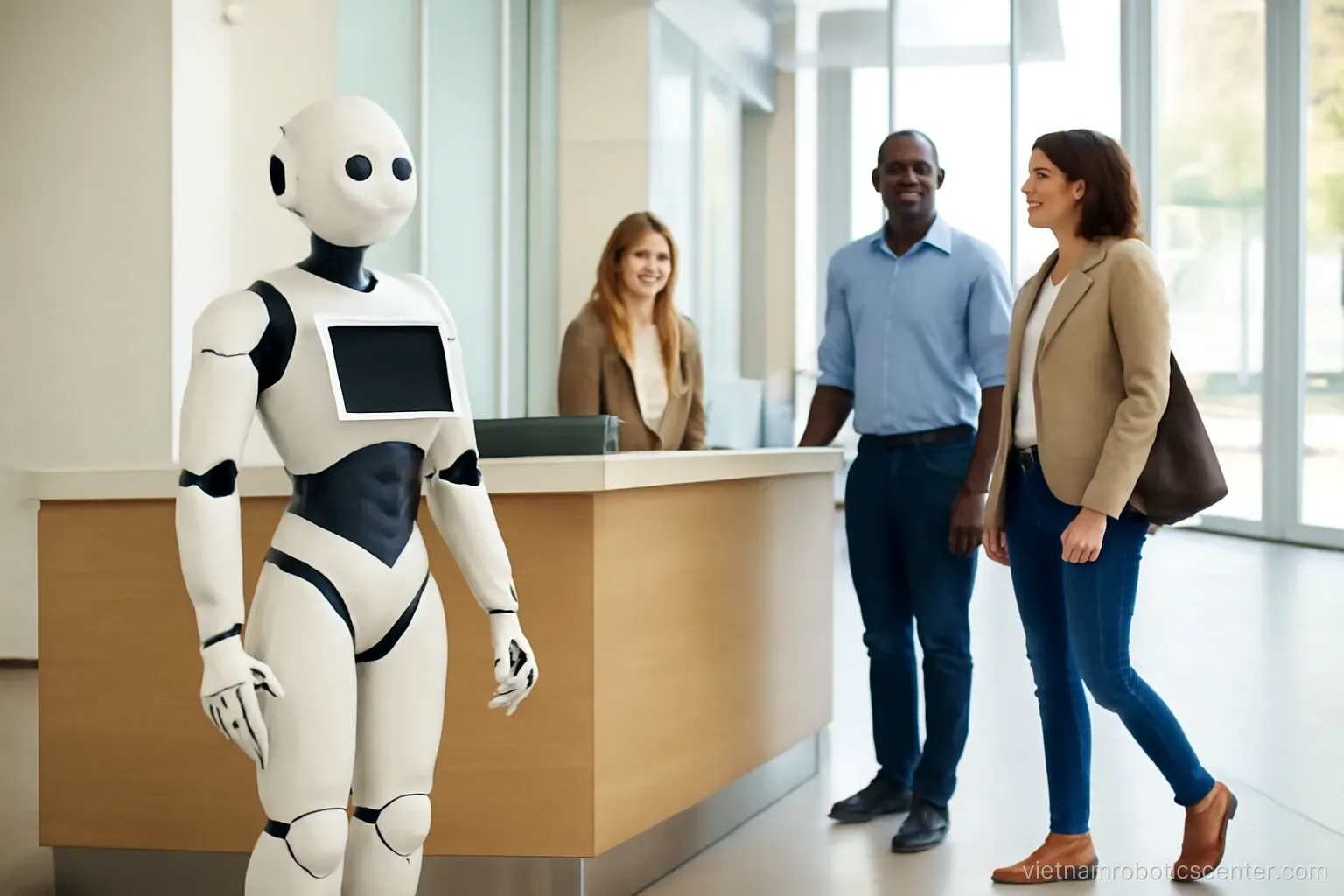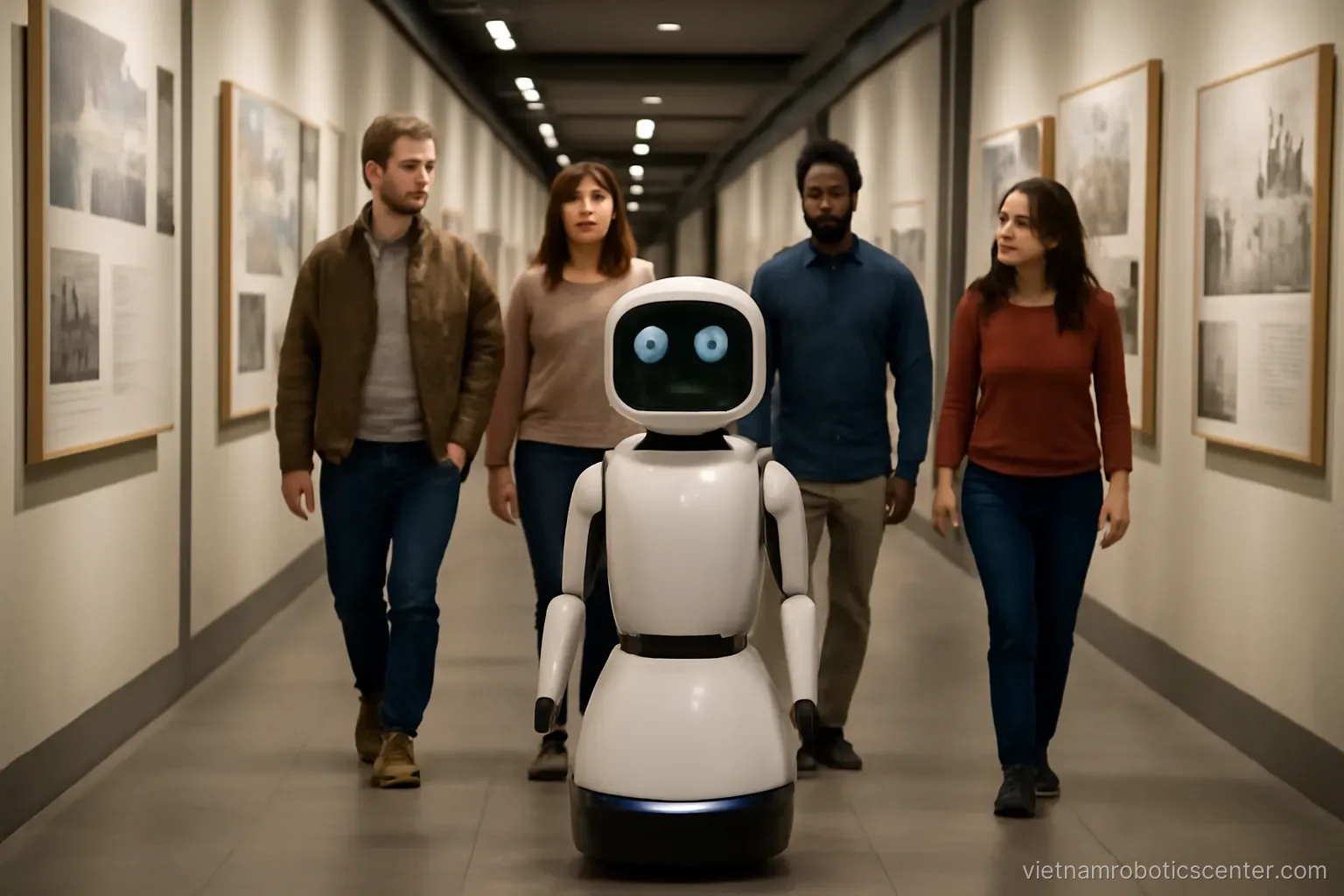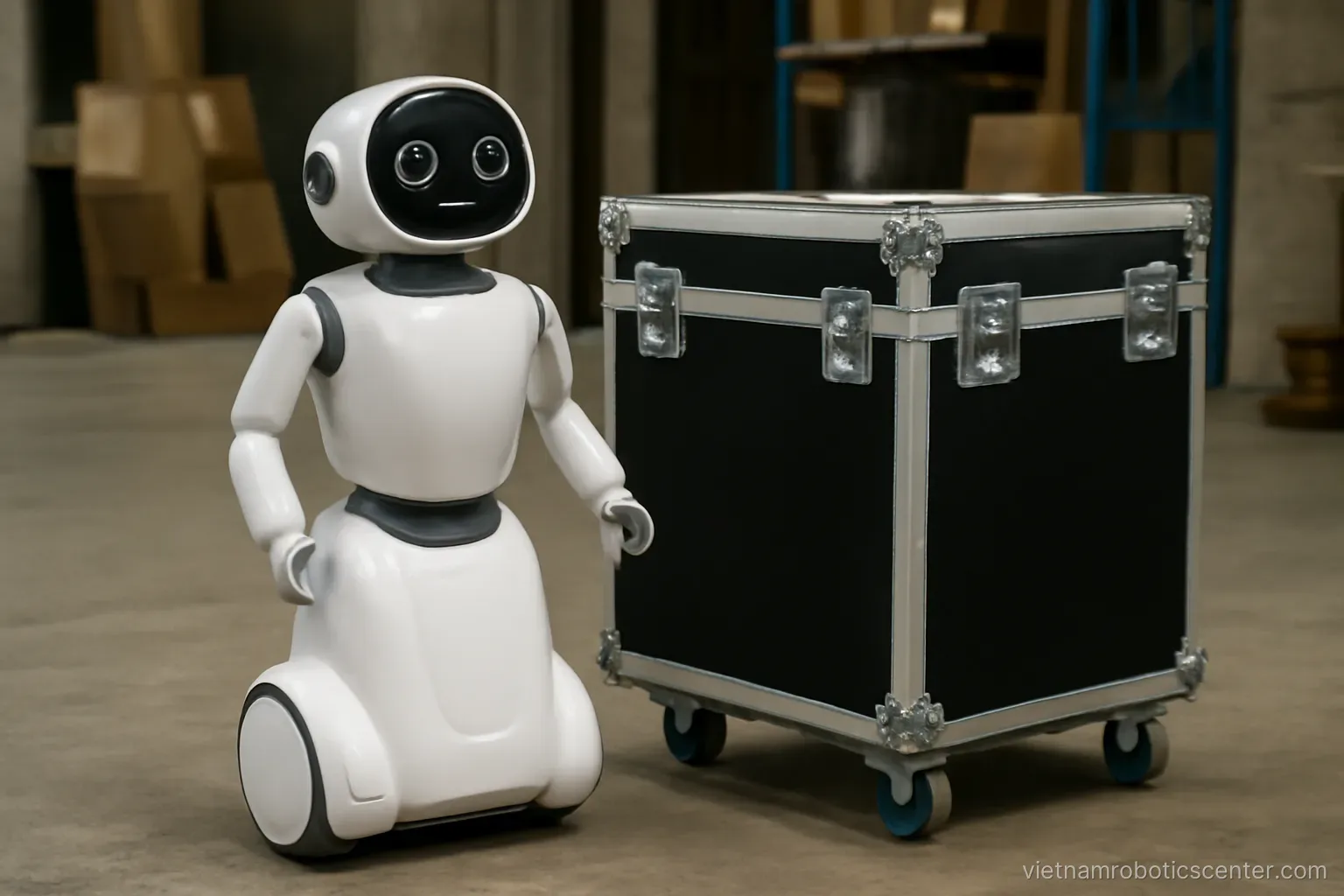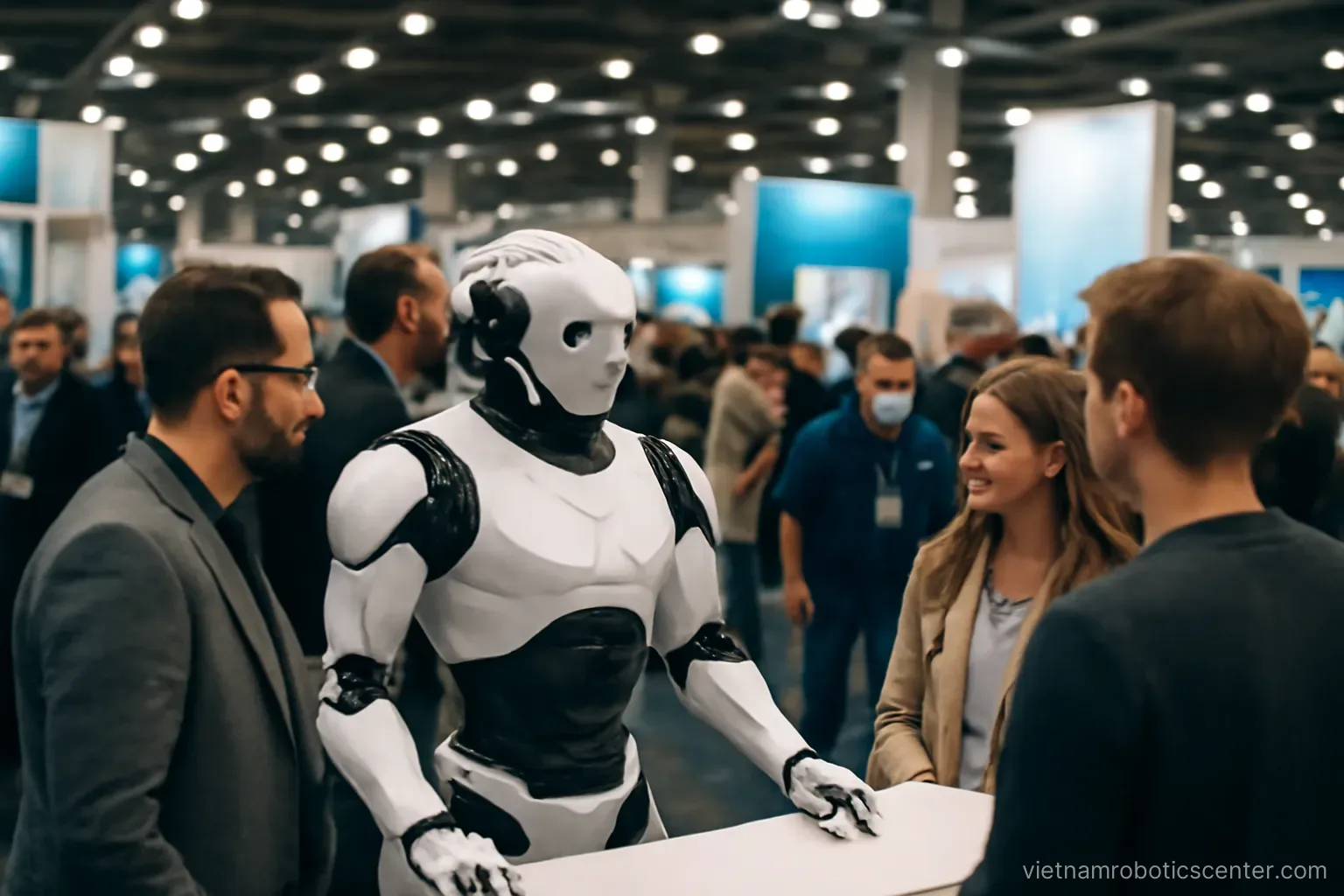
A robot at an event works under the worst possible conditions: crowds, high noise, unreliable networks, an unfamiliar space, and one chance only. In exchange, this is also where a robot produces the clearest effect if the preparation is right.
Survey the venue first
Mandatory, and routinely skipped for lack of time.
Measure noise at peak. A hall empty and a hall full are very different. If it is too loud, plan for a directional microphone, greater reliance on the screen, or a different position.
Check the network. Event wifi is usually saturated. If the robot needs connectivity to answer, arrange a separate connection or an offline mode.
Check power. Where the sockets are, whether supply is stable, whether you can stay plugged in all day.
Check the floor. Thick carpet, cables running across, steps — all matter if the robot moves.
Check lighting. Strong stage lights aimed directly cause camera glare.
Photograph and measure the stand. So the layout is decided before arrival rather than improvised during a rushed install.
Event scripting differs from daily scripting
Event visitors behave very differently from office visitors.
They pass quickly. The script must catch attention in seconds. A long greeting loses them.
They stand in groups. The robot should address a group rather than one person, at a volume several people can hear.
They ask off-topic questions. Does the robot have feelings, how much did it cost, could it beat another robot. Prepare short, good-humoured answers rather than letting the robot flounder — these make up a larger share of questions than expected.
They want photographs. This is an objective, not a nuisance. Have a pose or gesture for photographs and get the brand into the frame.
The goal is attraction and capture, not deep consultation. The robot draws visitors to the stand and collects contact details; staff handle the advisory part.
Handling crowds
The largest difference from everyday environments.
Do not let the robot navigate a crowd autonomously. Moving well in an empty corridor does not mean coping at a trade fair. If movement is needed, provide a dedicated area and a person leading.
Create a physical boundary. A platform, rope or floor marking defining the robot's area. Safer, and it tells visitors where to stand.
Always have an attendant. Not to operate it but to manage crowding, children playing with it, and people touching what they should not.
Prepare for children. They will come, they will touch, they will pull. The robot must tolerate it and the attendant must be ready.
Manage the queue. A popular robot creates one. A simple mechanism to keep each turn short keeps the flow moving.
Contingency planning
At an event there is no second attempt, so contingency is mandatory rather than optional.
Spare power or continuous mains. A robot running flat at peak hour loses the day.
Content that works offline. At minimum the basic questions must still be answerable when the network fails.
A script for when the robot is down. Staff know what to tell visitors and how the stand continues. A board and a person still functions.
Technical support reachable. The supplier's number and an agreement covering the event day.
A full rehearsal before opening. At least an hour, with audio on, in the actual position. Most problems appear during this rehearsal rather than during preparation at home.
Bring basic tools. Spare charging cable, cloth, tape and a small toolkit.
Measuring event value
A robot at an event is marketing spend and should be measured as such.
Visitors stopping at the stand. Compared with a previous event without a robot, where data exists.
Contact details captured. The most concrete measure, and the robot should be configured to collect rather than merely converse.
Photographs and videos visitors share. Hard to measure precisely, estimable by monitoring social platforms for a few days afterwards.
Average dwell time at the stand. A robot holding visitors longer gives staff more chances to talk.
Sales team feedback. Whether the robot made conversations easier or distracted visitors from the core message. Their answer decides whether it returns at the next event.
One caveat: the effect declines with each exposure. Being the first stand in a sector with a robot produces a strong effect; once every stand has one, something else is needed to stand out.
Frequently asked questions
What preparation matters most for an event?
Surveying the venue in advance — noise at peak, network, power, floor surface and lighting. Most event failures originate in these factors rather than in the robot itself.
Should a robot navigate autonomously at a trade fair?
No. Moving well in an empty corridor does not mean coping in a crowd. If movement is required, provide a dedicated area and a person leading the way.
What is the robot's objective at a stand?
Drawing visitors to stop and capturing contact details, not delivering detailed consultation. The advisory part belongs to staff while the robot handles attraction and retention.
What is the minimum contingency required?
Continuous mains power or a spare battery, content that answers basic questions offline, a script for staff when the robot is down, and a full rehearsal of at least an hour before opening.
More in Robots for business and Service robots in hospitality and retail.