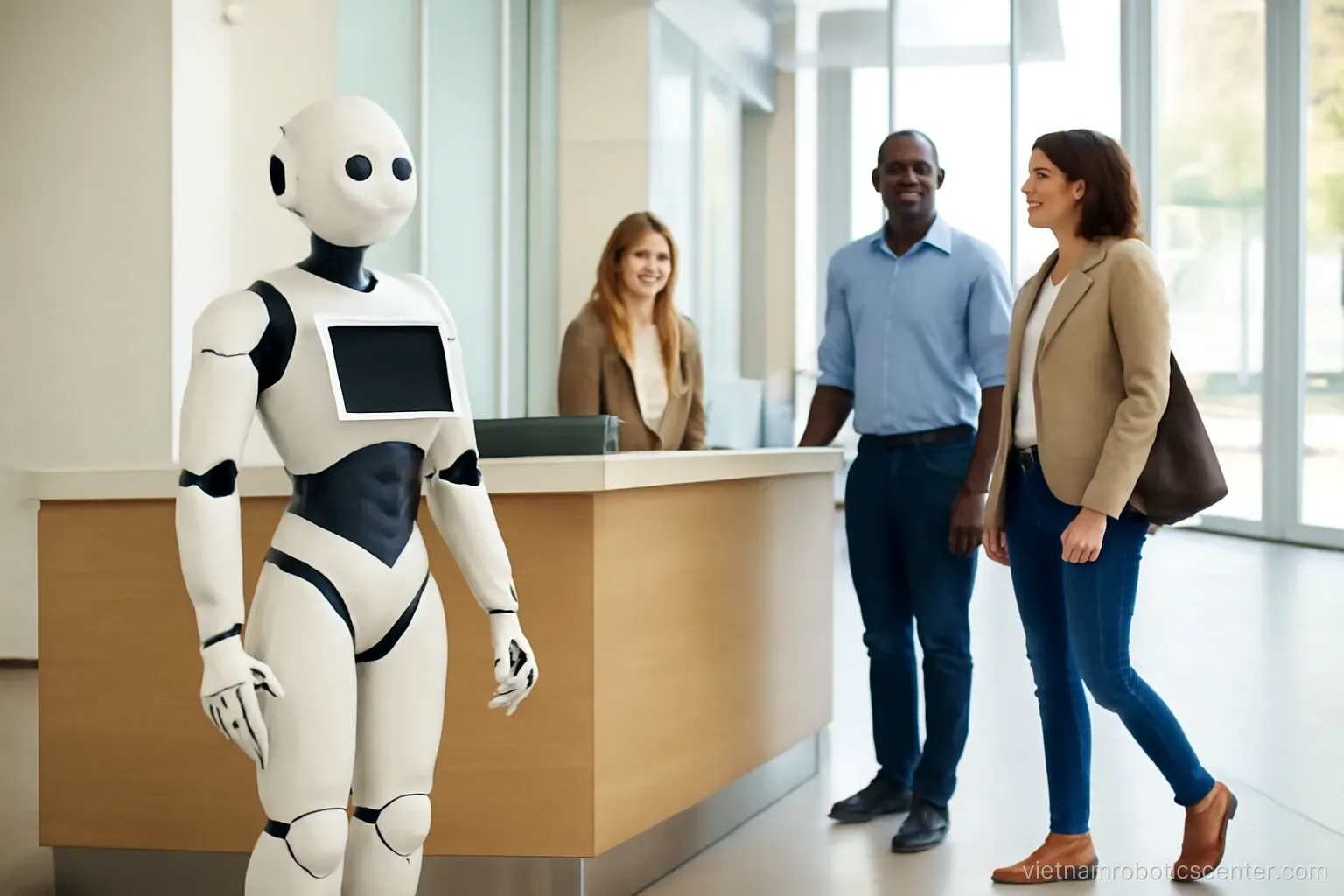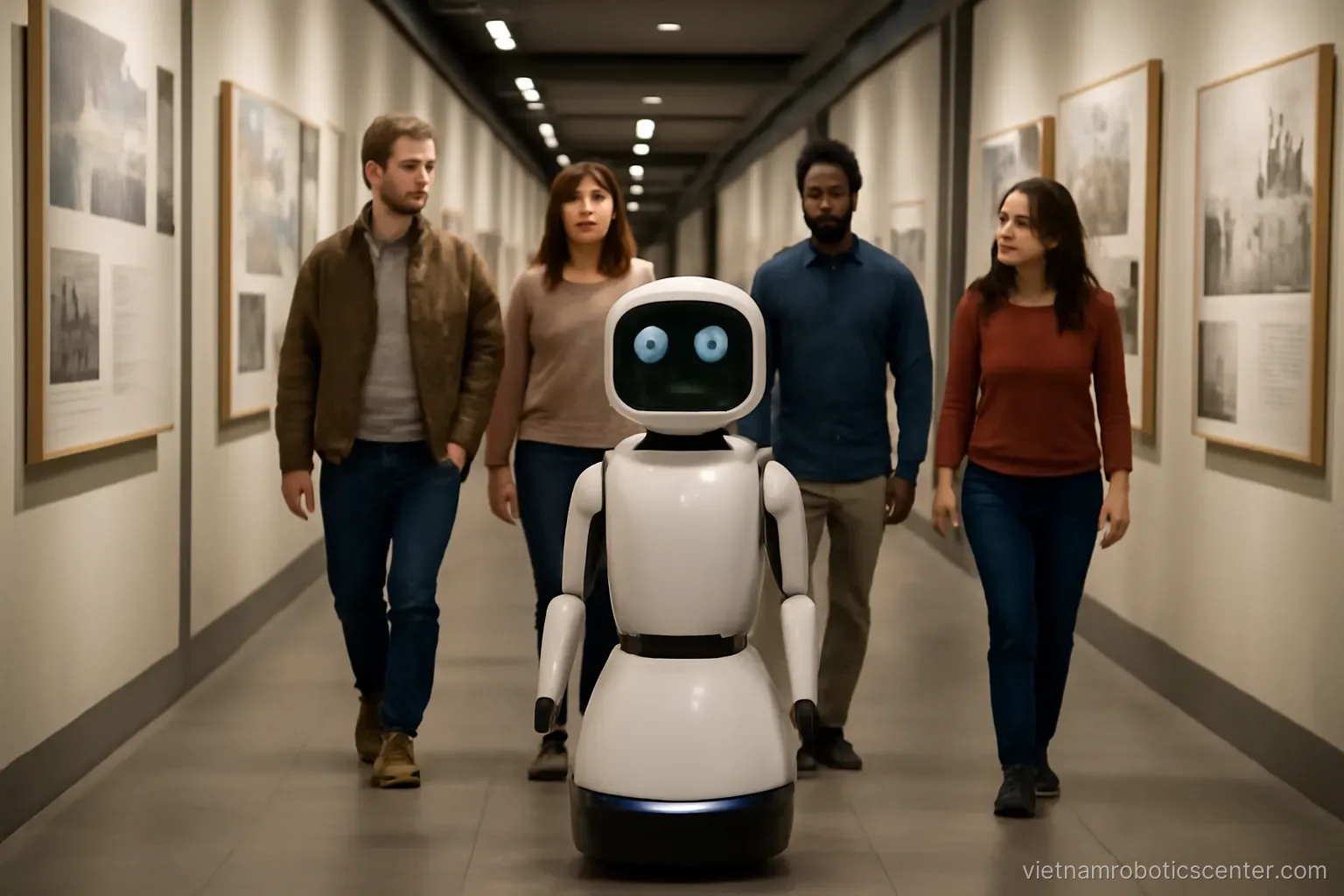
Guiding tours is one of the few jobs where a robot outperforms a person in specific respects: it does not tire, it does not omit content, and its quality does not degrade by the twentieth tour of the day. But it requires far more careful route design than the concept suggests.
Designing the route
Walk it first. Several times, at different hours. Note where it narrows, where it gets busy, where there are steps, where doors are usually closed.
Choose a route wider than seems necessary. A robot plus a group needs considerably more room than a robot alone. A metre and a half suffices for the robot and does not suffice for the robot leading five people.
Avoid crossing traffic. Entrances, stair landings, washroom corridors. The robot will stop repeatedly at these.
A moderate number of stops. Five to eight for a twenty-minute tour. Too many tires the group; too few means a lot of walking and little content.
Position stops where people can stand. Wide enough for the group to gather without blocking others.
Have a clear ending point. Where visitors are handed to staff, or where the tour concludes naturally — usually somewhere to sit or where materials are available.
Keeping the group together
The largest practical problem and the least anticipated.
Visitors walk faster than the robot. Adult walking pace exceeds the safe speed of most robots, so the group leaves it behind.
The fix. Open with an explicit invitation to follow and an explanation that the robot leads. The robot should speak while moving rather than travelling in silence — silence makes visitors assume it has finished and walk on.
Check the group at each stop. Before leaving a stop, the robot should ask whether everyone is ready. Simple, and it resolves most separation situations.
Keep groups small. Four to six people. From ten upward, those at the back cannot hear and will detach.
Send a person with larger groups. A staff member walking at the rear handles both stragglers and off-script questions.
Adequate volume. The single most common technical reason tours fail — people at the back who cannot hear stop paying attention.
Tour commentary
Shorter than you think. One to two minutes per stop. Standing listeners are less patient than seated ones.
One main point per stop. Visitors retain one thing per station, not five.
Talk about what they can see. This is the only advantage an in-person tour has over a video. Content unconnected to what is in front of them removes the reason for the tour to exist.
Leave room for questions. After each stop, ask whether anything needs clarifying. This is where an AI robot clearly beats a recording.
Have long and short versions. A ten-minute route for visitors in a hurry, thirty minutes for interested ones. Same content, different depth.
Update on change. A robot describing an area that has been repurposed is an error visitors notice immediately, and it undermines the credibility of the whole tour.
Handling exceptions
Real situations and how to prepare for them.
A blocked route. The robot should tell the group and wait, or have an alternative path. A robot standing silently confuses everyone.
An off-script question. Answer if known, transfer to staff if not. Saying it does not know still beats guessing.
Visitors wanting to linger at one stop. Allow it and have the robot wait. A rigidly timed tour irritates people.
Visitors wanting to skip a section. Provide a way to jump ahead.
The robot running out of power mid-tour. Requires an early warning and a nearest sensible conclusion point so the group is not stranded.
Another group on the route. On a busy route, coordination is needed so two groups do not converge on one stop.
Preparing for these takes an afternoon, and it is the difference between a tour that runs smoothly and one where staff constantly chase after it.
Compared with a human guide
Stated plainly, so the choice is made correctly.
The robot is better at. Never omitting content. Consistent quality from the first tour to the last of the day. Availability when no staff are free. Multiple languages. And logging the questions visitors ask.
The person is better at. Reading visitor reactions and adjusting. Answering in depth. Handling the unexpected. Building rapport. And selling.
The best combination. Robot delivers the general introduction, staff take over for specific consultation at the end. This frees staff from the repetitive portion while keeping the value-creating part.
When a robot is not appropriate. Important visitors, senior delegations, guests with highly particular needs. There, a person's presence is part of the respect being shown.
A simple rule: robots guide frequent and routine visitors; people guide important ones. Confusing the two categories is counterproductive in both directions.
Frequently asked questions
What is the biggest practical problem with tour robots?
Visitors walking faster than the robot and leaving it behind. The fix is an explicit invitation to follow at the start, having the robot speak while moving, and checking the group is ready before leaving each stop.
How many stops should a tour have?
Five to eight for a twenty-minute tour, with one to two minutes of commentary and one main point at each. More stops tire the group; fewer means a lot of walking and little content.
What is the most common technical reason tours fail?
Inadequate volume. People at the back of the group cannot hear, stop paying attention and detach, which makes the carefully prepared content worthless to half the group.
When should a person guide instead?
For important visitors, senior delegations and guests with particular needs. There the presence of a person is part of the respect being shown, and the ability to read reactions and adjust is not yet matched.
More in Robots for real estate and showrooms and Robots in education.