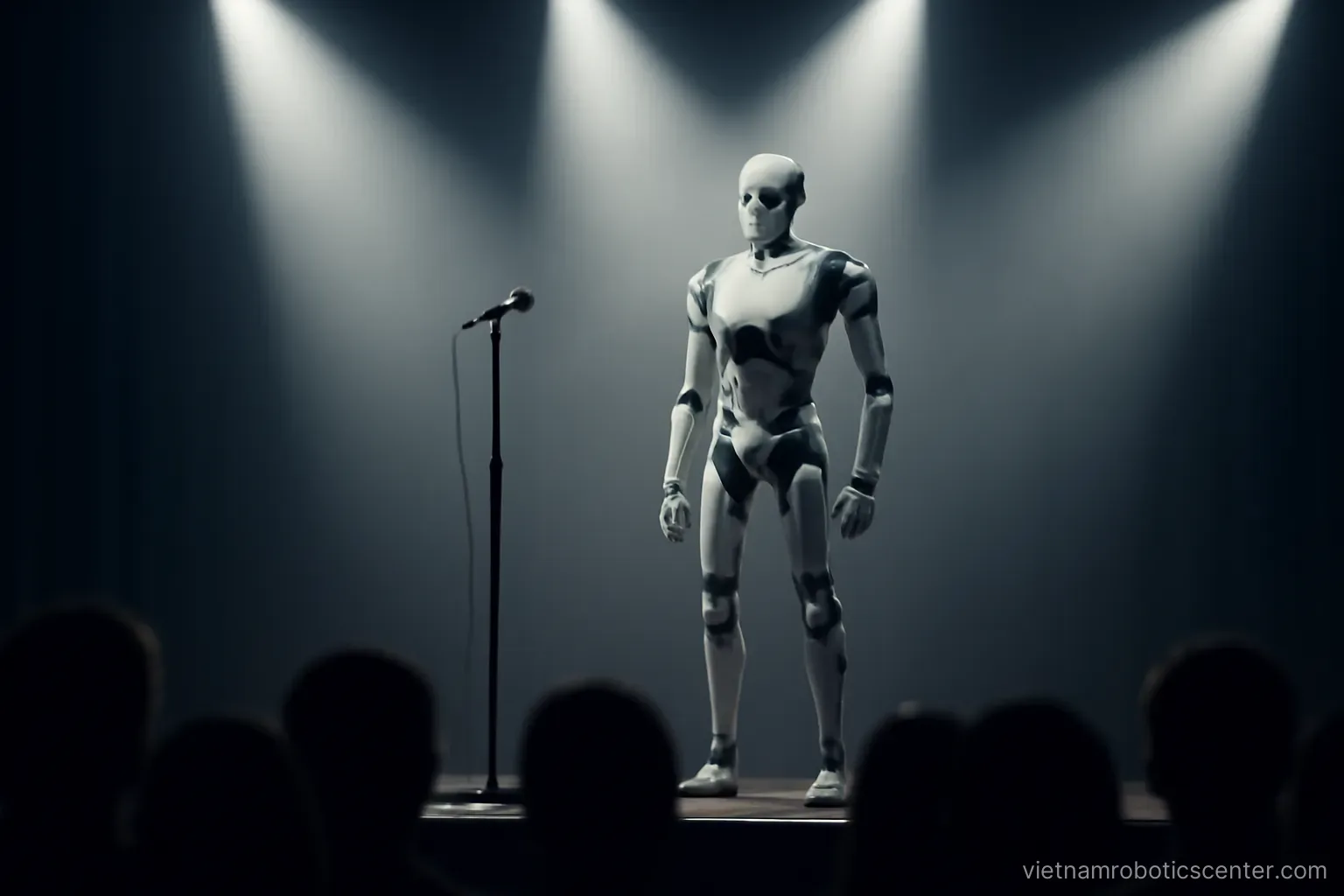
A robot on stage creates a moment nothing else does. It is also the highest-risk situation, because every failure happens in front of everybody at once and cannot be retaken.
Three viable stage roles
Co-host alongside a human. The safest and most effective role. The human host controls the programme's rhythm; the robot appears at defined moments — introductions, short exchanges, announcements. Every risk has someone ready to absorb it.
Hosting one short segment. The robot runs a complete five to ten minute section with a fixed script. Feasible if the script is thoroughly prepared and someone stands ready to take over.
Hosting the whole programme. Very high risk and rarely worth it. A small failure mid-programme has no recovery, and the audience will remember the failure rather than the rest.
The practical recommendation: choose the first role for a first attempt. After several events and a clear sense of what the robot handles, consider expanding.
On expectations: the robot's value on stage lies in surprise and image, not in hosting better than a person. Design its appearances around that value.
Scripting for a robot
Write to be spoken, not read. Short sentences, few subordinate clauses. Read drafts aloud and cut anything that runs out of breath.
Use where the robot has an advantage. Multiple languages, precise figures, speaking in sync with visual effects. Do not ask it to do what a human host does better — improvising, reacting humorously, working the audience.
Acknowledge being a robot. The best scripts play with the fact rather than pretending otherwise. The audience knows, and pretence reads as awkward.
Prepare filler lines. A few things the robot can say during technical gaps — waiting for someone to reach the stage, waiting for a video to start.
Limit open exchanges. If there is audience interaction, bound the topic and have a human host screen questions first. Unrestricted questions on stage are unnecessary risk.
Technical: where most failures happen
Audio is problem number one. The robot's speakers cannot fill a hall. Its voice must go through the event's sound system, and that requires coordination with the audio team in advance, not during the dress rehearsal.
Echo and feedback. The robot's microphone picks up the hall speakers and howls. Usually its microphone must be muted when it does not need to listen.
Stage lighting. Strong lights aimed directly blind the robot's cameras and disable recognition. If the script requires recognition, the lighting must be adjusted.
Network. If the robot needs connectivity to generate answers, it needs a dedicated stable connection. Event wifi is not reliable enough for a stage.
Power. Run on mains where possible. On battery, charge immediately before the performance, not that morning.
A dress rehearsal is mandatory. With real audio, real lighting, in the actual position. Without it, a failure is close to certain.
When something goes wrong
On stage, recovery speed matters more than avoiding failure.
A human host always ready. Standing beside or in the wings, with a script to take over within three seconds.
A prepared transition line. Something natural to fill the gap, ideally a light remark about robots also getting tired. Audiences forgive when it is handled lightly.
A technician nearby. Someone who can restart the robot, positioned to reach the stage quickly.
A plan to drop the robot segment entirely. If it fails, the programme must still run complete. The script must not depend on the robot at points that cannot be skipped.
Never let the robot announce anything critical. Awards, results, key announcements. A malfunction at that moment ruins the most important moment of the programme.
The general rule: the robot delivers an addition, not the backbone. Apply that and every failure remains manageable.
When not to use a robot on stage
Stated directly to prevent counterproductive use.
Formal occasions. Memorials, significant signings, events with ceremonial weight. A robot reduces the gravity regardless of preparation quality.
Tightly timed programmes. Where every minute counts and there is no room for a thirty-second gap.
Audiences already familiar with robots. In technology sectors the surprise has largely worn off, and a robot hosting less well than a good human host will be noticed immediately.
No time for a dress rehearsal. If the schedule does not allow a run with real audio and lighting, the robot should not go on stage.
No standby human host. A minimum condition; if unmet, do not proceed.
Conversely, robots suit technology product launches, family and children's events, trade fairs, and any programme where novelty is itself part of the message.
Frequently asked questions
What is the safest stage role for a robot?
Co-hosting alongside a human. The human controls the programme rhythm while the robot appears at defined moments, so every failure has someone positioned to absorb it within seconds.
What is the most common technical failure?
Audio. The robot's speakers cannot fill a hall so its voice must route through the event sound system, and its own microphone picks up the hall speakers and howls unless muted at the right moments.
Should a robot announce awards or results?
No. A malfunction at that moment ruins the most important part of the programme. The robot should deliver additions rather than the backbone of the script.
When should a robot stay off the stage?
Formal or ceremonial occasions, tightly timed programmes, audiences already familiar with robots, when there is no time for a dress rehearsal with real audio and lighting, and when no standby human host is available.
More in Robots in education and Robots for real estate and showrooms.