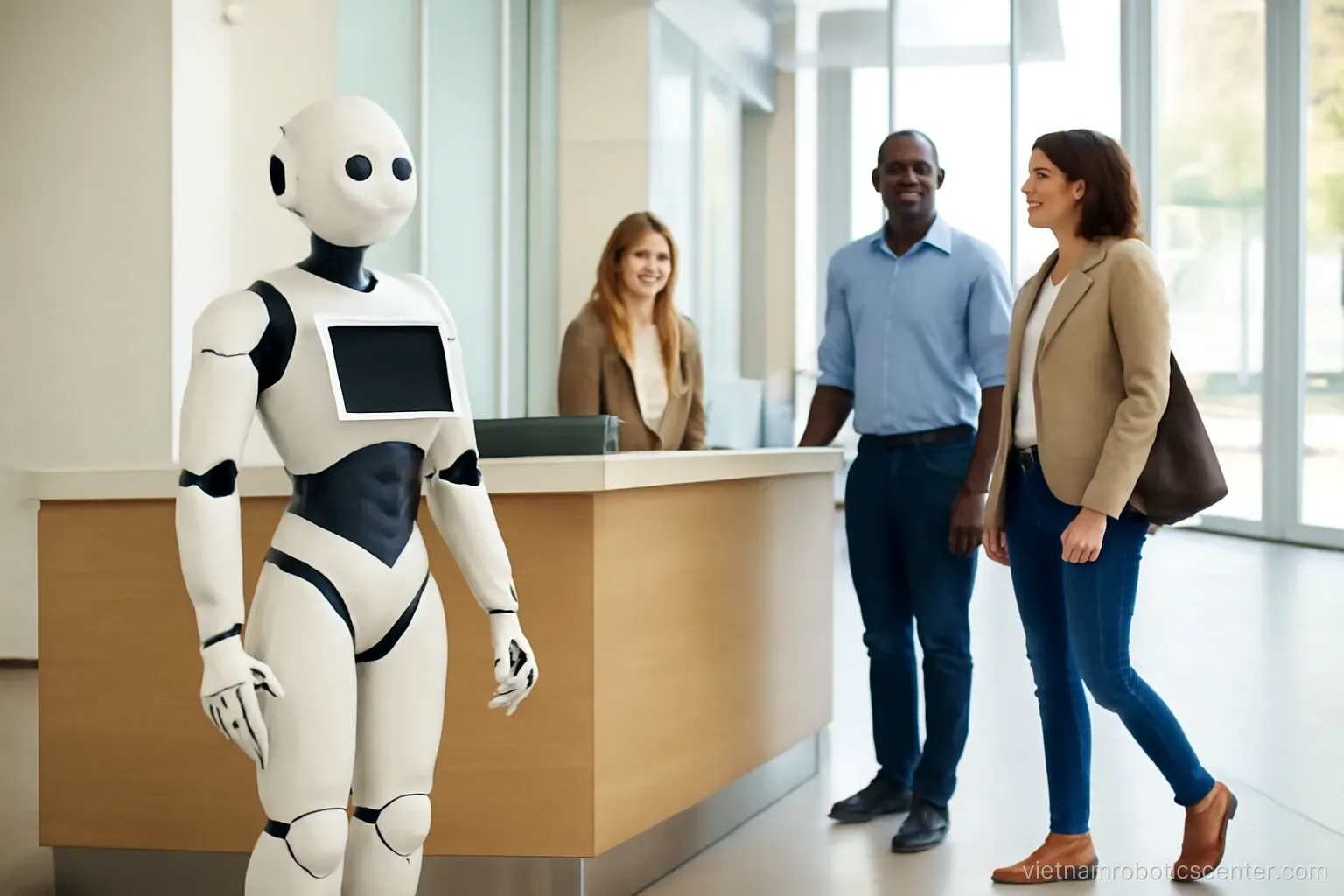
Greeting visitors is the first application nearly every business considers, and also the one most often abandoned within months. What is striking is that successful and failed deployments usually run identical hardware — the difference is entirely in how they are set up.
Where to place it
The decision with the largest impact and usually the fastest to be made.
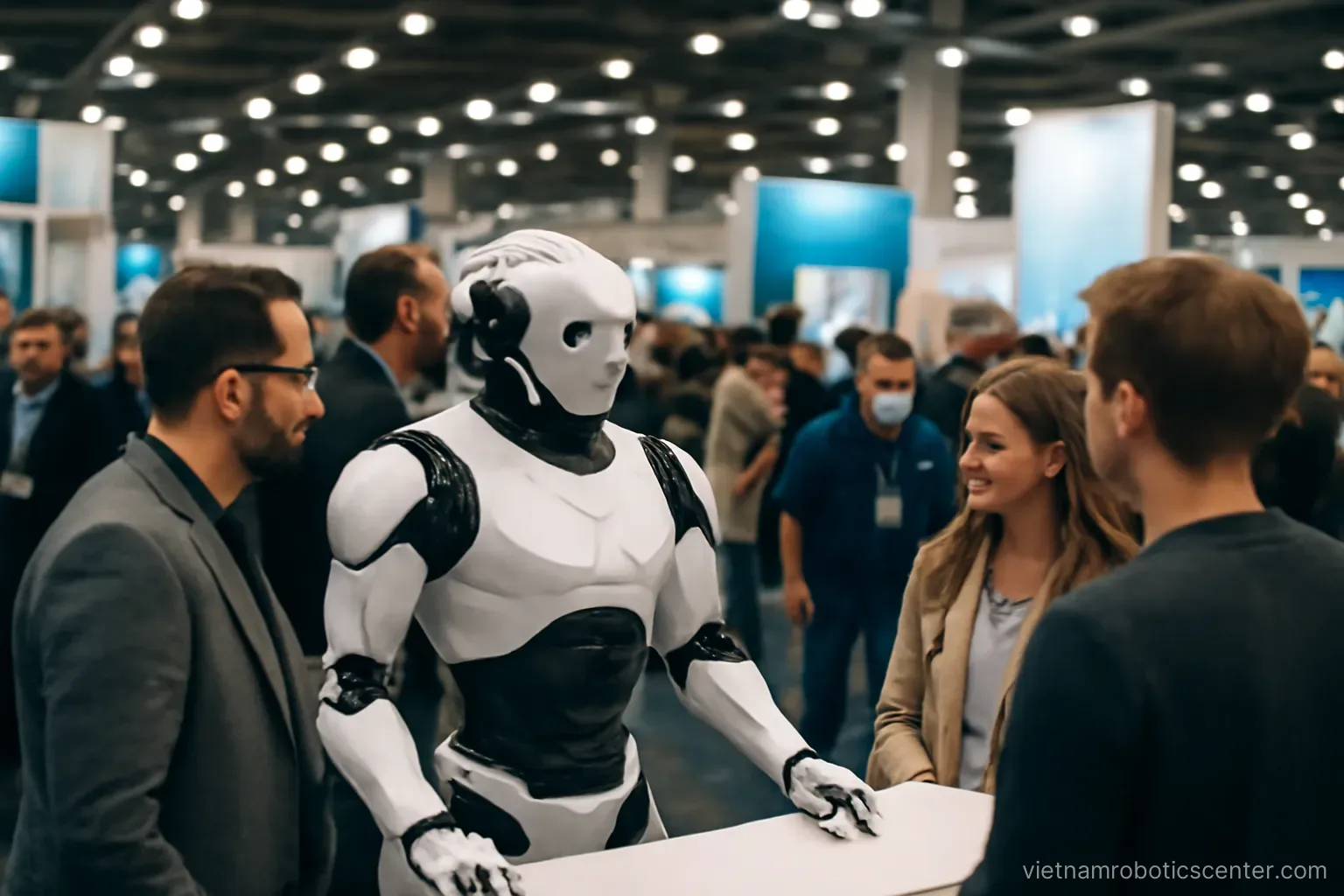
Place it in the visitor traffic flow, not in the attractive corner. The most common error is choosing the photogenic spot. A robot in a corner receives no conversations, and no conversations means no value.
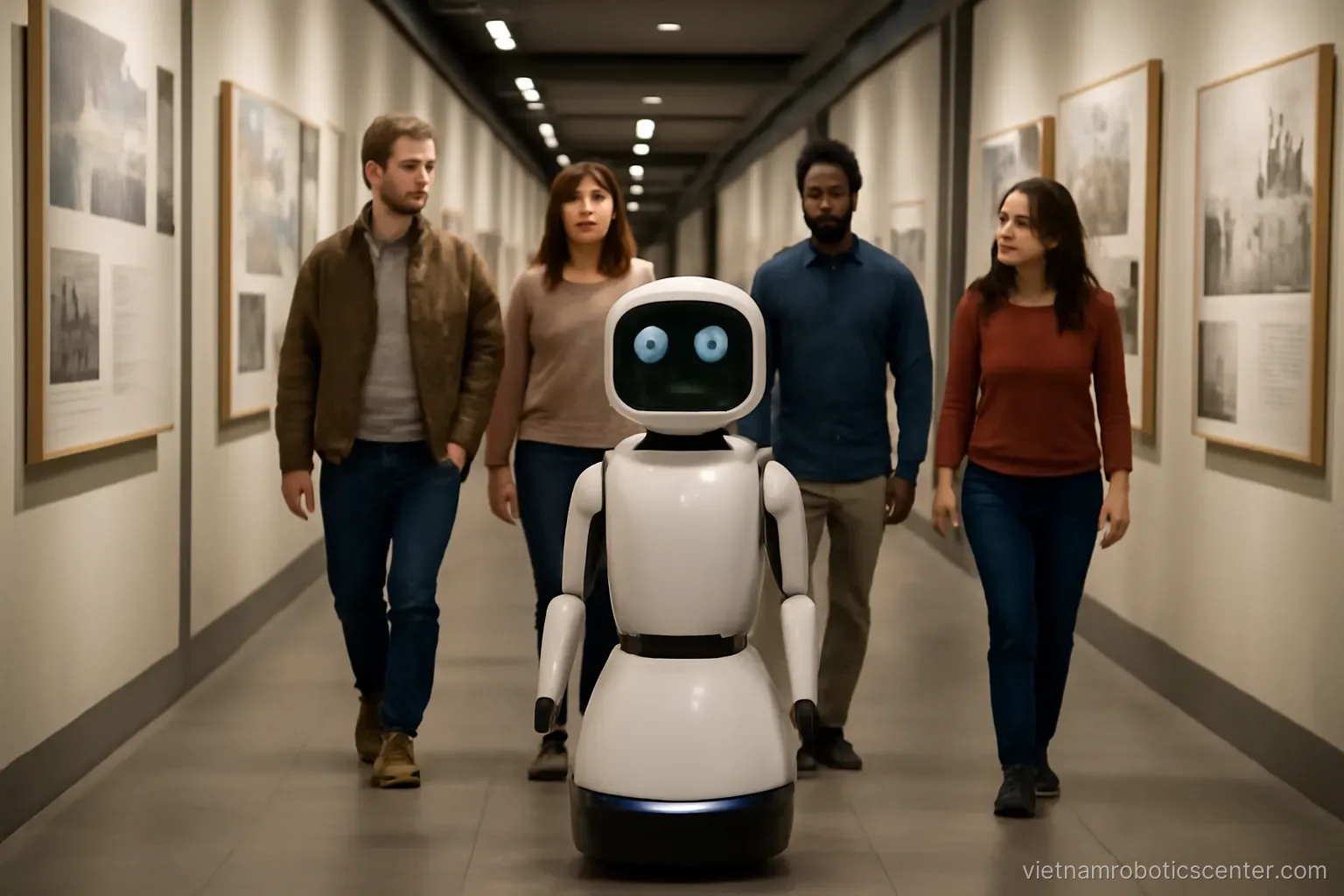
Place it where visitors pause. Before lifts, beside the waiting area, near the registration desk. Where people walk straight past, they do not stop.
Avoid noise sources. Entrance doors, air conditioning, food service areas. If the robot cannot hear, the experience fails at the first exchange.
Avoid backlighting. Cameras recognise poorly when a visitor stands against strong light.
Leave standing room. Enough space for one or two people to stop without blocking the way.
A simple test: stand in the intended position for thirty minutes at a busy hour and count how many visitors pass close enough to start a conversation. If the number is low, move it before installing.
The greeting and the first thirty seconds
These thirty seconds decide whether a visitor engages or walks on.
Greet proactively but not aggressively. Detect approach and offer one short line. Greeting too early, while the visitor is still distant, leaves them unsure who is speaking; greeting at length loses them mid-sentence.
Say immediately what you can do. The second line should offer something concrete: I can help with directions or with information about our services. Not knowing what to ask is the most common reason visitors do not ask.
Show sample questions on screen. Three to five common ones, selectable by touch. Many people are reluctant to speak to a robot in front of others.
Answer briefly. Three sentences suffices. Detail belongs in the follow-up. A standing listener has far less patience than a seated reader.
Close clearly. Ask whether anything else is needed, then say goodbye. A conversation left hanging leaves the visitor unsure whether to stay or go.
Handing over to staff
The detail that separates a professional deployment from a half-finished one.
The robot must know when to stop. Questions outside scope, a visibly frustrated visitor, sensitive topics such as complaints or firm pricing — all should transfer to a person.
The handover must be seamless. The colleague receives what the visitor already asked, so nothing is repeated. If the visitor has to start again, the robot cost them time rather than saving it.
Provide a clear way to call staff. A screen button, or the robot notifying the desk directly. Visitors should not have to go looking for someone.
Staff must expect the call. A defined process for who responds and how quickly. A robot calling with nobody arriving is worse than no robot.
Never let the robot block access to a person. Where a visitor wants a human immediately, they must get past easily. A robot obstructing that is the fastest route to both visitors and staff resenting it.
Daily operation
Small routines decide whether the robot still runs after three months.
A switch-on routine. Who starts it in the morning, who shuts it down, recorded in the shift log. It sounds trivial and it is the leading reason a robot is inactive on a given day.
Charging. A convenient charging point and a fixed charging window, or an automatic dock.
Cleaning. Screens and casing collect dust quickly in a lobby. A dirty robot creates precisely the opposite impression to the one intended.
Weekly content check. Ask the robot ten common questions and listen. Ten minutes, and it catches most stale content.
Read the conversation log. A sample each week. You will find the questions visitors asked that the robot could not answer — a self-generating list of work to do.
One named owner. With the responsibility counted as part of their role.
Measuring and improving
Interactions per day. The first and most important number. If it is low, the cause is almost always placement or greeting rather than robot quality.
Proportion of complete conversations. Visitors who asked and received an answer, against those who left mid-conversation. A high abandonment rate means answers are too long or off-target.
List of unanswered questions. Sorted by frequency. Add the top five each week.
Handovers to staff. Too high means content is thin; too low may mean the robot is answering things it ought to be transferring.
Staff feedback. Asked monthly: what helps, what irritates. This is the earliest indicator of trouble.
A simple and effective rhythm: fifteen minutes a week to review numbers, read a few conversations and add content. Sustain that and the robot stays useful; drop it and the rest is only a question of time.
Frequently asked questions
What is the most common placement error?
Choosing the photogenic corner rather than the visitor traffic flow. A robot nobody approaches produces no value regardless of how well it performs technically.
Why do visitors not ask, even standing right beside it?
Because they do not know what to ask. The greeting should include a concrete offer of what the robot can do, and the screen should show three to five sample questions selectable by touch.
What must a handover guarantee?
That the colleague receives what the visitor already asked so nothing is repeated, and that there is a defined process for who responds and how quickly. A robot calling with nobody arriving is worse than no robot.
Interactions are low — what should be fixed?
Almost always placement or the opening script rather than the robot itself. Moving it into the traffic flow or reworking the first thirty seconds improves the number faster than any technical change.
More in Training and customising a robot and Deployment and operations.