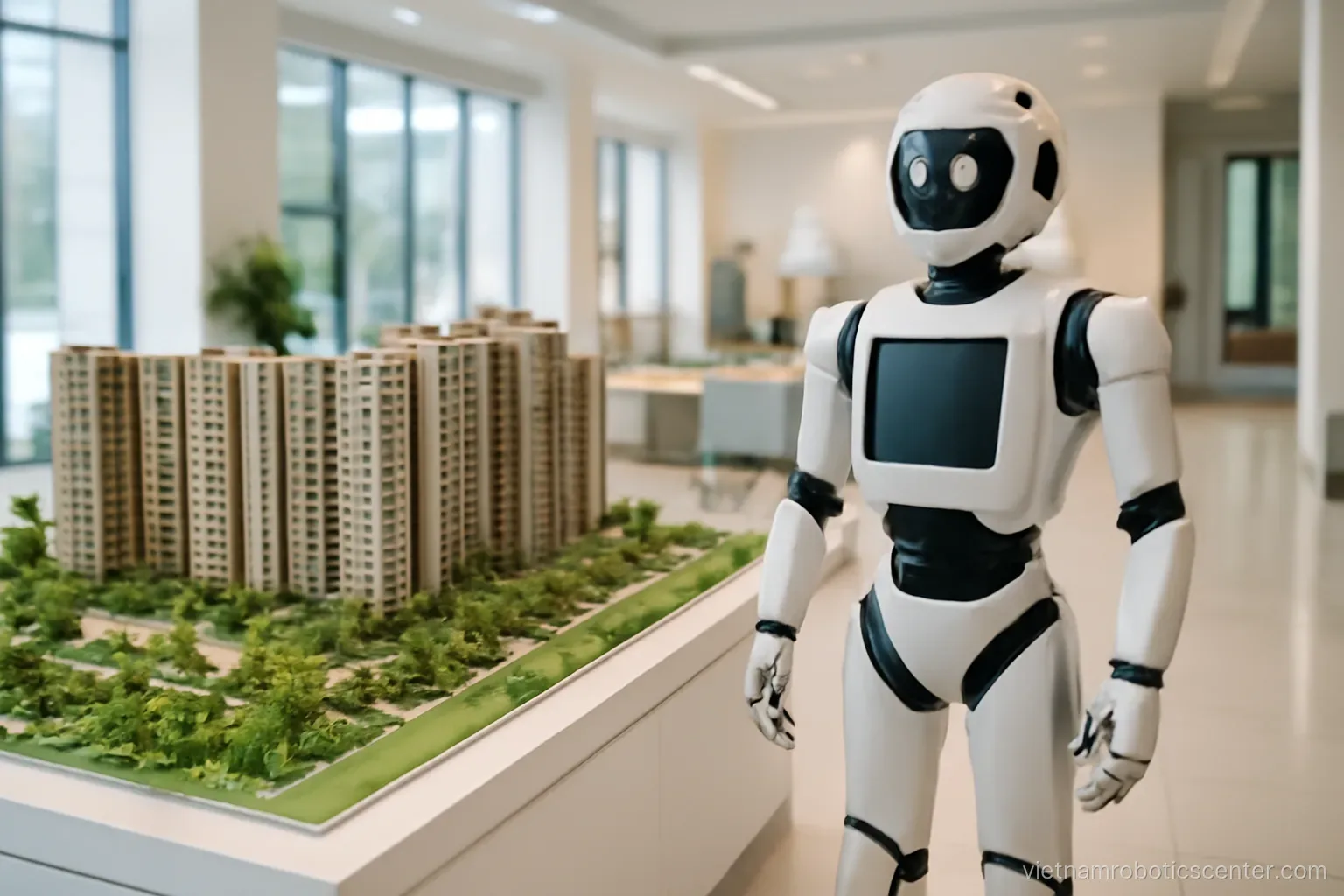
A robot deployed in sales differs from one in production in a specific way: the need is usually tied to the life of a project or a campaign, which is short. That changes both the calculation and the buying approach.
The cost lines
Equipment. Purchase or rental. If renting, monthly rate multiplied by expected months.
Initial content preparation. Loading project information, writing scripts, testing and adjusting. Substantial and routinely omitted.
Ongoing content updates. In sales, content changes constantly with progress and policy. This is a recurring monthly cost.
System integration. If the robot should push leads into the sales system.
Space preparation. Power, charging point, possibly rearranging the area.
The owner's time. Part of one person's role, valued in money. Not full time and not zero.
Transport and installation if the robot moves between projects.
In sales, the content line is proportionally larger than in other sectors, because information changes fast and errors have direct consequences.
The benefit lines and how to quantify them
Staff time saved. Basic questions handled multiplied by average time each multiplied by hourly cost. The easiest line to compute.
Additional visitors served. Those who previously went unattended for lack of staff. Valued as typical conversion rate multiplied by transaction value — usually several times larger than the labour saving.
Additional contacts captured. Number of leads multiplied by the typical value of a lead in your sector.
Communications value. Hard to quantify. State it separately without a number, or compare against the cost of a marketing activity producing comparable attention.
Information consistency. Fewer complaints from staff giving differing answers. Hard to measure and real.
The second line is the largest in most cases, and it only materialises if the robot genuinely reaches visitors who were previously missed — which depends entirely on placement and on content quality.
Staged rental: usually the sensible route
For project sales, renting usually beats buying for three reasons.
The need has an end date. A property project sells over six to eighteen months. What does the robot do afterwards?
Peaks are uneven. You may need the robot only during launch periods and weekends, not year-round.
Technology moves. Equipment bought today will have a better version in eighteen months.
The sensible approach. Rent monthly through the project's peak period and return it afterwards. With several overlapping projects, consider buying and rotating.
The threshold to buy. When expected total usage exceeds roughly half the period over which accumulated rental equals purchase price, and when a stable caretaker is in place.
What a long rental contract needs. Whether content updates are included, support response time when it fails, and whether upgrading to a newer model is possible.
Setting expectations for the first three months
Where most projects are misjudged.
Month one is adjustment. Content gaps, wrong placement, staff unfamiliar. Month one figures say nothing about the long run.
Month two stabilises. Content supplemented, placement corrected, customers accustomed.
Month three is the first credible data. This is the point to set for evaluation.
Write the criteria beforehand. After three months, how many interactions per day, how many contacts captured. Written before starting.
Write the stopping condition too. If a given level is not reached, pause and review. Difficult to write and it protects against sustaining an ineffective project to avoid admitting it.
Do not compare against expectations formed from videos. The correct baseline is your own current situation — how many visitors go unattended, how much staff time goes into repeated questions.
When a robot is not the answer
Situations worth stating plainly.
Visitor numbers too low. A robot serving ten visitors a day carries a very high cost per interaction. Work out your threshold in advance.
Staff currently have spare capacity. If they are not stretched, adding a robot solves nothing.
Information changes daily. Update cost will exceed the benefit.
Nobody responsible. A precondition. Unmet, do not start.
Premium buyers expecting personal attention. There a robot may be counterproductive.
More basic problems unresolved. If staff are poorly trained or product information is not standardised, fix those first — they are cheaper and have larger effects.
That last point deserves emphasis: a robot amplifies the quality of existing information and process. If the foundation is weak, the robot exposes the problem faster rather than solving it.
Frequently asked questions
Which benefit line is usually largest?
Additional visitors served who were previously unattended for lack of staff, valued as conversion rate times transaction value. This is typically several times larger than the labour time saved.
Why does renting usually beat buying in project sales?
Because the need ends with the project, peaks are uneven, and technology moves fast enough that equipment bought today will have a better version within eighteen months.
When should results be evaluated?
Month three. Month one is for adjusting content and placement, month two stabilises, and month one figures say nothing about long-run performance.
What should be fixed before buying a robot?
Weak staff training and unstandardised product information. A robot amplifies the quality of existing information and process, so a weak foundation means the robot exposes the problem faster rather than solving it.
More in Deployment and operations and Training and customising a robot.