Many businesses buy a robot for operational reasons and then discover most of the real value comes from visitors photographing it and telling others. If that is part of the value, it deserves to be designed for rather than left to chance.
Why robots generate content
Three fairly specific reasons.
They are unexpected. People photograph what they did not anticipate encountering. In a showroom or hotel lobby, a robot remains unfamiliar to most visitors.
They interact. A photograph with an object is dull; a video of a robot greeting you by name is worth sharing.
They say something about the brand. A business with a robot reads as modern, invested, ahead. This holds regardless of what the robot actually does.
But the effect decays. As robots become common in a sector, the advantage disappears. Businesses that move early capture most of the communications value.
The implication for decision making: if a robot is being bought largely for communications reasons, timing matters, and that value should be worked hard in the first year rather than spread thinly.
Designing for photography
It sounds mercenary and it makes a clear difference.
A branded backdrop. Photographs visitors take should include the logo or brand colours in frame. Without it, images circulate with nobody knowing where they were taken.
Adequate lighting. Photographs taken in poor light do not get posted. An extra light in the robot's area is a very cheap investment.
A place to stand. Floor marking or arrangement suggesting where to stand for a good picture.
A pose. A fixed gesture when a visitor says they want a photograph — raised hand, tilted head, a stance. Small detail, noticeably more lively images.
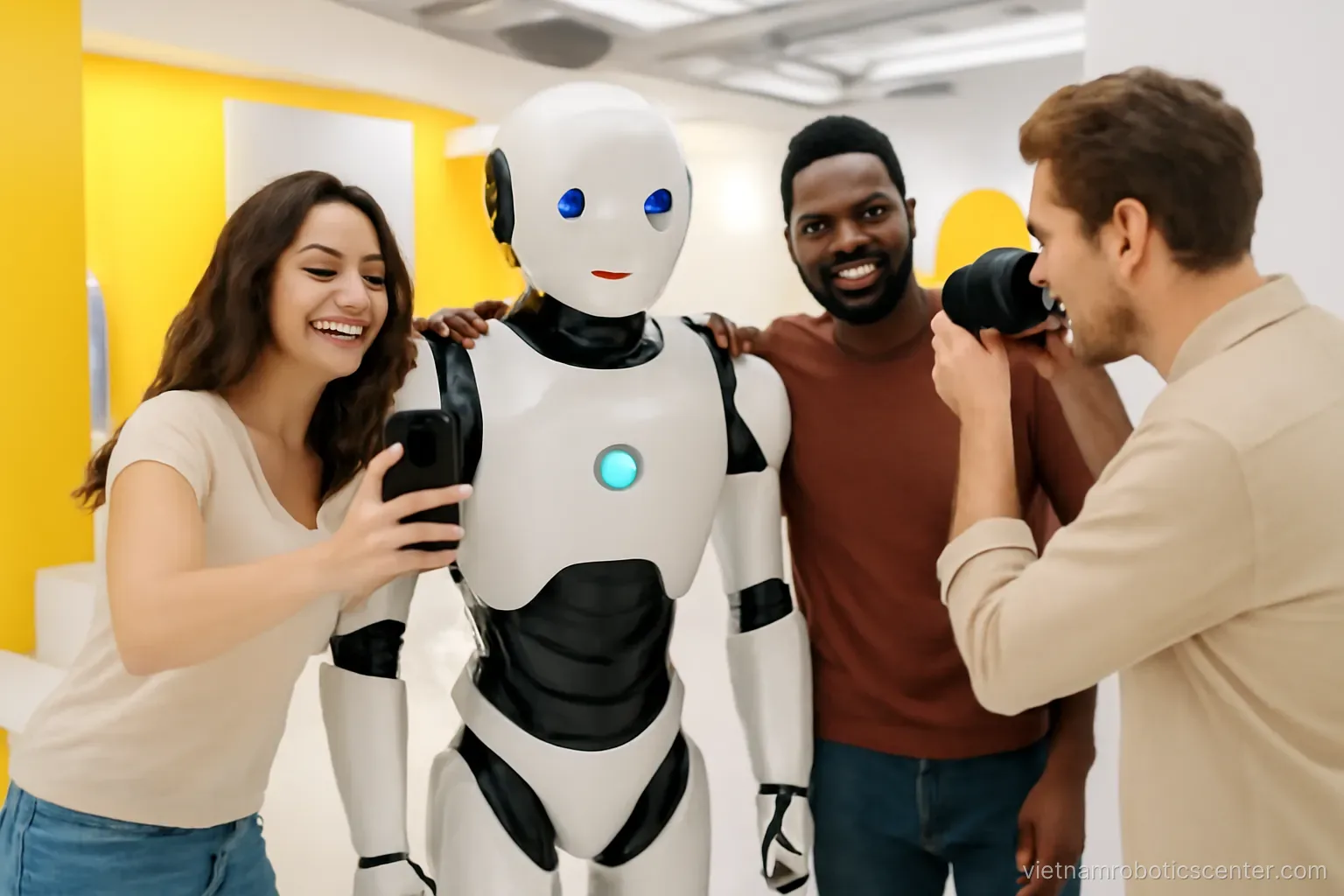
The robot offering. Many people hesitate to ask. The robot saying would you like a photo together raises the number of photographs taken considerably.
A way to send the image. If the robot can take the photograph and send it via a scannable code, it creates goodwill and an opportunity to capture contact details.
Creating content deliberately
Beyond what visitors produce, the business can work the channel actively.
Film the robot working for real. Not a staged video — footage of it actually serving customers is far more persuasive.
Tell the process story. Why a robot was chosen, what was difficult, what the result was. This kind of content is received better than equipment showcases.
Share the imperfect parts too. Amusing answers, awkward moments. Honest content builds more goodwill than polished content, and it sets accurate expectations for customers.
Use the data the robot gathers. The most-asked questions are natural material for articles and explainer videos.
Invite press or interested commentators. If you are first in a sector, that is a news story.
Do not over-promise. Content inflating the robot's capability creates expectations the real experience cannot meet, and the backlash outweighs the initial gain.
Measuring communications impact
Harder than measuring operations, not impossible.
Brand mentions on social platforms. Track the brand name and related terms for several weeks after deployment.
Photographs and videos posted. Estimated through public posts tagged to the location.
Website traffic and brand searches. Compared before and after.
Ask new customers how they heard of you. Add the robot as an option in that question.
Questions about the robot itself. Customers asking where it was bought and what it cost indicates it is capturing attention.
Qualitative record. Comments from customers, partners and staff. This group does not become a number but it tells you whether the impression created is positive or faintly ridiculous.
And measure over a long enough window. The first month always spikes on novelty; the figure in month four indicates the durable value.
Balancing image against function
The main risk of treating a robot as a communications asset.
A robot only for photographs stops working quickly. After a few months visitors are used to it, nobody photographs it, and if it does nothing useful it becomes surplus.
Durable value lies in function. A robot that both impresses and genuinely helps visitors gets maintained; one that only impresses ends up in storage.
But do not dismiss the image value. It is real, and it is usually the easiest part to justify the initial investment with.
How to balance. Choose a job genuinely useful to customers, then optimise the image dimension around it. The reverse — buying for image then finding a job — has a much higher failure rate.
Be explicit internally about what you are buying. If most of the value is communications, budget it as marketing and measure it with marketing metrics, rather than measuring it operationally and being disappointed.
Frequently asked questions
Why does a robot's communications value decay?
Because it rests on surprise. As robots become common in a sector the advantage disappears, so businesses moving early capture most of the value and should work it hard in the first year.
What small detail increases the number of photographs taken?
The robot offering. Many visitors hesitate to ask, and a simple invitation raises the count considerably — combined with a branded backdrop and enough light for the images to be worth posting.
What kind of content works best?
Footage of the robot genuinely serving customers rather than staged video, and the story of the process including the imperfect parts. Honest content builds goodwill and sets accurate expectations.
How do you balance image against function?
Choose a job genuinely useful to customers, then optimise the image dimension around it. Buying for image and then looking for a job has a far higher failure rate.
More in What AI robots are and Deployment and operations.