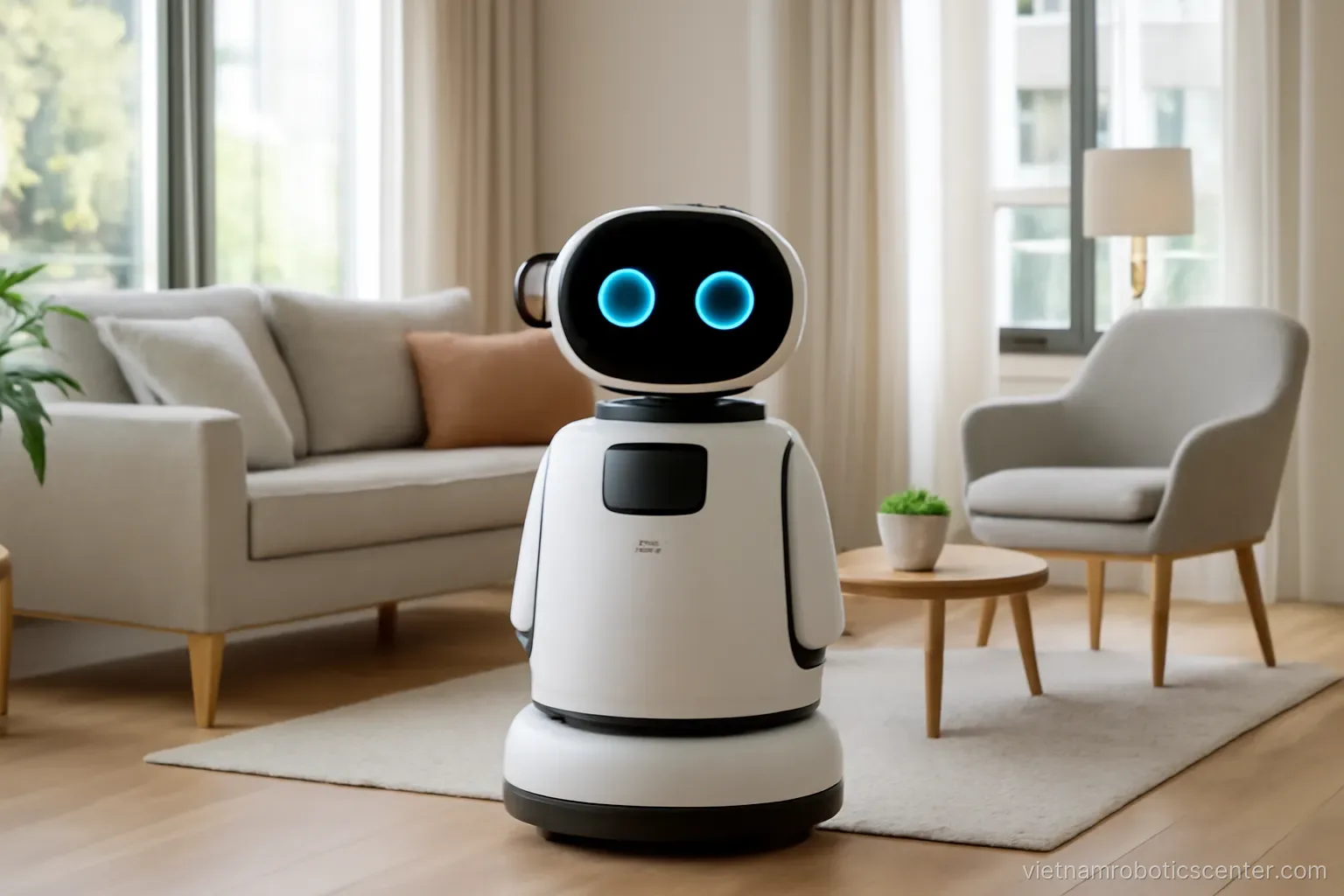
Showrooms share a particular problem: many visitors browse, staff are limited, and a customer not attended within the first few minutes typically walks a circuit and leaves. That is the gap a robot fills.
The showroom problem at peak times
The pattern is familiar in every showroom.
Customers arrive in waves. Weekends are many times busier than weekdays, and staffing cannot flex accordingly.
Unattended customers leave. They walk one circuit, nobody answers their questions, and they go without leaving any trace.
Staff gravitate to the easy customers. Those who ask a lot and appear interested get attention; the reticent are passed over, though they are sometimes the ones about to buy.
Basic questions consume time. Price, specifications, colour availability, warranty terms — answered dozens of times a day.
The robot fills exactly this gap. It attends customers who are waiting, answers the basics, and importantly reticent customers find it easier to ask a robot than a salesperson, because there is no risk of being pursued.
That last point is significant and rarely discussed. Many customers avoid sales staff purely to avoid being followed, and a robot gives them a way to get information without committing to anything.
What the robot does in a showroom
Specifications and pricing. Fast, accurate, never confusing variants. The clearest strength, since staff frequently mix up details when the product range is long.
Comparing products. A customer asks how two models differ — the robot answers completely and neutrally.
Checking stock and colours. Where it connects to a system, this is the question customers ask most.
Directing customers to the right area. In a large showroom, even directions have value.
Capturing needs. What the customer is looking for, at what price, on what timeline. Passed to staff so they approach appropriately.
Booking appointments. If the showroom is too busy, the robot books a return visit at a quieter time with a prepared salesperson.
What it cannot do: persuade, address financing concerns, build trust, close. That remains human work and expectations should not run otherwise.
Where to place it in a showroom
Near the entrance but not blocking it. Visible on arrival without any sense of being intercepted.
Some distance from the sales desk. So customers have a choice between asking the robot and asking a person. Placed adjacent, customers always choose the person and the robot becomes redundant.
Where customers naturally pause. Beside a feature product, near the waiting area.
With comfortable standing space. Room for a small group to stop.
Within staff sightlines. So they know when to step in.
Consider multiple points. A large showroom may need one robot at the entrance and lookup screens in each section — considerably cheaper than several robots and better coverage.
For showrooms, one robot at the entrance plus several lookup screens typically delivers the best value, and it deserves serious consideration before buying additional robots.
Connecting to sales systems
Where the largest difference is made, and the part most often skipped for complexity.
Stock connection. The robot knows what is available and in which colours. Wrong stock information annoys customers more than no information.
Price list connection. Prices and promotions change frequently, and manual updating is a source of error.
Pushing leads into the system. A customer who spoke to the robot should appear in the sales team's list along with what interested them.
Logging questions. The list of most-asked questions is valuable data for merchandising, for staff training and even for purchasing decisions.
Where budget is limited, prioritise in this order: lead transfer first, price connection second, stock connection third. The first generates revenue directly; the other two improve experience.
Measuring in retail
Interactions against total visitors. This ratio shows whether placement is right. If low, move it before concluding anything else.
Contact details captured. Compared with before the robot arrived.
Time customers spend in the showroom. Longer dwell means more selling opportunity.
Customers attended by staff. If the robot works properly this number rises rather than falls, because it filters and forwards interested customers.
Unanswered questions. Added weekly.
Sales staff feedback. In retail, staff usually earn commission and are therefore highly sensitive to whether the robot helps or intercepts. Their view is the most reliable indicator, and if they believe it takes customers from them the project will not survive however good the numbers look.
Frequently asked questions
Why do reticent customers prefer asking a robot?
Because there is no risk of being pursued and no commitment implied. Many customers avoid sales staff purely to avoid being followed, and a robot offers a way to get information without that.
How far from the sales desk should the robot sit?
Some distance, so customers have a genuine choice between asking it and asking a person. Placed adjacent to the desk, customers always choose the person and the robot becomes redundant.
Which system connection should be built first?
Pushing captured leads into the sales team's system, because it generates revenue directly. Price connection comes second and stock connection third, as those improve experience rather than producing revenue immediately.
What is the most reliable indicator in retail?
Sales staff feedback. They usually earn commission and are highly sensitive to whether the robot helps or intercepts customers, and if they believe it takes their customers the project will not survive.
More in What AI robots are and Robots for business.