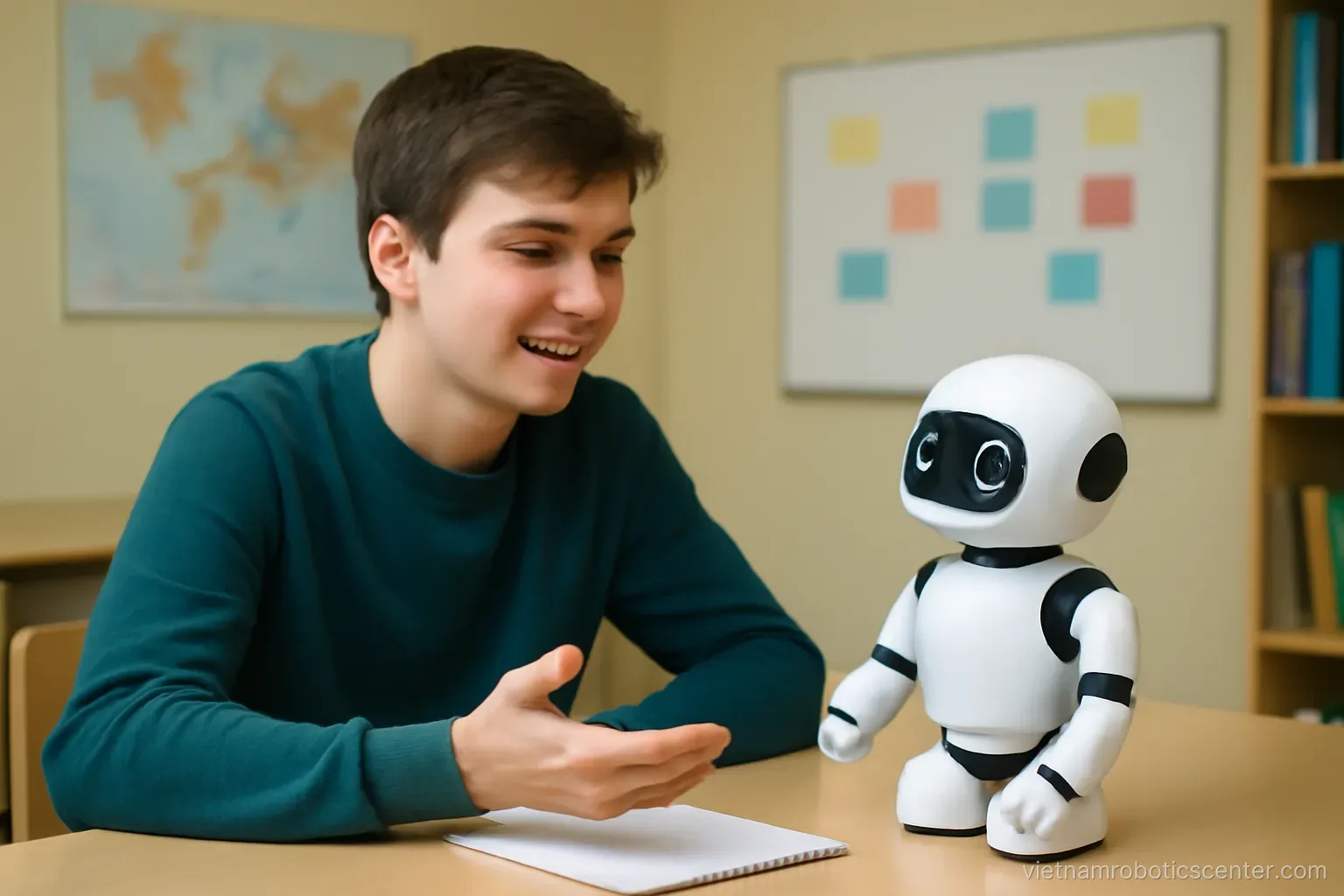
The biggest obstacle for language learners is rarely a shortage of material. It is a shortage of places to speak without embarrassment. That is precisely where an AI robot can contribute, and also where the contribution is most easily oversold.
The real problem a robot addresses
Learners are reluctant to speak. Afraid of errors, of classmates laughing, of teacher judgement. This is the largest barrier and it is psychological rather than about knowledge.
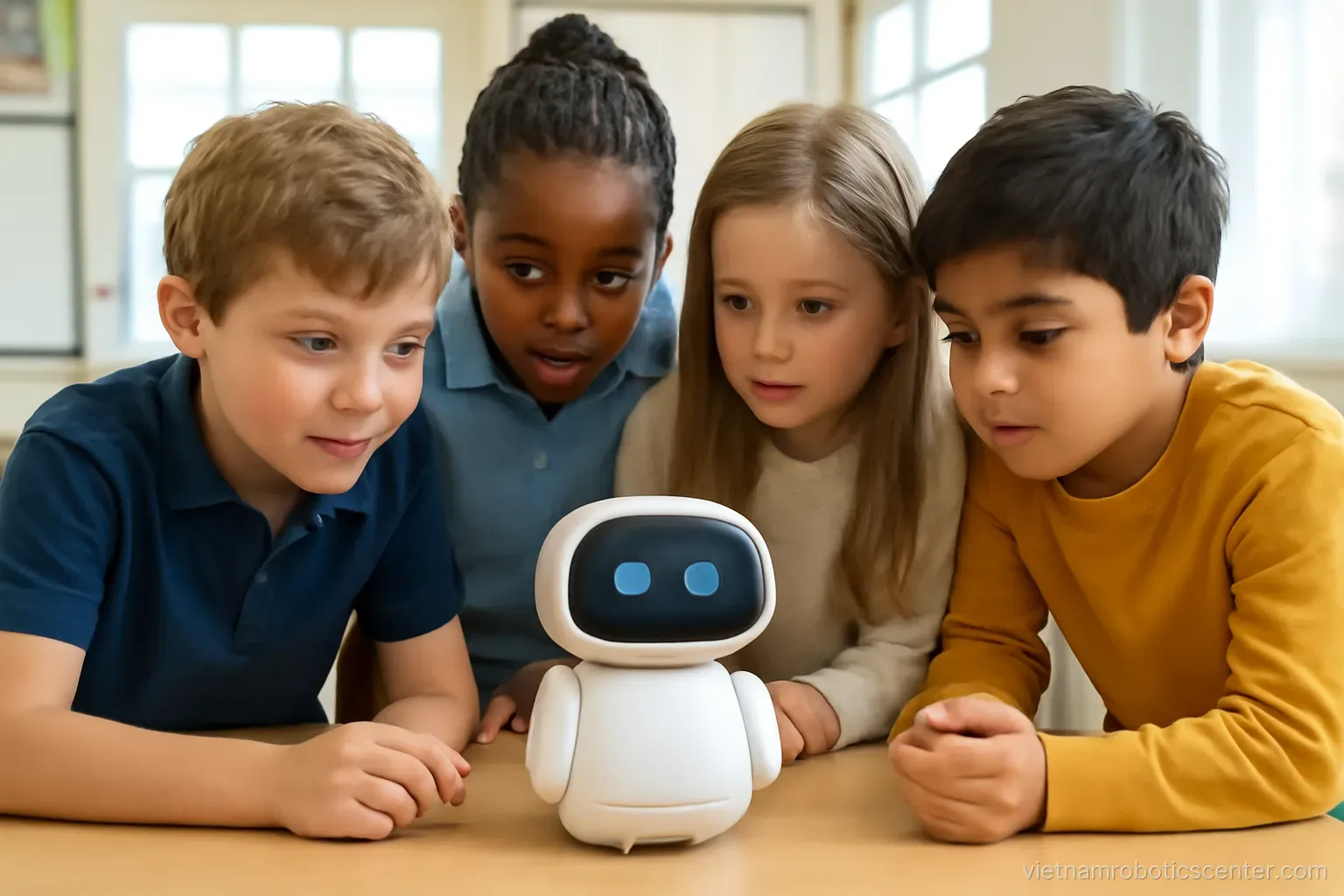
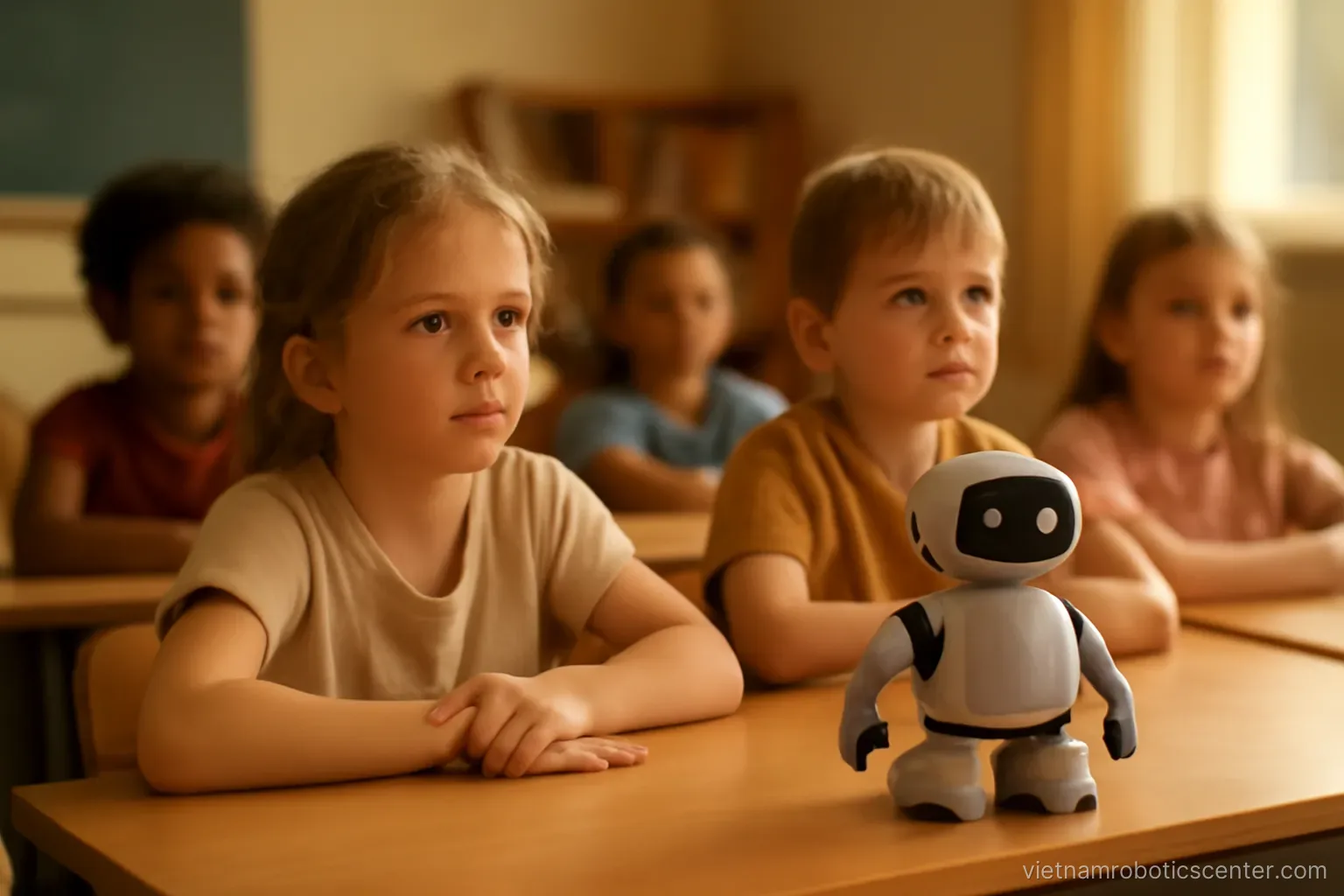
A robot does not judge. Getting it wrong ten times with a robot costs nothing socially. In classrooms using robots, hesitant learners typically speak considerably more than they do in paired practice.
Practice time is unlimited. A teacher has forty-five minutes for thirty students, meaning tens of seconds of speaking each. A robot gives every learner as long as they want.
Patience does not vary. The twentieth attempt receives the same response as the first.
Available any time. Practice outside class hours, at home, whenever the learner feels comfortable.
The first four combine into a practical effect: more minutes in which the learner actually speaks, which is the variable most strongly correlated with progress.
Limits worth knowing first
Speech recognition has error rates. With beginners whose pronunciation is imprecise, the robot mishears, and being marked wrong on a correct utterance is discouraging. This is a real issue at lower levels.
Pronunciation feedback remains coarse. The robot can say a phrase was unclear but usually cannot identify which sound was wrong and how to correct it — which is precisely what a good teacher does.
It does not read the room. A teacher sees confusion on a face and changes approach. A robot waits for an answer.
Conversation can drift. Without a bounded topic, the robot rambles and the learner practises something other than the target.
It does not replace human motivation. Learners practising alone with a robot typically stop after a few weeks. Commitment comes from the class, the teacher, the peers.
The practical conclusion: a robot is a tool for increasing practice volume, not a replacement for a teacher. Used in that role the benefit is clear; used in any other, disappointment follows.
Combining with teachers
The effective model divides the work explicitly.
The teacher introduces new material. New structures, vocabulary, usage, cultural context.
The robot provides repetition. The learner uses the newly taught structure across many situations, many times, until it becomes automatic.
The teacher corrects deeply. Reviewing the learner's practice, identifying recurring errors, explaining causes.
The robot records data. Minutes practised, recurring errors, topics causing difficulty. The teacher uses this to teach the right things.
The data element is the least discussed and possibly the largest: for the first time a teacher knows precisely which learners are practising and on what, rather than inferring it from end-of-term tests.
What to avoid: letting the robot introduce new material. It is technically capable and noticeably worse at it than a teacher.
Designing a practice session
Bound the topic clearly. Today we practise making appointments. Unbounded conversation means the learner speaks a lot while practising nothing in particular.
Short and frequent. Fifteen minutes daily beats two hours weekly.
Give a countable goal. Use these five structures during the conversation. The learner knows whether they achieved it.
Record for playback. Hearing yourself speak is a powerful correction tool, and learners rarely do it unprompted.
Do not let the robot grade beginners harshly. At low levels encouragement matters more than accuracy. Many products allow the strictness to be adjusted, and it should be.
End on something achieved. Today I managed to book an appointment in English. That sense of accomplishment is what brings learners back.
Deciding whether to invest
For a language centre, three questions settle it.
How many minutes do learners currently speak per session? Measure it across a few sessions. If the figure is very low — common in large classes — this is where a robot contributes most.
Who will guide learners in using it? Equipment without guidance goes unused. A named teacher and a defined place in the lesson are required.
How does it compare with alternatives? Phone applications for speaking practice cost far less and do much of the same work. A robot adds physical presence, attention and suitability for young children. If the learners are adults, the price difference needs a clearer justification.
A low-risk entry: trial with one class for one term, measure speaking minutes and end-of-term results against a comparison class, then decide on expansion. That produces a real answer at small cost.
Frequently asked questions
What real problem does a robot solve for language learners?
It increases the minutes in which learners actually speak. A robot does not judge, so hesitant learners speak more freely, and practice time is not limited to the few seconds each learner gets in a large class.
What is the main limitation?
Pronunciation feedback remains coarse. The robot can say a phrase was unclear but usually cannot identify which sound was wrong and how to fix it, which is exactly what a good teacher provides.
How should work be divided with the teacher?
The teacher introduces new material and corrects deeply; the robot provides repetition and records data on what learners practised and where they struggled. The robot should not introduce new material.
What is the lowest-risk way for a centre to try this?
Trial with one class for one term, measuring speaking minutes and end-of-term results against a comparison class, then decide on expansion. This gives a real answer at small cost.
More in Robots for business and What AI robots are.