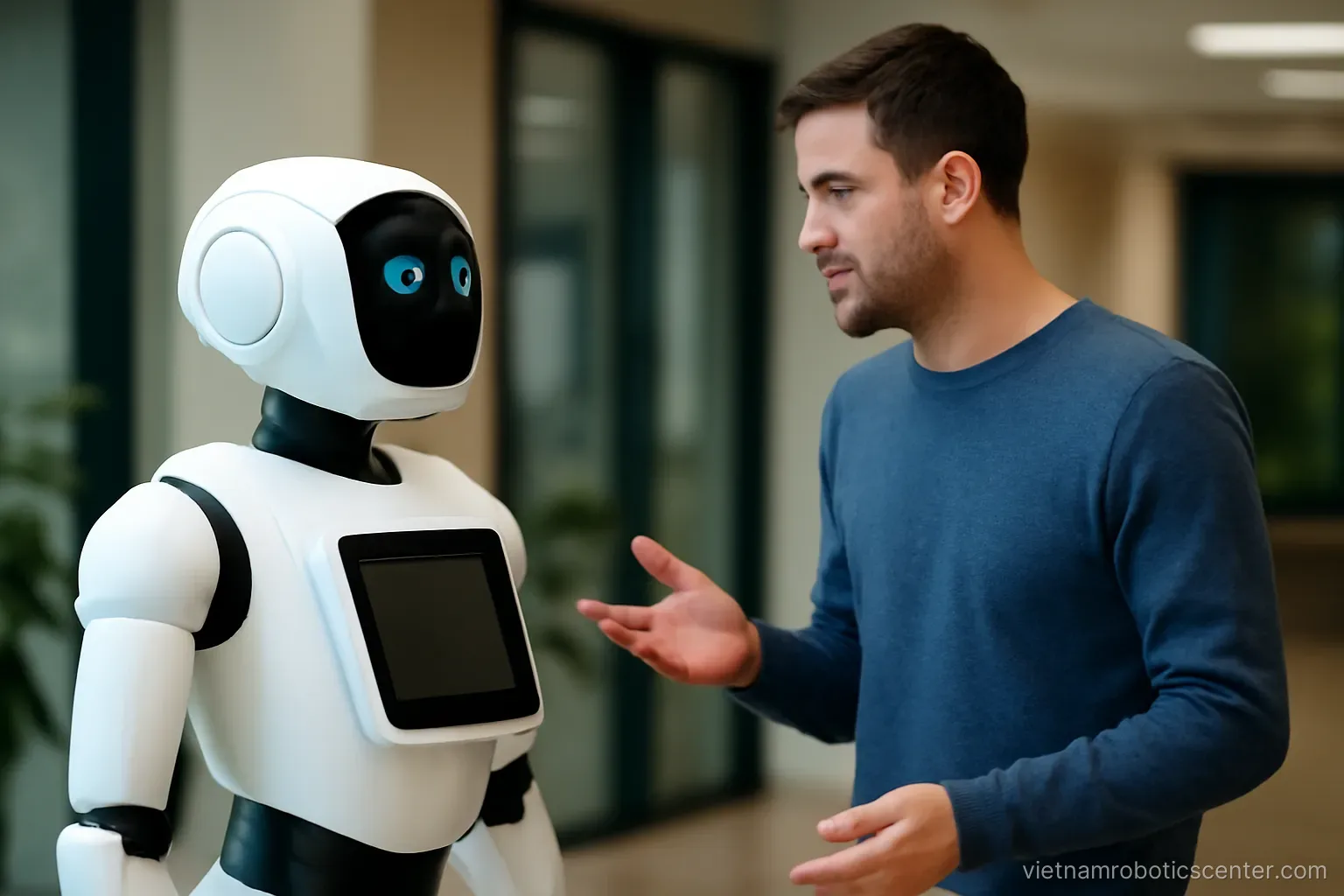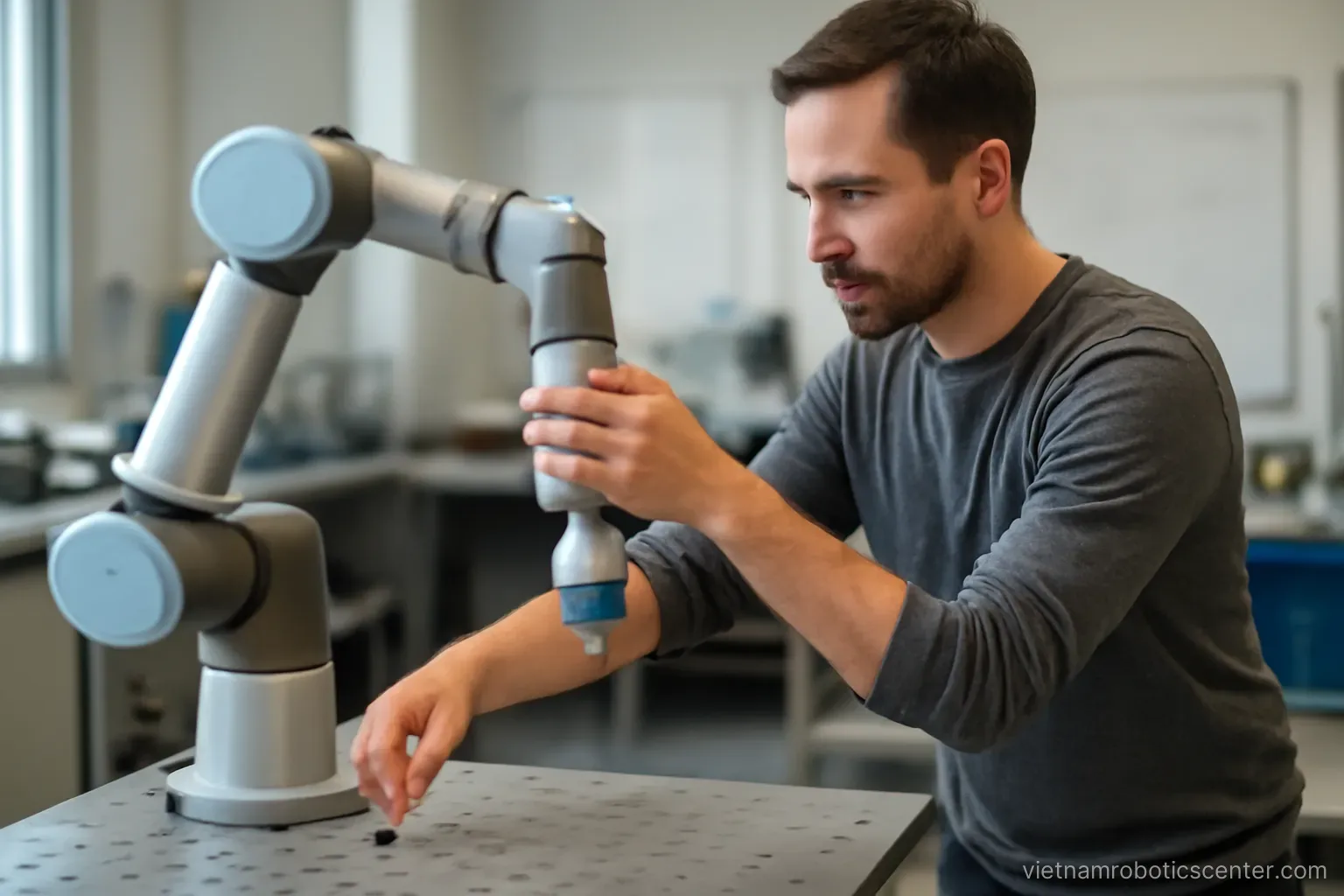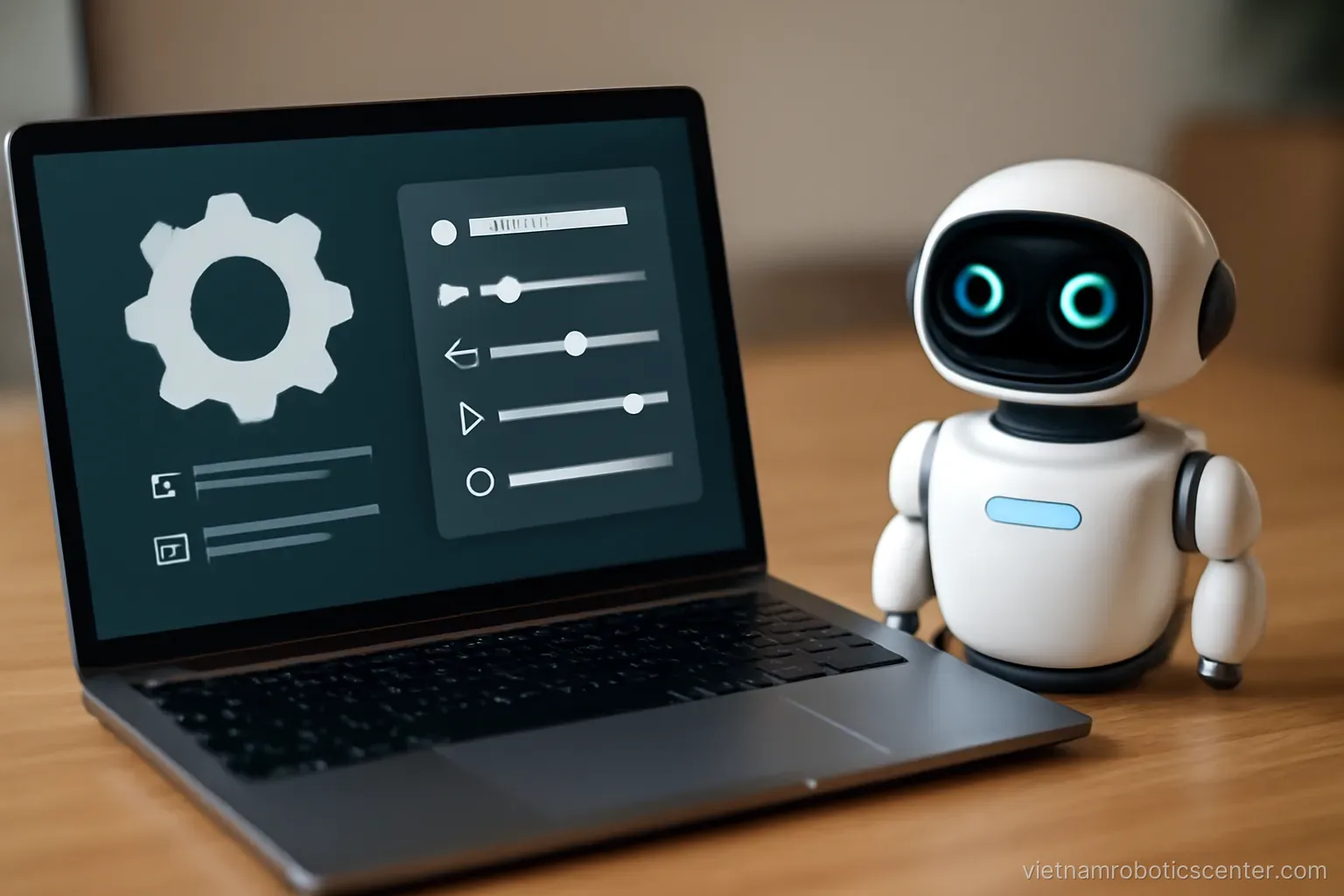
When a supplier says a robot can be customised to your needs, that may mean changing a logo or it may mean training a dedicated model — two things separated by a very wide gap in cost and time.
Level one: identity and interface
The most basic level, available on essentially every product.
What it includes. Logo and brand colours on screen, a name for the robot, a greeting mentioning your company, background imagery, sometimes an outer shell printed to brand.
Cost and time. Low, usually measured in days.
Result. The robot looks like it belongs to your company. Sufficient for an image objective, insufficient for serving customers.
The trap. Many projects stop here and are then disappointed that the robot cannot answer specific customer questions. That is not a hardware fault — it is the consequence of customising only the outer layer.
If the goal is creating an impression at an event, this level is enough. If the robot must do real work with customers, level two is required.
Level two: content and scripting
The level that produces most of the practical value.
What it includes. Loading company, product, service and procedure documents. Writing frequently asked questions. Writing greeting and handover scripts. Configuring the scope of what may be answered.
Cost and time. Moderate, usually measured in weeks. Most of the elapsed time is on your side — preparing and approving documents.
Result. The robot answers real customer questions. This is the boundary between an ornament and a working tool.
Who does what. You supply and approve information; the supplier edits it into the robot's speaking style and configures it. This must be explicit in the contract.
The recurring part. Content requires updating, so this is not a one-time task. Ask about ongoing update costs and how they are performed.
For most organisations, level two is the level to aim at, and budget should favour it over the outer shell.
Level three: voice and character
Moderate cost, noticeable difference in perception.
What it includes. A distinct voice rather than the default. Consistent forms of address suited to the brand. A character in the responses — formal, warm, light. Signature phrases.
Why it merits consideration. Voice is the first thing a customer notices and the thing they remember longest. A default machine voice reduces the impression of the whole experience even where the content is strong.
The options. Use a stock synthetic voice but choose a fitting one; record a person for fixed lines; or generate a custom voice from a real voice sample.
A note on real voices. Using a specific person's voice requires a clear usage agreement, and it is worth planning for the possibility that the person may not remain available.
Consistency beats quality. One ordinary voice used consistently is better than mixing several voices across different parts of the experience.
Level four: training and deep integration
The most expensive level and justified only in specific situations.
What it includes. Connecting to internal systems so the robot queries live data. Additional model training on proprietary data. Developing features to requirement. Customising movement or manipulation behaviour.
Cost and time. High, measured in months, and usually requiring technical teams on both sides.
When it is justified. When the robot needs real-time data such as stock, appointments or order status. When there are many robots so development cost is spread. When a specific requirement cannot be met by an existing product.
When it is not. With a single robot and ordinary requirements. Development cost will far exceed the benefit, and everything must be redone if the hardware changes.
The risk to understand. Deep customisation binds you to one supplier. If they withdraw support or you want different hardware, that investment does not transfer.
Allocating the budget sensibly
The common error is concentrating budget on hardware and treating customisation as an afterthought.
Suggested allocation. For an ordinary project, content and configuration should represent a meaningful share against hardware cost — not a rounding item.
The reason. With the same robot, one deployment with good content and one with thin content produce entirely different results in the customer's eyes. The hardware creates almost none of the difference.
Do not forget maintenance. Content needs regular updating. The annual budget must include this rather than only the initial investment.
Priority under a tight budget. Level two first, level three if funds remain, level one at minimum, level four later.
A quick check. If a quotation shows a very small content line against the hardware, ask precisely what will be done in it. The answer tells you what standard of answers the robot will give customers.
Frequently asked questions
Which level of customisation produces most of the value?
Level two — content and scripting. It is the boundary between an ornament and a working tool, because it determines whether the robot can answer real customer questions.
Why are many projects disappointed despite the robot working?
Because only the outer layer was customised — logo, colours, name. The robot looks like it belongs to the company while knowing nothing about its products and services.
When is deep customisation justified?
When the robot needs real-time data such as stock or appointments, when there are many robots to spread development cost, or when a specific requirement cannot be met by an existing product.
How should the budget be allocated?
Content and configuration should be a meaningful share rather than a rounding item, because with identical hardware the difference between good and thin content produces entirely different customer outcomes.
More in Robots in education and Reception and event robots.