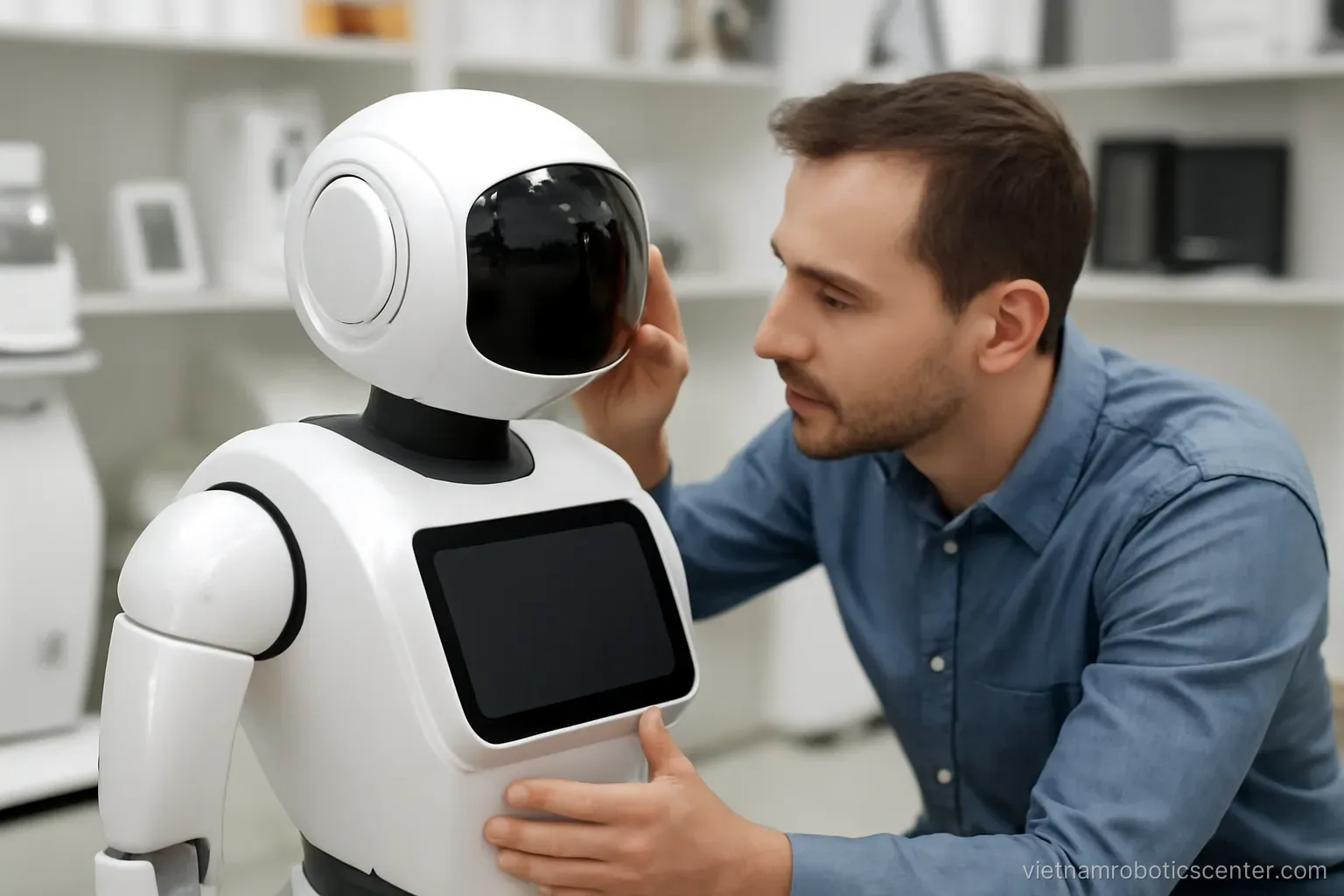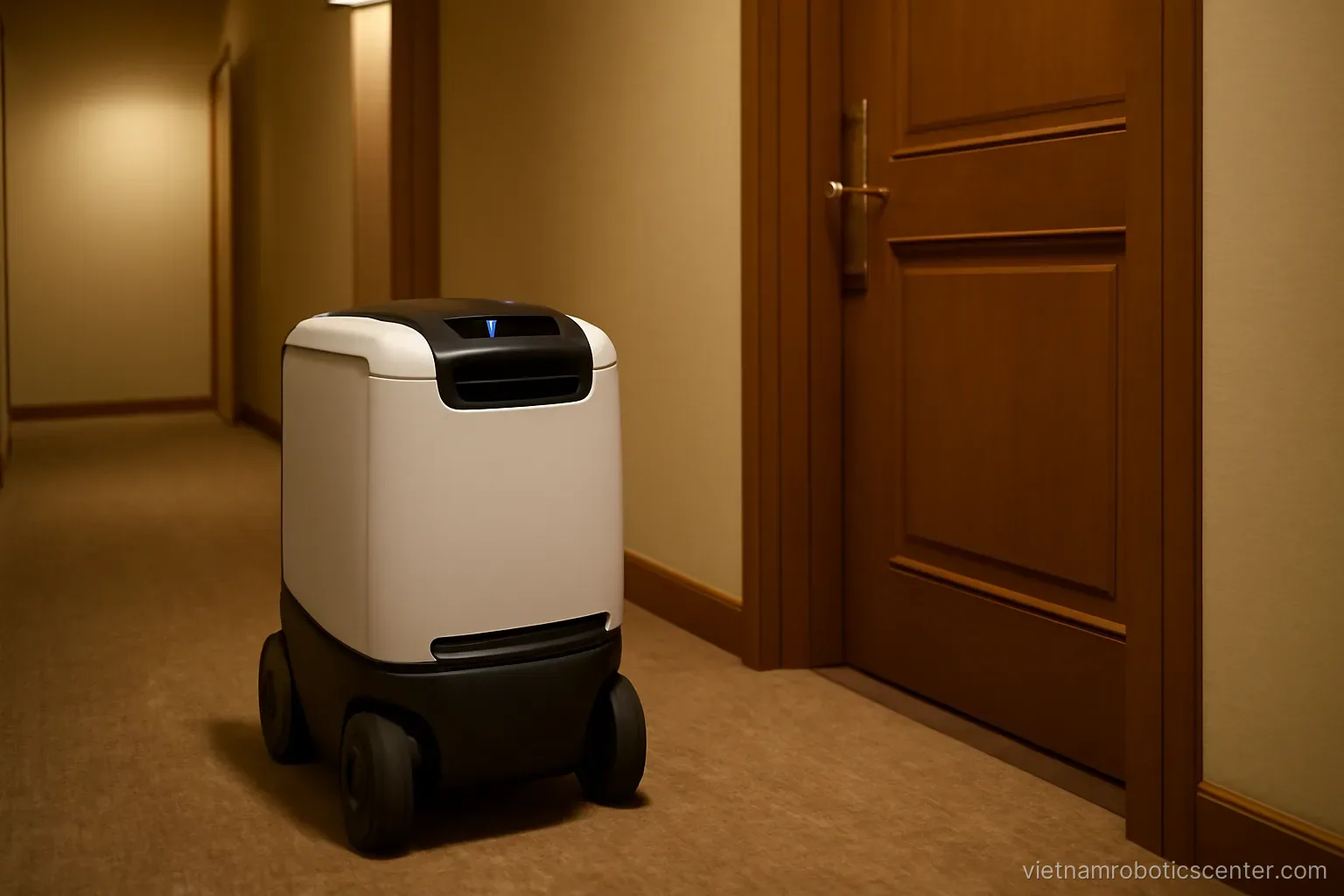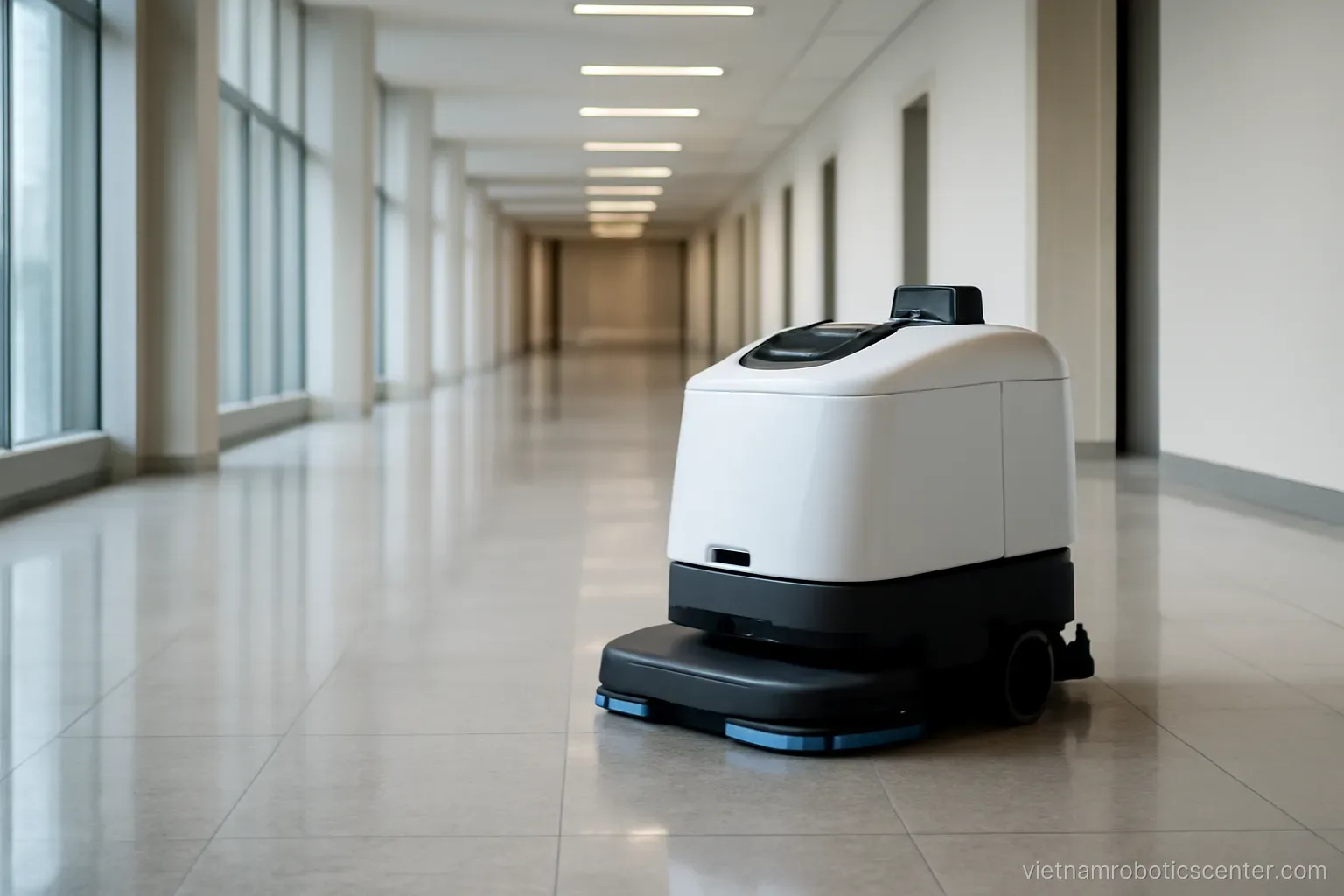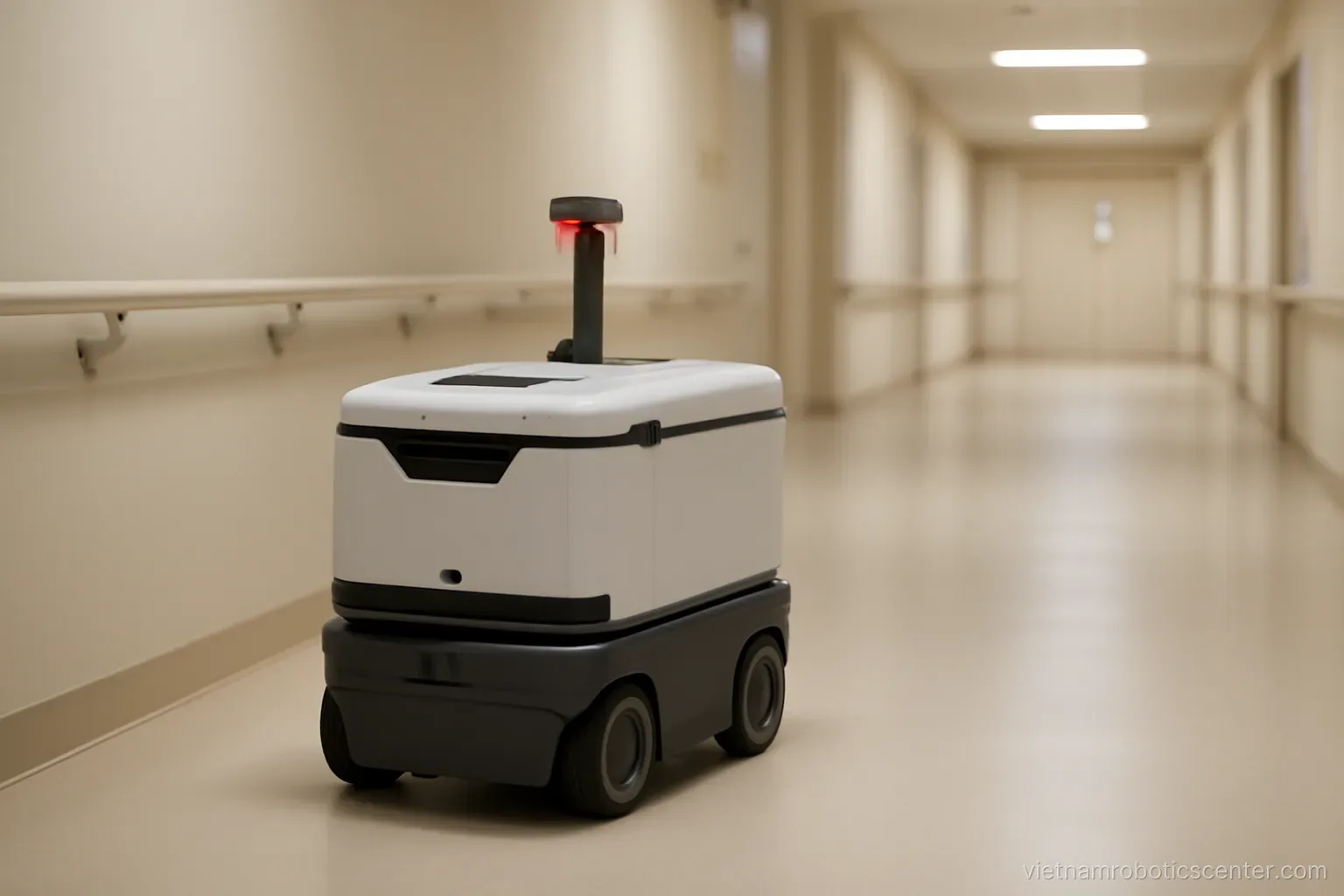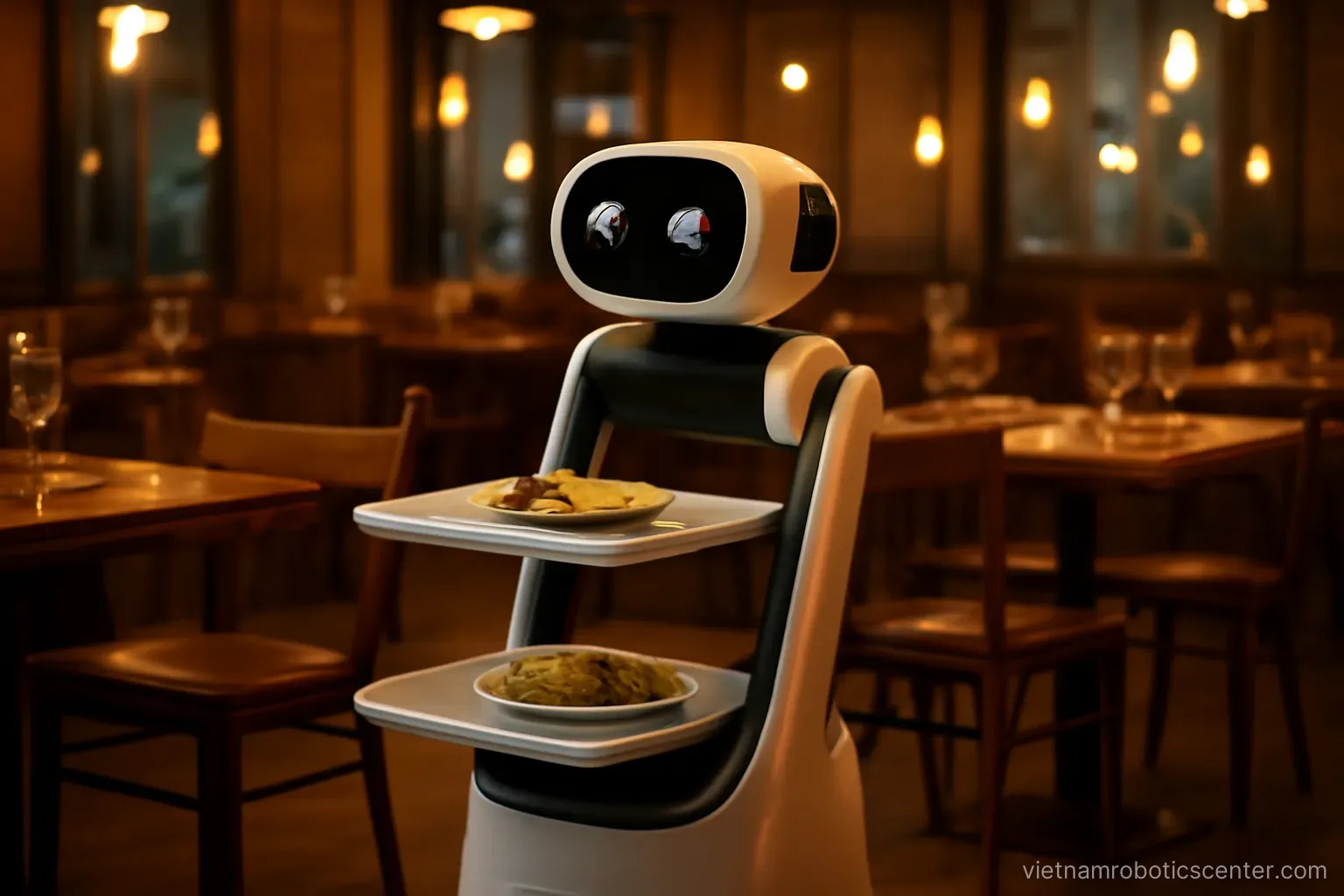
A food-carrying robot is what most restaurant owners consider first. It genuinely works in some venues and creates friction in others, and the difference lies almost entirely in the floor plan rather than in the robot.
Exactly what it does
Worth stating clearly to avoid mismatched expectations.
It carries food from the kitchen to the table area. This is the largest single component of a server's walking distance in a shift.
It does not place dishes on the table. The guest or a server lifts the tray. Robots do not have hands dexterous enough to set down plates.
It does not take orders, take payment or clear tables. Some products handle ordering through a screen; clearing remains out of reach.
It carries back to the kitchen. Dirty dishes, empty trays — the return leg has value too and is frequently forgotten in the calculation.
So the real value is reducing the distance staff walk, freeing them for guest contact. In venues where servers walk several kilometres a shift the figure is meaningful; in small venues it is close to zero.
This is also why larger and longer venues make more sense, while small venues get an expensive ornament.
Which venues suit
Suits. Large floor area, many tables, long distance from kitchen to tables. Wide straight aisles. Flat floor on one level. High and steady guest volume. Dishes not prone to spilling.
Does not suit. Small venues with the kitchen close to tables. Narrow or winding aisles. Steps or multiple levels. Tables packed tightly. Full soup dishes that slosh. Venues with a refined service style where a robot's presence lowers the experience.
Middle cases. Hotpot and barbecue restaurants, buffet venues, large family restaurants — usually suitable because dishes travel on large trays and guests are accustomed to serving themselves.
A quick check. Measure the narrowest aisle at a busy hour, with chairs pulled out and staff standing at tables. If it is below what the robot needs, there is nothing further to discuss.
And a simple physical test: push a trolley of comparable size around the whole venue at peak. If the trolley struggles, the robot will too — with the difference that a trolley can be manoeuvred and a robot cannot.
Aisle and table layout
Most restaurant robot problems are floor plan problems, and most are solvable.
Reserve one adequate main route. Not the whole venue, just one route from kitchen to the table areas. The robot uses it; staff handle the rest.
Mark the route. Floor marking or furniture arrangement making the route obvious. Staff and guests will avoid it once they know it is the robot's path.
Fix chair positions. Chairs pulled out are the leading cause of blockage. In a venue using a robot, arrange chairs so that even pulled out they do not encroach on the route.
Stop near tables, not at them. The robot stops at the end of a row and a server or guest lifts the tray. Far simpler than forcing it right up to each table.
Parking and charging. Off the traffic route, near the kitchen.
Remove fixed obstacles. Planters, standing menu boards, bins placed mid-aisle — each is a point the robot must avoid or stop at.
Coordinating with staff
This determines whether the robot is used or pushed into a corner.
Who loads it. Usually whoever plates in the kitchen. A clear procedure and a place for the robot to wait are needed.
Who unloads it. Section staff or the guests. If guests are expected to unload, they must be told clearly, because unfamiliar guests hesitate.
Who unjams it. There must be someone and they must know how. A robot stalled mid-floor at a busy hour creates a very poor impression.
Never make staff wait for the robot. If the procedure has servers standing idle waiting for it, they will simply carry the dish themselves and the robot becomes redundant.
Be clear it replaces nobody. Servers spend more time with guests and less time walking. If they believe it arrived to cut headcount, they will find ways to demonstrate it does not work.
Let them help adjust the route. Staff know where it jams and when it is busy. Their input improves the route faster than any planning on a drawing.
Working out whether it pays
Measure current walking. Count trips from kitchen to tables in a shift and estimate distance. This is the baseline.
Estimate real robot throughput. Trips per shift at actual speed, including loading waits and unloading waits.
Do not forget the return leg. Carrying dirty dishes back is a productive trip too.
Against real cost. Purchase price over expected years, plus maintenance, power and route adjustment time.
Consider the image value. In some segments a robot draws guests who come to try it — real value, but it fades within months, so keep it out of the long-run calculation.
The practical threshold. A robot only makes sense above a certain number of trips per shift. Venues serving few trips will find cost per trip exceeds the wage of the person who would carry them.
The lowest-risk test: rent for one month during peak season, count actual trips, then decide about buying. Many suppliers offer short rentals and this is the cheapest way to get a real answer for your own venue.
Frequently asked questions
Can a serving robot place dishes on the table?
No. The guest or a server lifts the tray, because robot hands are not dexterous enough to set down plates. Its value lies in carrying dishes over the distance from kitchen to table area.
Which venue type suits best?
Large floor area, many tables, long kitchen-to-table distance, wide straight aisles and one flat level. Small venues with the kitchen near the tables gain almost nothing.
What most commonly causes blockages?
Chairs pulled out into the aisle. In venues using a robot, chairs should be arranged so that even when pulled out they do not encroach on the marked route.
What is the cheapest way to test it?
Rent for one month during peak season and count actual trips per shift. Many suppliers offer short rentals, and this gives a real answer for your specific venue rather than a general estimate.
More in Deployment and operations and Robots in education.