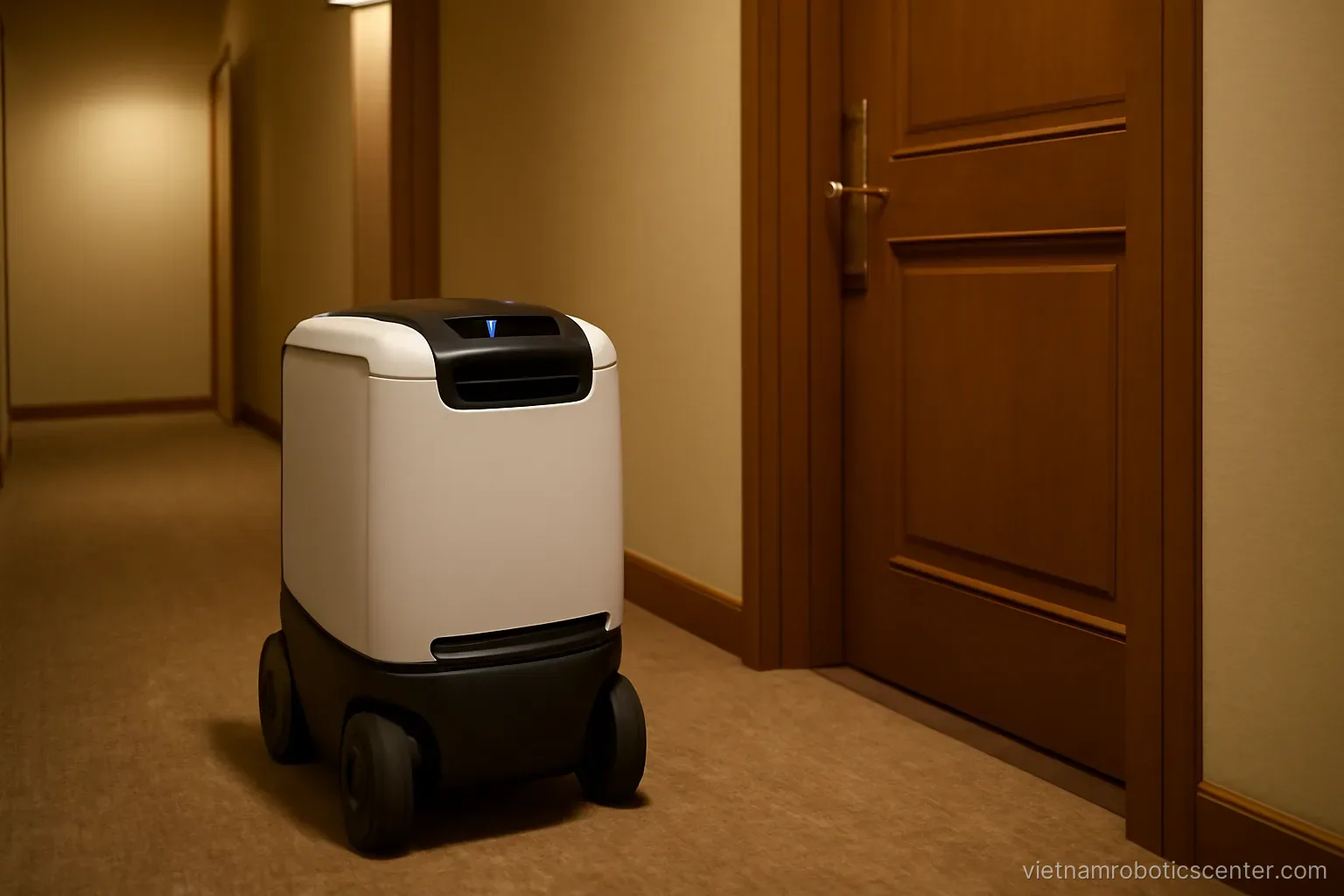
Of all service sectors, hotels may be the most favourable environment for robots: corridors are wide and straight, floors are flat, routes repeat daily, and guests usually find it interesting rather than irritating.
Room delivery
The clearest business case in a hotel.
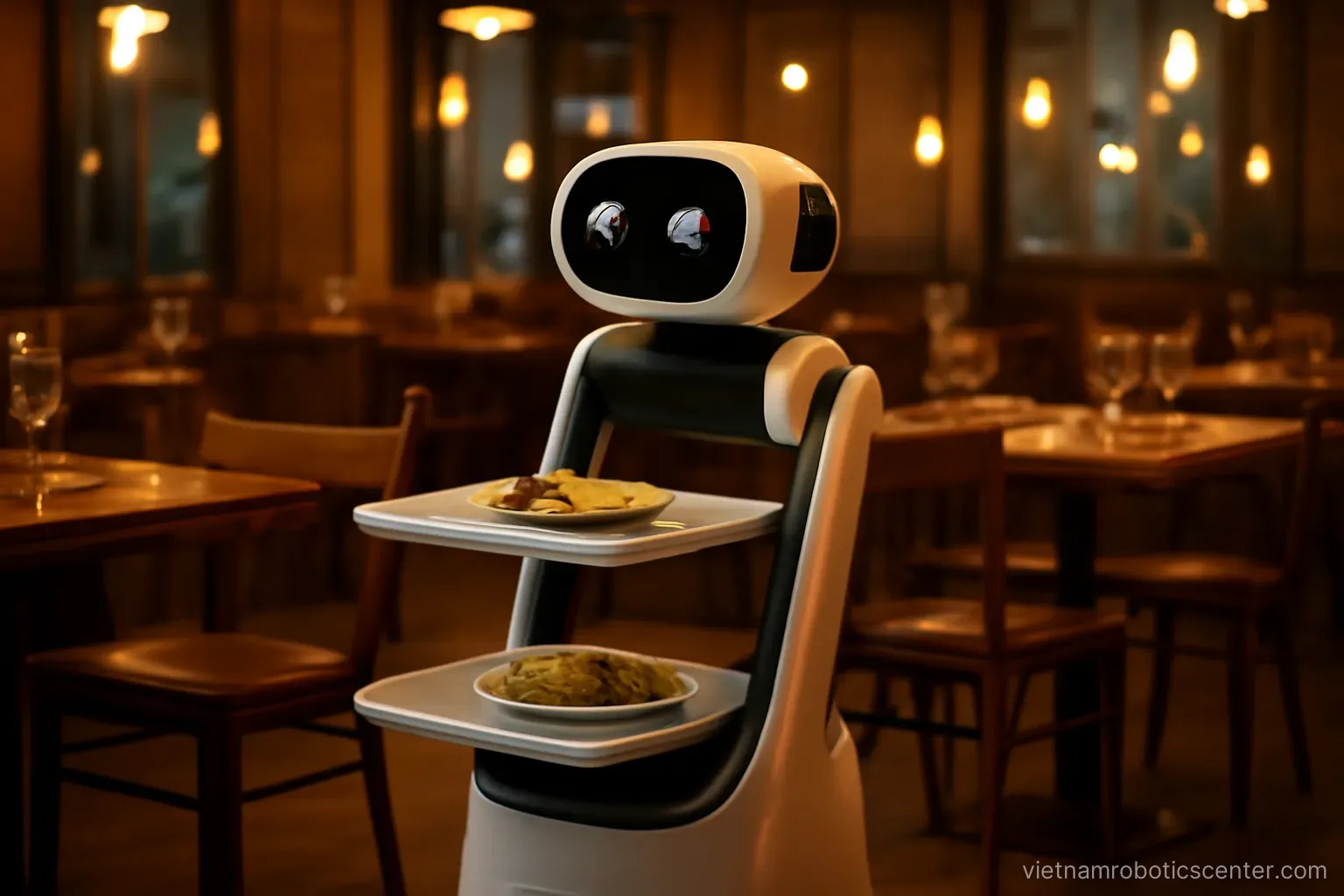
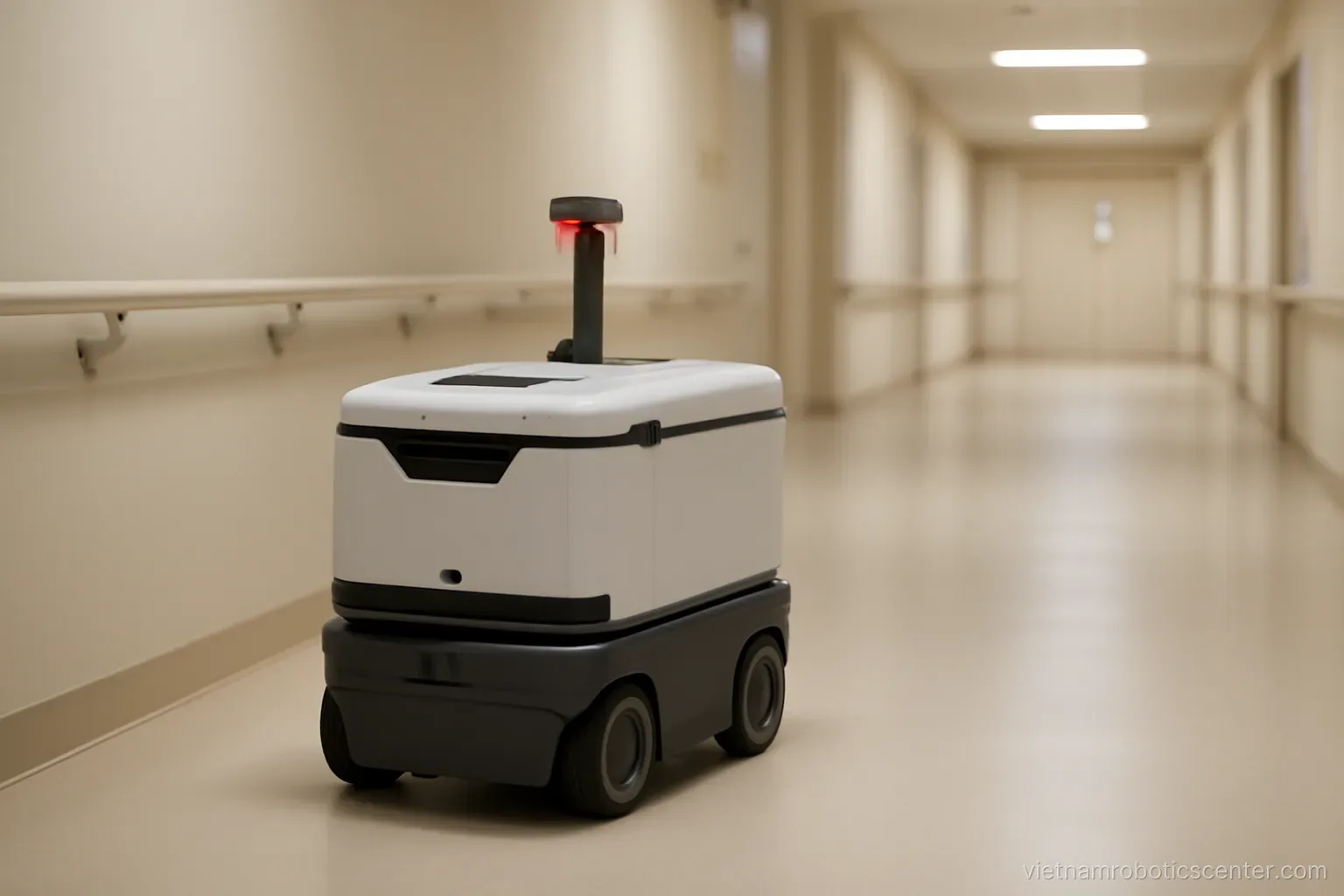
The job. A guest requests extra towels, water, amenities, or orders food. The robot carries it from the service area to the room door and the guest collects.
Why it fits. Long distances, repeated, and often falling at times when the front desk has only one or two people — particularly overnight.
The night shift is where the value concentrates. From midnight to morning staffing is minimal, and each trip to deliver something leaves the desk unattended. The robot addresses exactly that.
The key technical condition. The robot must be able to call the lift — the most important requirement and usually needing additional equipment integrated with the lift system. Without solving this, the robot serves one floor only.
Other conditions. Corridors wide enough, carpet not too thick, a charging point in the service area, and a way to notify the guest when it arrives.
Support in the lobby
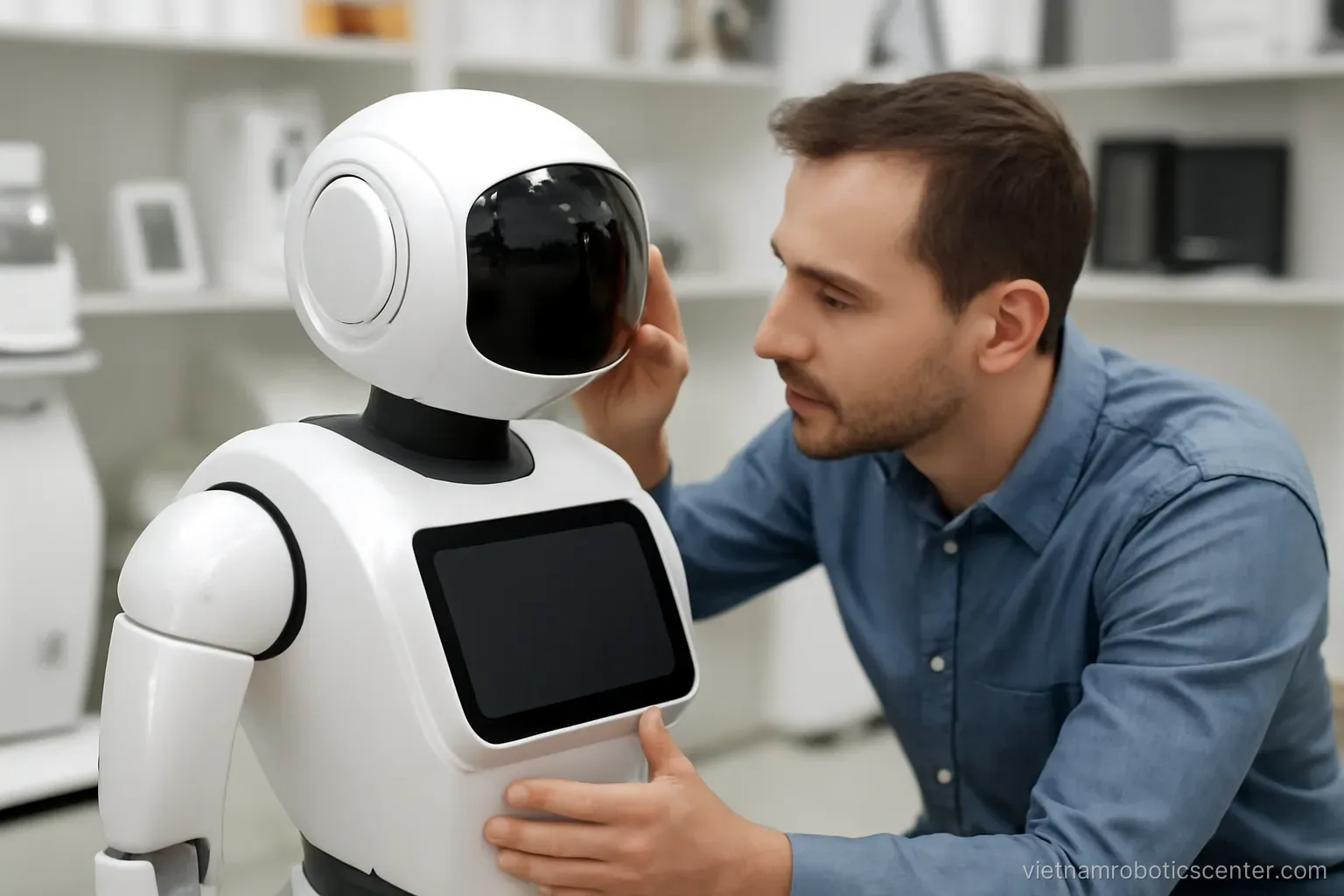
The job. Answering questions about the hotel and the surrounding area, breakfast times, services. Giving directions within the hotel. Assisting international guests in several languages.
The clearest strength is languages. Hotels in tourist areas receive guests of many nationalities, and staff who speak the relevant language are not always on shift. This is where a robot contributes measurably.
Common guest questions. Where and when is breakfast, how does the wifi work, what is nearby to eat, how do I get to the beach, where can I hire a vehicle. Mostly repeated with fixed answers.
It does not replace the front desk. Check-in, check-out, complaints, special requests — these need people, and guests expect people for them.
Placement. Near the waiting area or the lifts, where guests naturally pause, and not blocking the reception counter.
The lift problem
The largest technical barrier for hotel robots and one that should be settled before purchase.
The robot cannot press lift buttons. It needs an electronic connection to the lift system to call it and select a floor.
Feasibility depends on the lift. Newer lifts often have an interface available; older ones may need additional equipment or may not be connectable at all.
The cost is significant. Lift integration sometimes costs as much as the robot, and it is routinely omitted from budgets.
Sharing lifts with guests. A robot entering a lift with guests occupies space and can irritate. Hotels with a service lift should use that instead.
The simpler alternative. If the lift cannot be solved, restrict the robot to one floor or to the lobby area. Many hotels do exactly this and still derive value.
Practical advice: ask about the lift in the first meeting with any supplier, before anything else is discussed. The answer determines the scope of the whole project.
Guest experience
Hotels differ from other sectors in that the experience is the product.
Most guests enjoy it. A robot delivering to the room is something guests photograph and describe to others. Real value for hotels in the mid segment and below.
The premium segment is the opposite. Guests paying for personalised service may read a robot as cost-cutting. There it suits back-of-house logistics better than guest contact.
Tell guests clearly. A guest unaware the robot is coming will not open the door. Notification by room phone or message is required.
Prepare for unfamiliar guests. Older guests or those uncomfortable with technology may hesitate. Simple instructions on the robot itself help considerably.
Never make the robot the only option. There must always be a way to reach a person. A guest wanting to speak to someone and finding only a robot is a poor experience.
Putting it into operation
Start with one job. Usually room delivery on a subset of floors. Prove it, then extend.
Map thoroughly. All corridors, every room position, the lift locations. A day or two of work, and doing it carefully means fewer faults later.
Trial during quiet periods. Several days running without guests present, to tune routes and speed.
Train all three shifts. Especially the night shift, because that is when the robot is most useful and when the fewest people know how to handle it.
Have a procedure for night-time jams. Who is called and what they do. A robot stuck in a corridor at three in the morning with nobody aware is a real situation.
Track delivery volume. If it is low, guests may not know the service exists — which needs communicating in the room.
That last point is often overlooked: guests must know the service exists before they use it. A small card in the room typically raises usage more than any technical improvement.
Frequently asked questions
Where does the value of hotel delivery robots concentrate?
The night shift. From midnight to morning staffing is minimal and every trip to deliver something leaves the front desk unattended, which is exactly the problem a robot removes.
What is the largest technical barrier?
The lift. The robot needs an electronic connection to call it and select a floor, feasibility depends on the lift's age, and integration sometimes costs as much as the robot itself.
Do robots suit premium hotels?
Usually not in guest-facing roles, because guests paying for personalised service may read a robot as cost-cutting. It suits back-of-house logistics better in that segment.
Why is usage low even when the robot works well?
Usually because guests do not know the service exists. A small card in the room explaining how to request delivery typically raises usage more than any technical improvement.
More in Robots in education and Training and customising a robot.