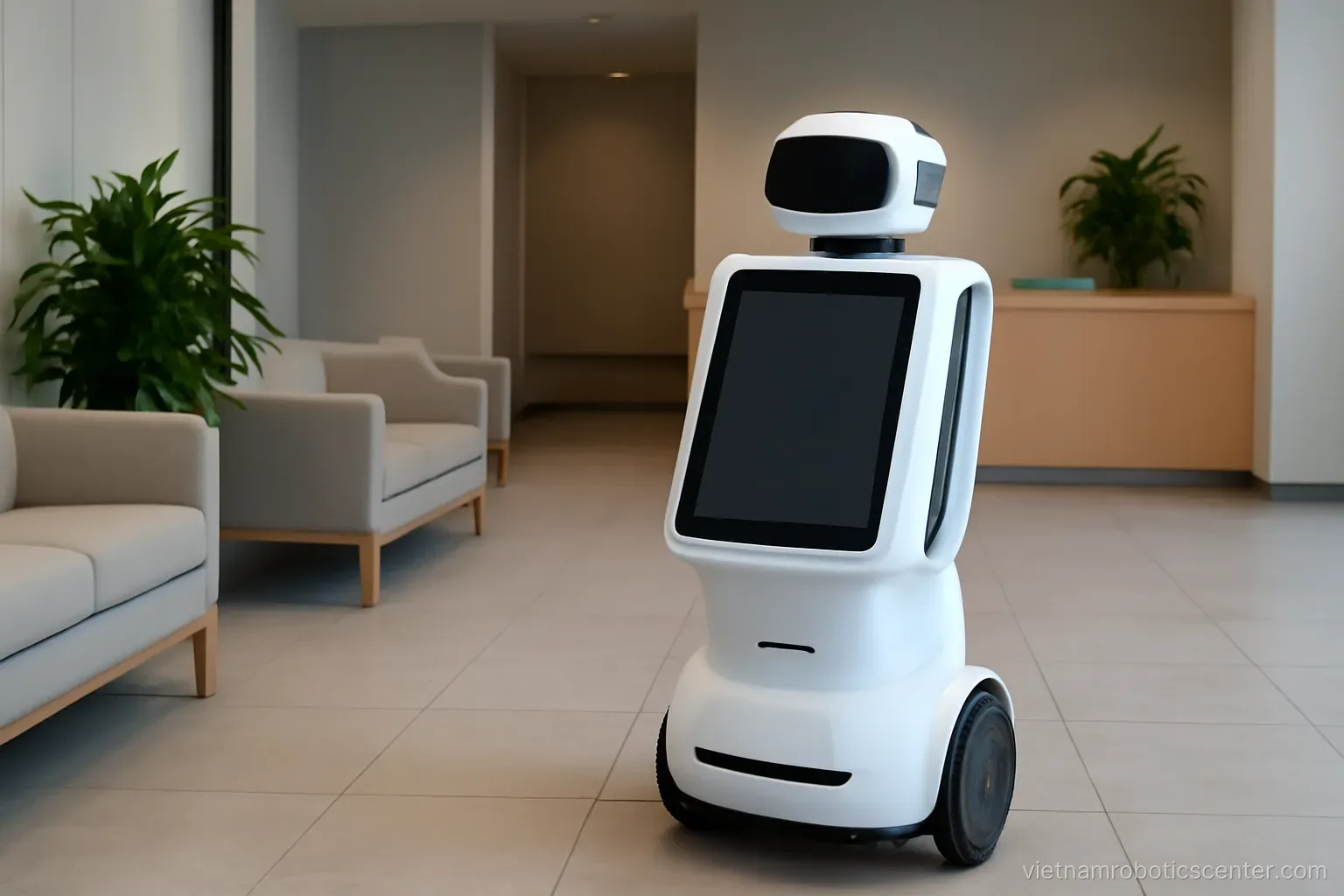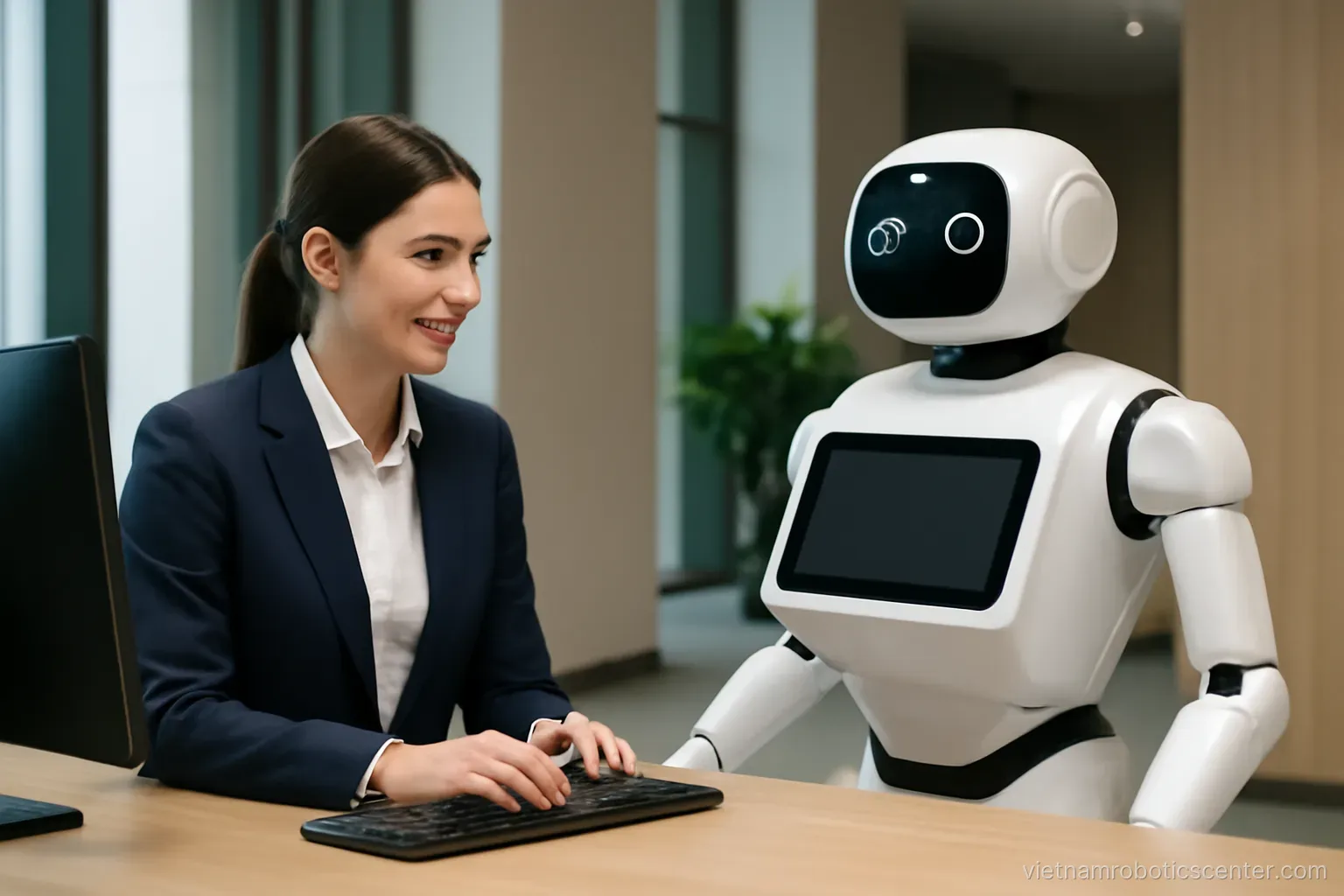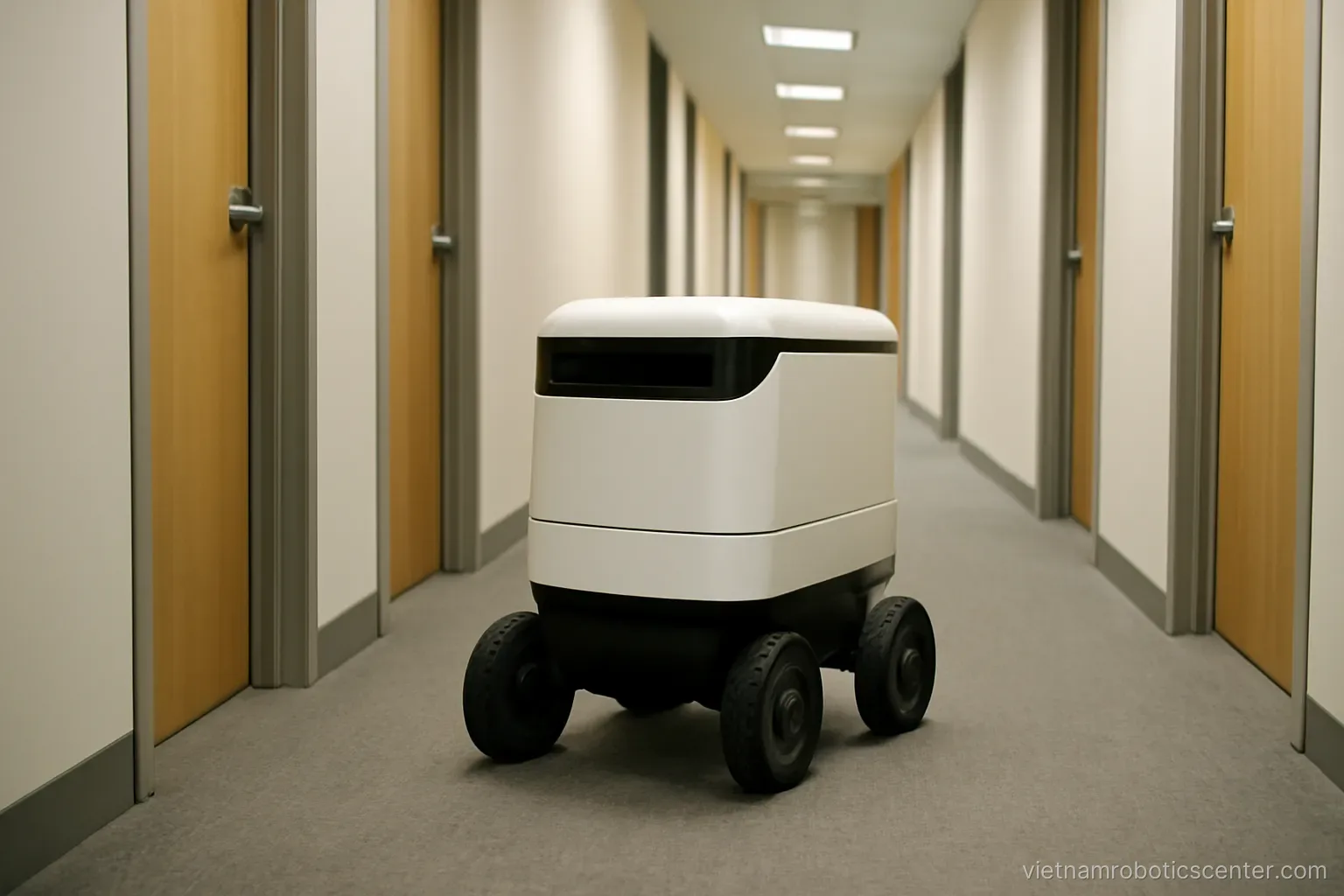
Almost everyone thinking about AI robots pictures greeting visitors. Internal applications tend to have clearer economics, lower risk, and a much lower failure rate — for one simple reason: if the robot performs poorly, only colleagues see it.
Moving items around a site
The job. Documents between departments, samples in a laboratory, supplies in a hospital, linen and amenities in a hotel.
Why the economics are clear. Directly measurable in trips completed and in walking distance staff no longer cover. In large buildings, staff walking time is considerably higher than perceived, and a week of measurement usually surprises people.
Conditions. Flat floors, lift access where levels are crossed, aisles kept clear.
Where it fails. Aisles blocked by stored items — the leading cause. Nobody unloading the tray. And closed doors the robot cannot open.
Practical approach. Start with a single route between the two busiest points. Prove it there, then extend, rather than covering the whole building from the outset.
Onboarding and internal guidance
A rarely considered application with real value where hiring volume is high.
The job. Showing new staff around, explaining procedures, answering the basic questions people are reluctant to ask a colleague.
Why it works. Onboarding content is highly repetitive, and whoever delivers it is usually busy. Quality varies with who happens to be free that day, which is not a stable basis.
An overlooked side benefit. New employees ask a robot more freely than they ask a person, particularly questions they fear would look uninformed. The number of questions actually asked rises noticeably.
Conditions. Procedure documents to load, and updates when procedures change.
Where it fails. Written procedures differ from how work is actually done, and the robot will follow the written version. This is an opportunity to review the procedures rather than a fault of the robot.
Routine inspection rounds
The job. Following a fixed route, photographing checkpoints, reading gauges, noting temperature, flagging anomalies such as open doors, failed lights or obstructions.
Why it suits. Repetitive, fixed route, stable content — squarely in the robot's strong area. And it is work people skip because it is dull.
Value. Complete and consistent records with photographic evidence, and it can run overnight when nobody is present.
Conditions. A traversable route, checkpoints visible from where the robot stands, enough light to photograph.
Important caveat. The robot records; it does not judge. Reading and acting on anomalies still requires a person, and someone must genuinely review the reports — otherwise this is merely generating data nobody reads.
Why internal applications succeed more often
Four reasonably clear reasons.
Lower expectations. Colleagues are more forgiving than customers. A clumsy first few weeks costs nothing in brand terms.
A more stable environment. Internal areas vary less than customer areas, with fewer strangers and fewer surprises.
Users learn to cooperate. Staff work out how to phrase things so the robot understands, how to give way, how to unjam it. Customers do not.
Easier to measure. Trips completed, checkpoints covered, questions from new starters — all internal figures, simple to collect.
This suggests a sensible strategy for a first-time organisation: run an internal application first so the team learns the ropes, then build a customer-facing one. Slower, with a considerably higher success rate and a cheaper learning curve.
Combining internal and external roles
One robot can do both if the roles are separated by time.
Greeting by day, inspection by night. Uses the machine during hours it would otherwise sit idle, and the investment case improves noticeably.
Lobby at peak, deliveries off-peak. Same device, two roles on a schedule.
Requirements. A product supporting multiple configured modes. A map covering both areas. And someone responsible for switching, or automatic switching by time.
Caution. Do not attempt both from the start. Get one role running reliably before adding the second — trying two jobs in week one is a reliable way to have neither work well.
And when building the investment case, dual-role capability should be counted. It is often the factor that moves the calculation from hard to justify into reasonable.
Frequently asked questions
Why do internal applications succeed more often?
Lower colleague expectations, a more stable environment, users who learn to cooperate with the robot, and metrics that are simpler to collect because they are all internal figures.
What is the overlooked benefit of a robot guiding new staff?
New employees ask a robot questions they would hesitate to ask a colleague for fear of looking uninformed. The number of questions actually asked rises noticeably compared with traditional onboarding.
Does an inspection robot detect problems by itself?
It records rather than judges. A person must read and act on the reports, and if nobody does, the exercise only generates data nobody reads.
Can one robot serve both internal and customer-facing roles?
Yes, separated by time — greeting by day and inspection or deliveries at night. But get one role running reliably first; attempting both from week one usually means neither works well.
More in Training and customising a robot and Reception and event robots.