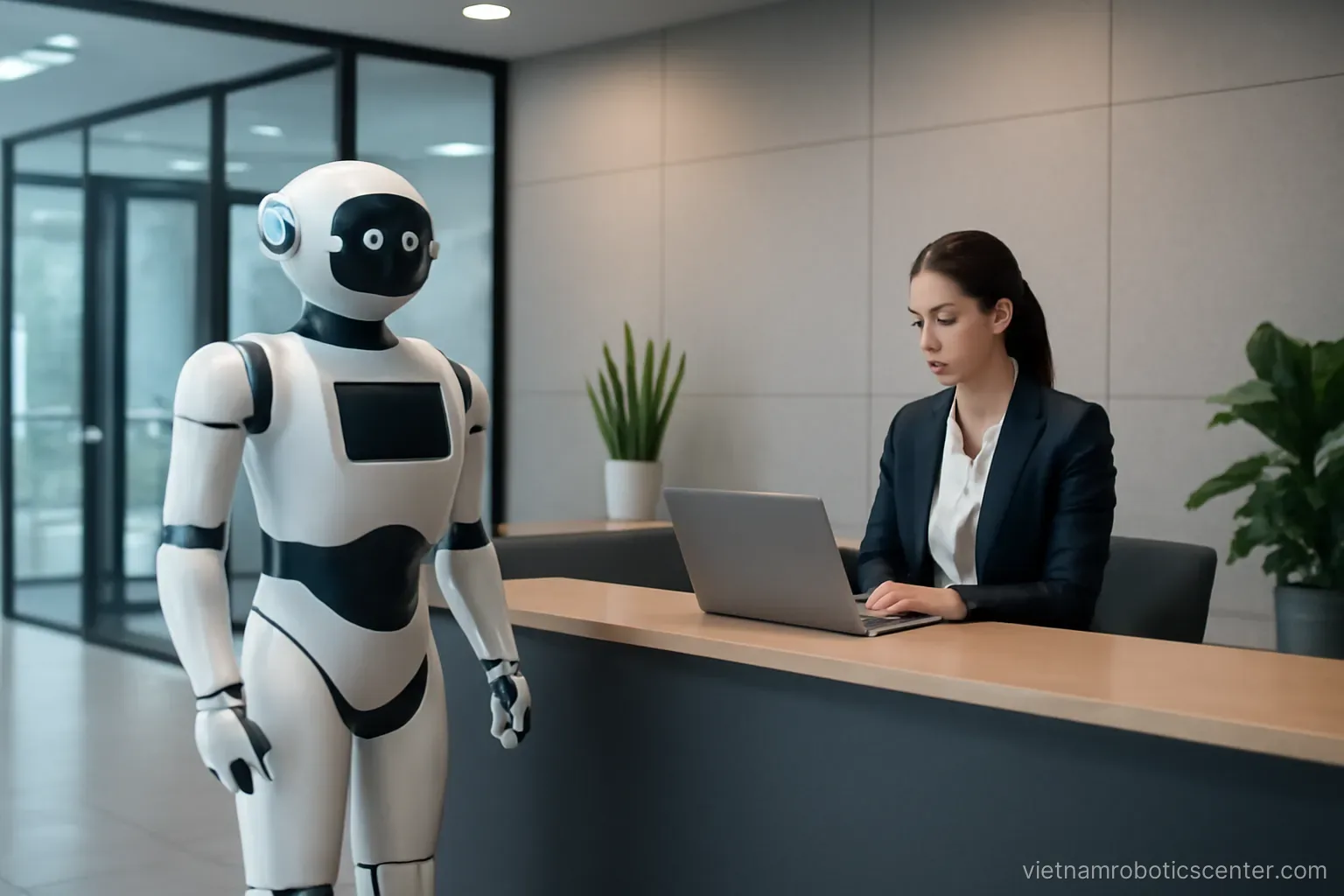
Most content about AI robots describes what will be possible in a few years. This covers only what runs today, in places you can visit, with value measurable in numbers.
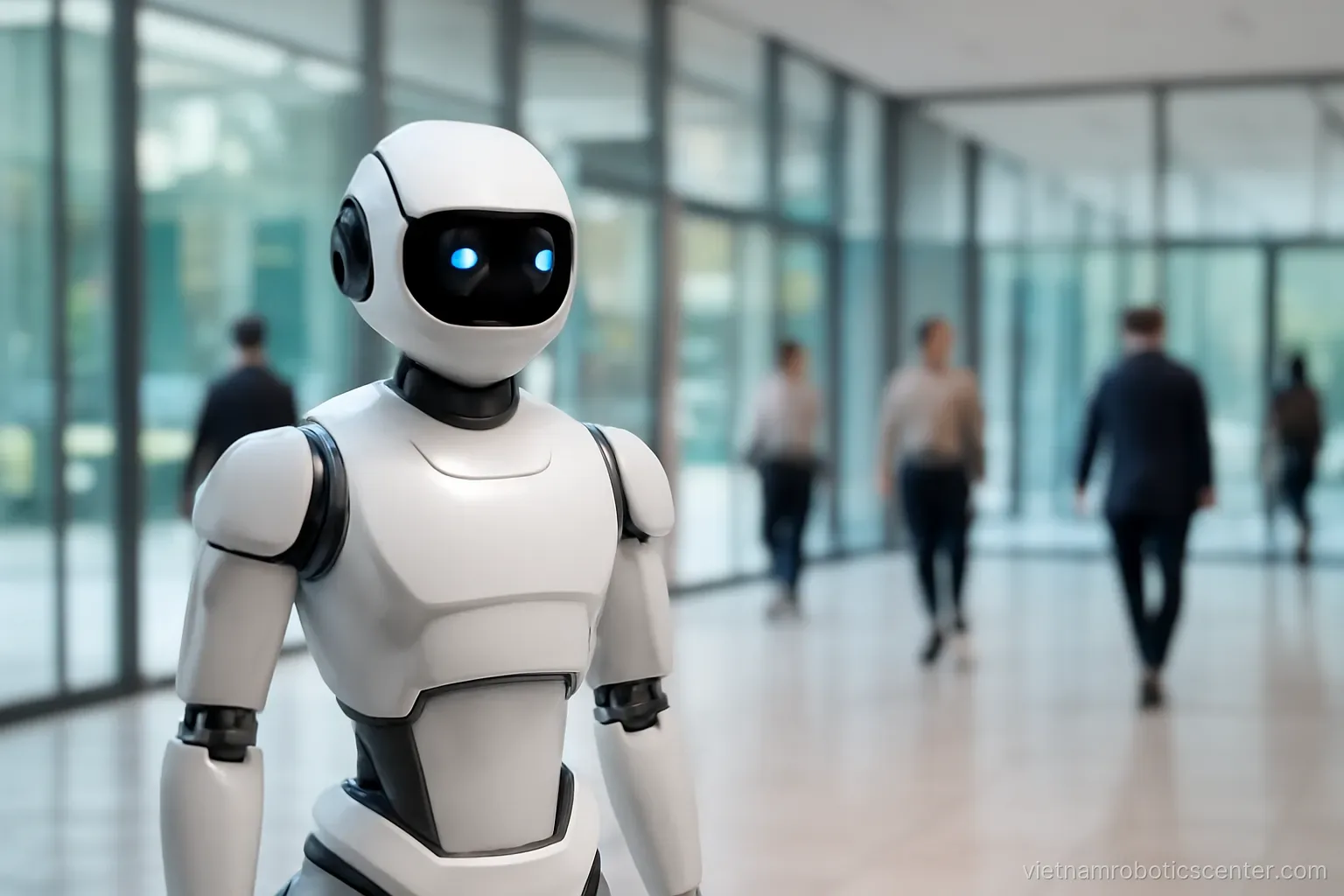
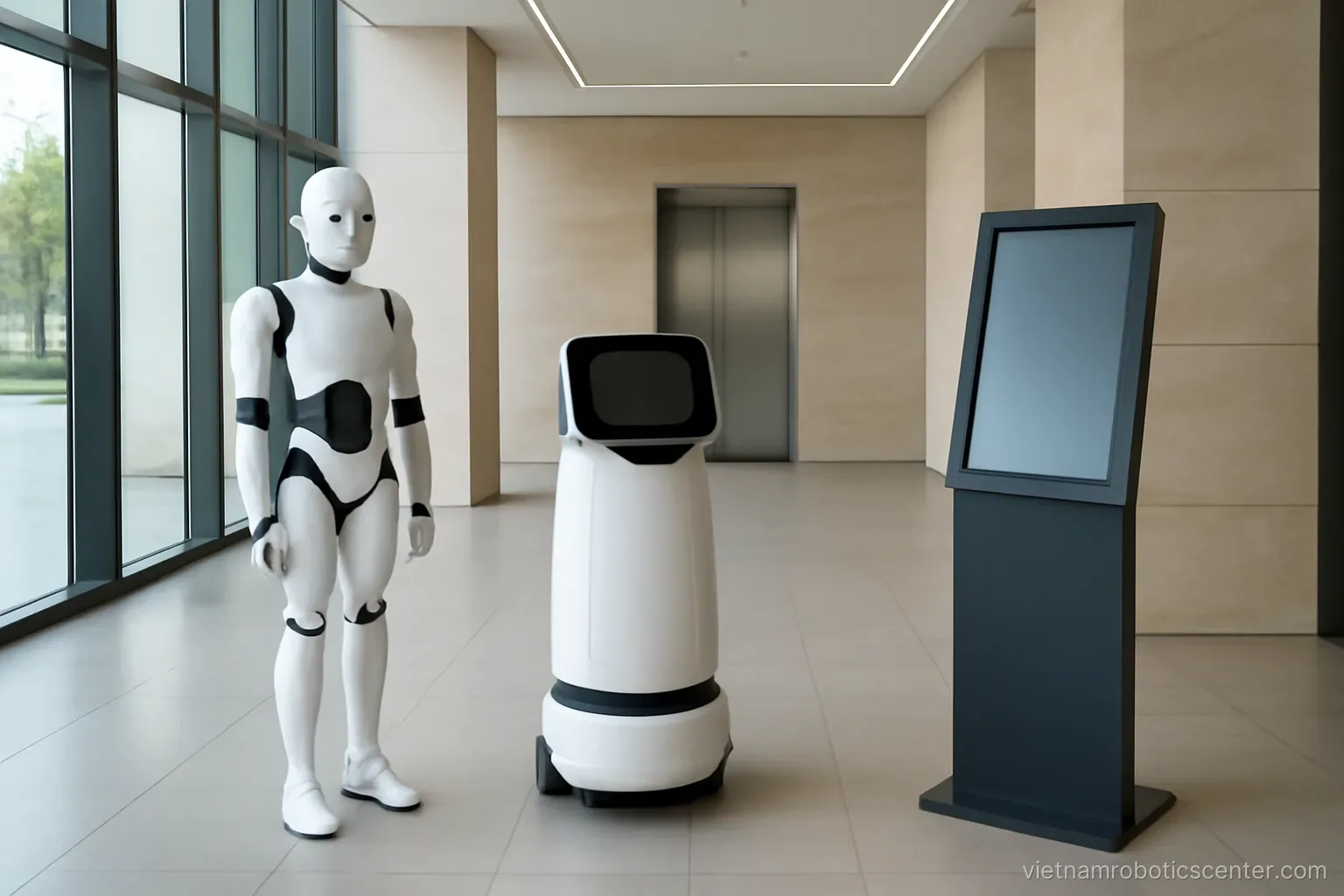
Greeting visitors and answering repeat questions
The most common application and the one with the highest success rate.
The job. Greet arrivals, ask what they need, answer questions about products, services, opening hours and processes. Give directions inside a building. Capture contact details.
Measurable value. Questions handled without staff involvement. At any busy reception, the proportion of repeated questions is high, and that proportion is exactly what a robot absorbs.
Conditions for success. Documents to load. Someone to update them when information changes. A handover mechanism when a question exceeds scope.
Where it fails. Stale content. Environments too noisy to hear clearly. And placing the robot where visitors do not walk.
This is also the right first application, because it is cheap, low risk, and it teaches the organisation how to work with a robot before harder things are attempted.
Guiding visitors and presenting a space
The job. Lead a visitor from lobby to meeting room, run a tour of a facility or showroom along a fixed route, stopping at each point to explain.
Value. Frees staff from repetitive guiding. Ensures every visitor receives the full explanation, which a human guide struggles to sustain past the twentieth time in a day.
Conditions. Flat floors, adequate aisle width, no steps. A built map. A fixed route.
Where it fails. Furniture moved so the map no longer matches. Crowding that slows or stops the robot. And visitors walking faster than the robot and leaving it behind — which happens far more often than expected.
Practical fix. Have the robot move slightly slower than natural walking pace and open with an explicit invitation to follow. That handles most of the losing-the-group problem on its own.
Covering hours and places without staff
The application with the clearest economics and the least attention.
The job. Answering visitors outside office hours, staffing a small branch that cannot justify a full-time person, serving arrivals at peak times when all staff are occupied.
Value. Not replacing anyone but covering gaps where currently nobody is available. Visitors arriving out of hours receive nothing at present, so any level of service is an improvement.
Why the case is easier. Nobody loses a job, so there is no internal resistance. The comparison baseline is nothing rather than a capable employee. And visitor expectations of out-of-hours service are lower to begin with.
Conditions. The robot must run unattended, meaning automatic charging or a reliable charging routine, and it must handle situations where nobody is coming to help.
Carrying items around a site
The job. Delivering food in restaurants, items in hotels, samples and documents in hospitals or large offices.
Value. Directly measurable in deliveries per shift and in walking distance staff no longer cover. Where staff walk for hours each shift, the figure is larger than expected.
Conditions. Flat floors, lift access if it crosses levels, aisles kept clear.
Where it fails. Aisles blocked by stored items — the number one cause of stoppages in practice. And nobody removing items from the tray, which prevents the robot continuing.
What decides success. Staff cooperation. A delivery robot only works well once everyone habitually keeps aisles clear and unloads promptly, and that takes a few weeks to establish.
What not to expect this year
Stated plainly to prevent mismatched purchases.
A robot replacing a whole role. Not yet. It absorbs part of a job and needs a person for the rest.
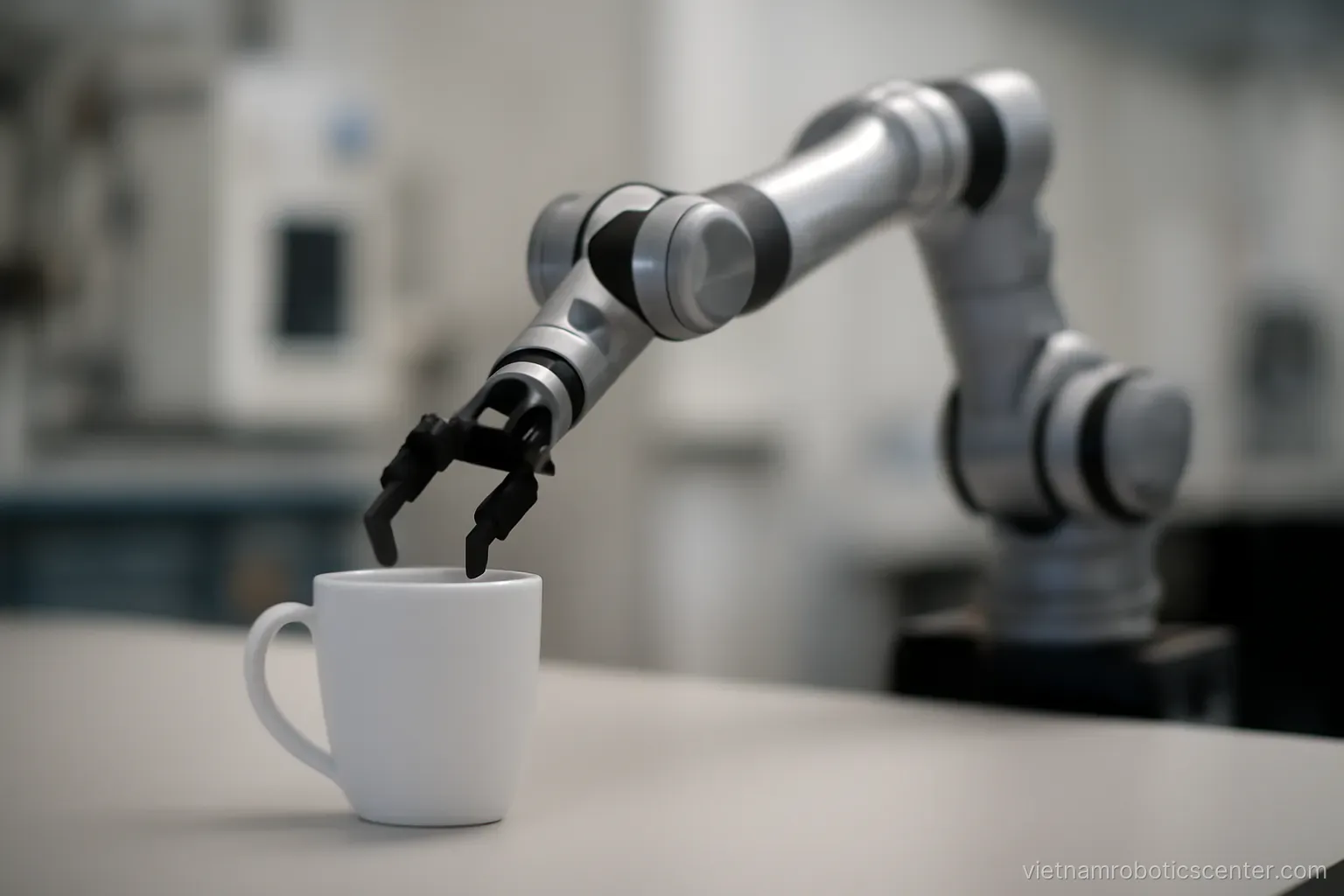
Varied physical work. Flexible tidying, arranging cluttered items, food preparation — not reliable outside demonstrations.
Learning a new task just by watching. Real research progress, no deployable product working this way.
Running all day unattended. Still needs charging, cleaning, content updates and unjamming.
Moving well through real crowds. Empty corridors yes; a busy market or packed event no.
The general boundary: AI robots today are strong at communication and movement, weak at hand manipulation. Choose a job in the strong half and success rates are high; choose one in the weak half and disappointment is close to guaranteed.
Frequently asked questions
Which application should be tried first?
Greeting visitors and answering repeated questions. It is cheap, low risk, measurable in questions handled without staff, and it teaches the organisation how to work with a robot before harder applications are attempted.
Why does after-hours coverage have easier economics?
Because the comparison baseline is nobody rather than a capable employee. No one loses a job so there is no resistance, and visitor expectations of out-of-hours service are already lower.
What most commonly stops a delivery robot?
Aisles blocked by stored items, followed by nobody unloading the tray promptly. Both are human habit problems rather than technical ones, and they take a few weeks of adjustment to resolve.
What is the general boundary of usefulness?
AI robots are strong at communication and movement and weak at hand manipulation. Jobs in the strong half succeed at high rates; jobs in the weak half disappoint almost without exception.
More in Service robots in hospitality and retail and Training and customising a robot.